Read the Privacy Policy
Quantity must be in increments of 5
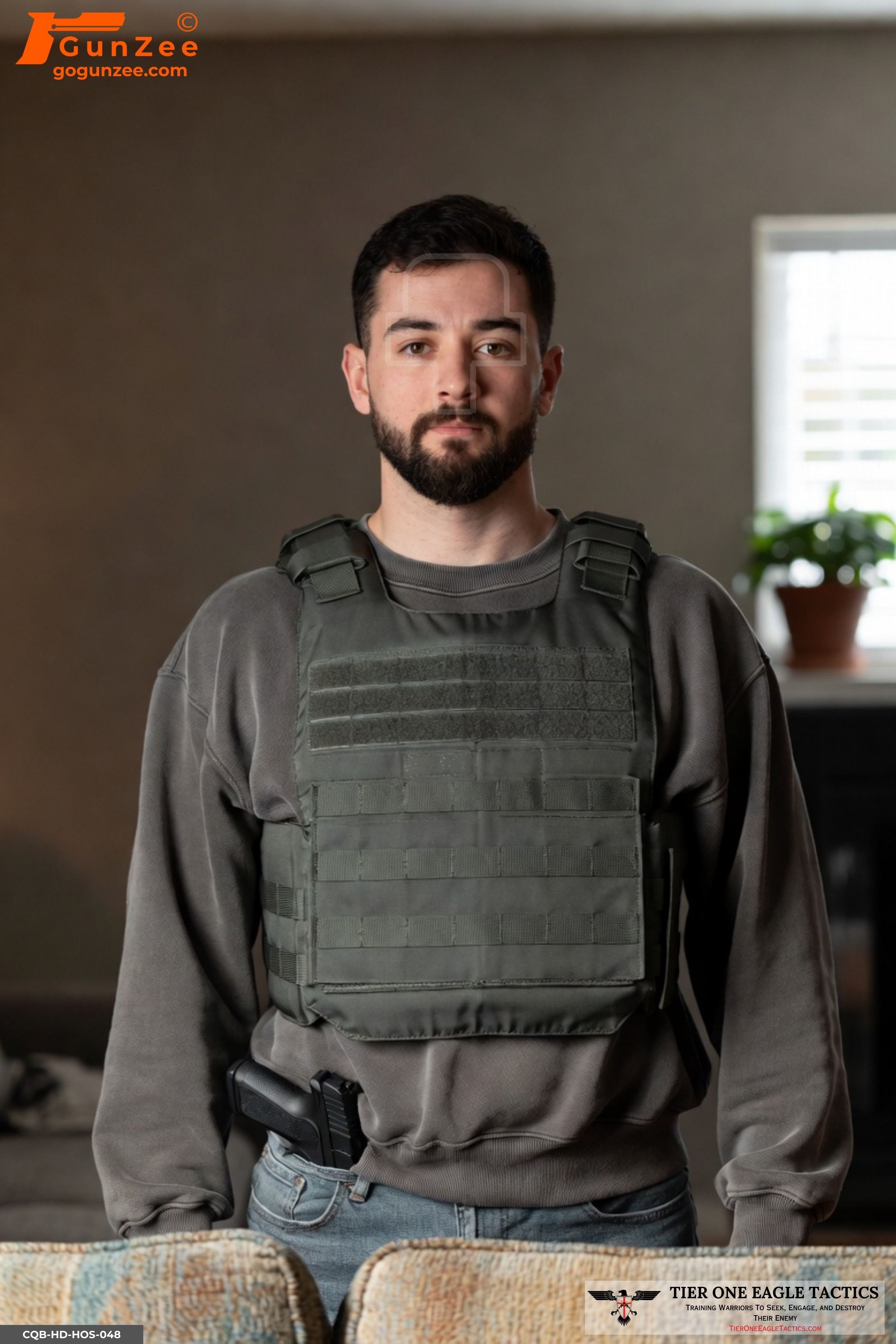
This target presents a tense interior confrontation involving a male subject wearing visible body armor with a concealed handgun positioned at the waist. At first glance, the subject’s hands are neutral and no weapon is actively presented, yet the presence of armor and a partially concealed firearm introduces a complex threat profile that requires deliberate assessment rather than reflexive action.
The indoor residential setting adds realism and pressure. The subject stands upright, squared to the shooter, with no overt aggression, forcing careful evaluation of intent, capability, and timing. This scenario reflects real-world encounters where threat indicators are present, but lethal intent is not immediately obvious.
Encounters involving armored individuals dramatically alter defensive decision-making. Body armor changes shot placement priorities, increases risk of ineffective hits, and often correlates with higher threat potential. This target was created to train shooters to recognize armor, adjust aiming strategy, and maintain discipline when a weapon is concealed but not yet deployed.
The scenario reinforces the importance of visual scanning, recognizing secondary threat indicators, and preparing for rapid escalation without prematurely engaging. It conditions shooters to process capability and context, not just hand position.
This target includes a modified T-box to reinforce anatomically effective shot placement when body armor is present. The reference zone emphasizes precision targeting above armor coverage when lethal force becomes necessary.
Most targets present... ...
This target presents a tense interior confrontation involving a male subject wearing visible body armor with a concealed handgun positioned at the waist. At first glance, the subject’s hands are neutral and no weapon is actively presented, yet the presence of armor and a partially concealed firearm introduces a complex threat profile that requires deliberate assessment rather than reflexive action.
The indoor residential setting adds realism and pressure. The subject stands upright, squared to the shooter, with no overt aggression, forcing careful evaluation of intent, capability, and timing. This scenario reflects real-world encounters where threat indicators are present, but lethal intent is not immediately obvious.
Encounters involving armored individuals dramatically alter defensive decision-making. Body armor changes shot placement priorities, increases risk of ineffective hits, and often correlates with higher threat potential. This target was created to train shooters to recognize armor, adjust aiming strategy, and maintain discipline when a weapon is concealed but not yet deployed.
The scenario reinforces the importance of visual scanning, recognizing secondary threat indicators, and preparing for rapid escalation without prematurely engaging. It conditions shooters to process capability and context, not just hand position.
This target includes a modified T-box to reinforce anatomically effective shot placement when body armor is present. The reference zone emphasizes precision targeting above armor coverage when lethal force becomes necessary.
Most targets present either a clearly armed threat or an obviously unarmed individual. This target occupies the uncomfortable middle ground. The subject’s armor signals preparedness for violence, while the concealed firearm introduces the potential for rapid escalation without immediate justification for engagement.
By forcing shooters to balance readiness with restraint, this target develops judgment rather than conditioning automatic responses. It reflects the reality that the presence of equipment alone does not always equal immediate lethal intent.
Pair this target with related scenarios from across the GunZee catalog:
Public and everyday self-defense: Backyard Pool Knife Assault – Crowd Chaos Scenario, Man on Crutches Armed Confrontation Shooting Target, Bank Lobby Active Robbery – Multiple Armed Suspects with Body Armor Shooting Target
Home defense, CQB, and hostage: Interior Male Wearing Body Armor Unarmed Threat Assessment Shooting Target, Interior Doorway Armed Male Home Defense Shooting Target, Interior Doorway Male With Phone Ambiguous Threat Shooting Target, CQB Home Defense Hostage – Rear Control Handgun Threat Shooting Target
Vehicle and barrier: Vehicle Barrier Elderly Victim Carjacking Shooting Target, Vehicle Barrier Daylight Carjacking Shooting Target, Vehicle Barrier Closed-Door Armed Driver Shooting Target
Anatomical: Anatomical Head-Out Vehicle Window Engagement Shooting Target, Anatomical Semi-Frontal Handgun Threat Precision Shooting Target, Anatomical Side-Profile Rifle Threat Shooting Target