
Anatomical Shooting Targets
Medically accurate anatomical shooting targets for serious defensive training. Eight single-target designs, each printed at full 24" x 36" on heavy, durable paper. Shot placement is trained against real human anatomy — vital zones are visible because the print itself is anatomy, not because score lines are drawn over it.


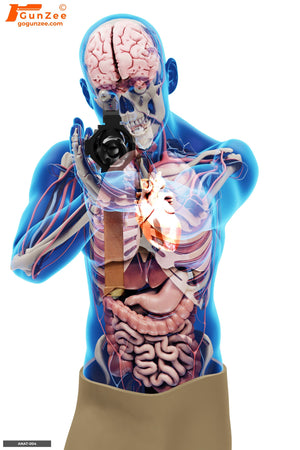


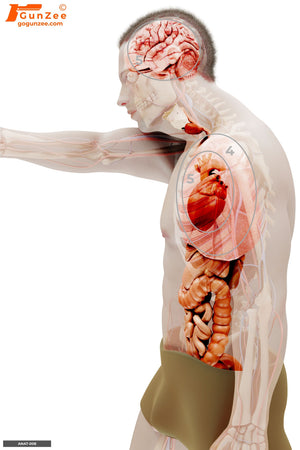
Our flagship full-body design (ANAT-001) features built-in kill-box overlays — T-box, cardiac box, and pelvic girdle — printed directly on the target for instructor-led shot-placement drills. The remaining seven targets in the collection present pure anatomical reference for shooters who train against actual vital structures rather than arbitrary scoring overlays.
Made in the USA. Designed for civilian defenders, law enforcement, and professional training environments.
Browse the full paper shooting targets catalog — anatomical, scenario, CQB, vehicle, and public-defense, every design under one roof.
The hostage rescue library uses anatomically accurate aggressor and hostage figures so debriefs can talk about real wound channels and shot accountability, not abstract scoring rings. Decision-training products with the same anatomical fidelity are at /collections/shoot-no-shoot-targets.
The science behind these zones is in the human anatomy training guide; if you’re coming from ring-scored silhouettes, the silhouette shooting targets pillar maps the upgrade path.
Build the full program with the Range Manual: Train Vital Zones, Not Scoring Rings.
What anatomical targets train. A ring or a printed box tells a shooter where to aim. Anatomical targets show why. Each design places a medically accurate illustration of the human figure (brain, spine, heart, lungs, major vessels and abdominal organs) inside an armed aggressor, so every hit can be read against the structure it would actually reach. The debrief stops being "you were in the 8 ring" and becomes "that round went high and outside the heart." That is the point of anatomy-based shot placement: hits that stop a threat, not hits that score.
Every presentation angle, not just face-on. Real threats rarely stand square to the shooter. The line runs from the full-system reference (ANAT-001) through frontal, semi-frontal and semi-profile handgun threats, a rifle threat, a side-profile rifle threat, a hostage shield and a head-out vehicle window engagement. As the body turns, the vital structures shift behind the ribs, shoulder and arms, and the shooter has to move the aiming point instead of defaulting to center mass.
How instructors run them. Start with ANAT-001 at close range to teach where the structures sit. Move to the frontal handgun threat, then the bladed and profile presentations, then the hostage shield and vehicle window designs, where only a small part of the aggressor is exposed. After each string, have the shooter call every hit by the structure it reached before walking up to check. Once placement holds, mix the anatomical line with shoot no shoot targets so the decision and the shot are trained together.
Who buys anatomical shooting targets. Police academies and agency firearms instructors use them for shot-placement blocks and use-of-force debriefs. Civilian defenders use them to replace bullseyes with an aiming point that matches a real threat. Every design is made in the USA, ships rolled from Raleigh, NC, and is sold in sets of 5 per design, so one order can mix the whole line.
Frequently asked questions
What are anatomical shooting targets?
Anatomical shooting targets (also called anatomy shooting targets) show the internal anatomy of a threat: brain, spine, heart, lungs and major vessels. Shooters learn shot placement against the structures that matter instead of against scoring rings.
Are anatomical targets better than bullseye targets?
For basic marksmanship a bullseye works fine. For defensive shot placement, anatomical targets teach where a hit actually lands in the body and how that changes when the threat turns. Our shot placement comparison goes deeper.
Do the anatomical targets have printed scoring zones?
ANAT-001 carries a classic T-box and printed engagement zones over the anatomy. The other seven show the anatomy itself, with no scoring boxes drawn on top. For scenes with no printed zones at all, see the NKZ (No Kill Zone) line.
Which anatomical target should we start with?
Start with ANAT-001, the full-system reference, to learn where each structure sits. The frontal handgun threat is the next step and the most-ordered design in the line.
How are anatomical targets sold?
In sets of 5 per design, and you can mix any designs in one order. Volume discounts apply automatically at checkout on larger orders.