CQB Home Defense Hostage – Child Shield Handgun Threat Shooting Target [24" x 36"]
each · sold in 5s · mix any designs
Price drops automatically: 50+ $1.85 · 100+ $1.76 · 250+ $1.66 · Up to 25% off at 999+ · Volume quote →
$40 order minimum for your whole cart, not each design. Mix any targets.
Quantity must be in increments of 5
CQB Home Defense Hostage – Child Shield Handgun Threat Shooting Target
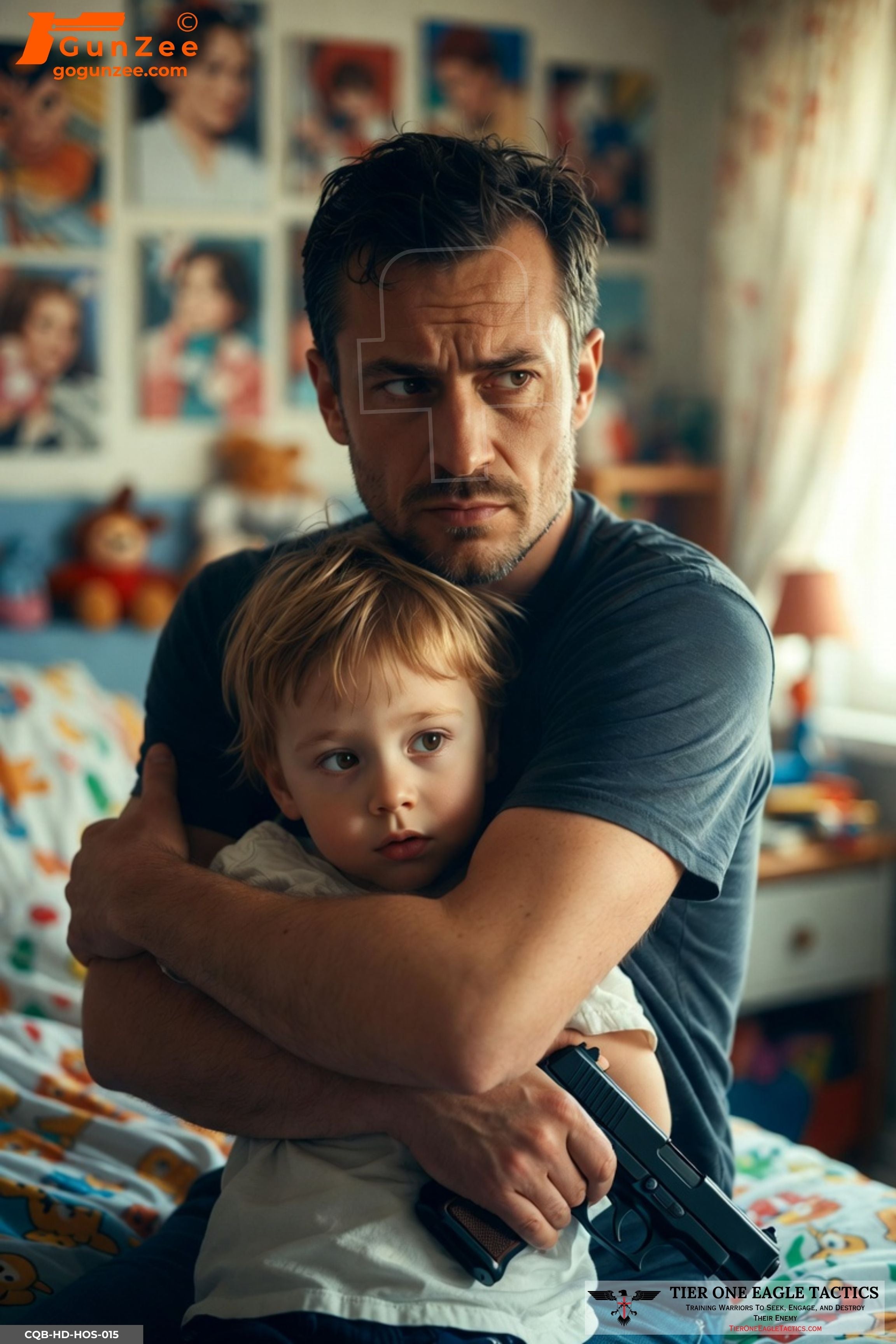
This CQB Home Defense Hostage Shooting Target depicts an extreme close-quarters scenario where an adult male restrains a young child while concealing and controlling a handgun near the child’s body. The environment is intimate and domestic, and the emotional weight of the scene immediately challenges the defender’s ability to maintain composure and judgment.
The aggressor’s posture indicates protective control rather than overt aggression, while the child’s presence dramatically restricts viable engagement options. This target is intentionally difficult, designed to reflect the rare but catastrophic situations where lethal threats are intertwined with the highest possible innocent risk.
Training Purpose
Scenarios involving children demand the highest standard of restraint, confirmation, and accountability. Emotional response alone cannot drive decision-making when the margin for error is effectively zero.
This target is designed to train shooters to recognize confirmed threat presence while simultaneously evaluating whether any shot opportunity exists at all. It reinforces that the presence of a weapon does not automatically create a permissible engagement when an innocent is physically entangled with the threat.
Skills Reinforced
- Emotional control under extreme stress
- Threat confirmation with innocent entanglement
- Accountability in zero-margin hostage scenarios
- Decision-making when lethal force may be unjustifiable
- Discipline in the presence of overwhelming emotional cues
Why This Target Is Different
Many hostage targets focus on adult-to-adult dynamics. This target introduces a child into the threat equation, fundamentally altering acceptable response thresholds.
The aggressor’s controlled posture and partial concealment of the handgun create ambiguity around timing and intent, while the child’s position... ...
CQB Home Defense Hostage – Child Shield Handgun Threat Shooting Target
This CQB Home Defense Hostage Shooting Target depicts an extreme close-quarters scenario where an adult male restrains a young child while concealing and controlling a handgun near the child’s body. The environment is intimate and domestic, and the emotional weight of the scene immediately challenges the defender’s ability to maintain composure and judgment.
The aggressor’s posture indicates protective control rather than overt aggression, while the child’s presence dramatically restricts viable engagement options. This target is intentionally difficult, designed to reflect the rare but catastrophic situations where lethal threats are intertwined with the highest possible innocent risk.
Training Purpose
Scenarios involving children demand the highest standard of restraint, confirmation, and accountability. Emotional response alone cannot drive decision-making when the margin for error is effectively zero.
This target is designed to train shooters to recognize confirmed threat presence while simultaneously evaluating whether any shot opportunity exists at all. It reinforces that the presence of a weapon does not automatically create a permissible engagement when an innocent is physically entangled with the threat.
Skills Reinforced
- Emotional control under extreme stress
- Threat confirmation with innocent entanglement
- Accountability in zero-margin hostage scenarios
- Decision-making when lethal force may be unjustifiable
- Discipline in the presence of overwhelming emotional cues
Why This Target Is Different
Many hostage targets focus on adult-to-adult dynamics. This target introduces a child into the threat equation, fundamentally altering acceptable response thresholds.
The aggressor’s controlled posture and partial concealment of the handgun create ambiguity around timing and intent, while the child’s position forces shooters to confront the reality that restraint may be the correct outcome even when a firearm is present.
This target is not about speed. It is about judgment.
Modified T-Box
This target includes a modified T-box outline that expands beyond the traditional eye-to-eye reference by incorporating a defined area in the upper forehead. This modification reflects established understanding that disruption in this region is associated with immediate incapacitation due to proximity to critical central nervous system structures.
The modified T-box is not intended to be visible or used as an aiming reference at shooting distance. It exists strictly for post-exercise analysis and instructor-led review. After the drill, the outline allows shooters to assess whether a true precision opportunity ever existed given the child’s position, the aggressor’s posture, and acceptable accountability standards.
Related training targets
Pair this target with related scenarios from across the GunZee catalog:
Public and everyday self-defense: Nightclub Exit Hostage Crowd Crisis Shooting Target, Backyard Pool Knife Assault – Crowd Chaos Scenario, Parking Garage Close-Contact Hostage Control Shooting Target
Home defense, CQB, and hostage: CQB Home Defense Hostage – Child Shield No-Weapon Confirmation Shooting Target, CQB Home Defense Hostage – Rear Control Handgun Threat Shooting Target, CQB Home Defense Hostage – Forward Weapon Presentation Shooting Target, CQB Home Defense Hostage – Woman Armed Forward Presentation Shooting Target
Vehicle and barrier: Vehicle Barrier Closed-Door Armed Driver Shooting Target, Vehicle Barrier Carjacking Confrontation Shooting Target, Vehicle Barrier Windshield Gunman Engagement Shooting Target
Anatomical: Anatomical Rifle Threat Vital Zone Shooting Target, Anatomical Side-Profile Rifle Threat Shooting Target, Anatomical Frontal Handgun Threat Vital Zone Shooting Target
Also ships in: CQB & Interior 150-pack, Hostage Rescue 150-pack, 150-Target Training Pack — the 30 best sellers, 5 each — five of each design, priced below singles.