Read the Privacy Policy
Quantity must be in increments of 5
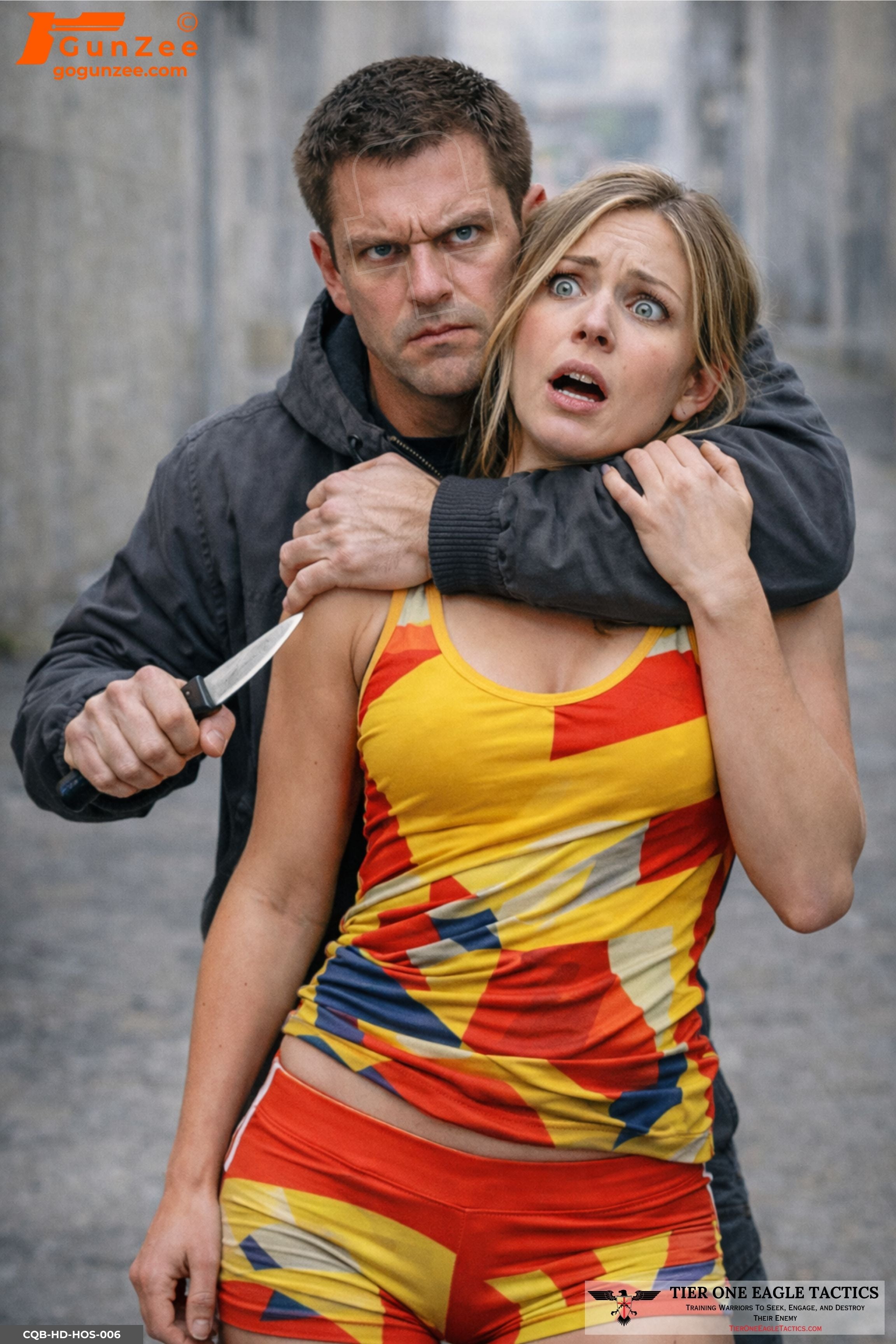
This CQB Home Defense Hostage Shooting Target depicts a high-risk close-quarters encounter where an aggressor controls a hostage from behind while presenting an edged weapon at close proximity. The threat is immediate, personal, and dynamic, with minimal distance separating the attacker, the hostage, and the defender.
Unlike firearm-based hostage scenarios, the presence of a knife introduces rapid movement, unpredictable angles, and an extremely compressed reaction window. The defender must process proximity, blade orientation, body alignment, and hostage positioning simultaneously, all while recognizing that even small errors can result in catastrophic injury to the innocent party.
Edged-weapon hostage encounters demand a fundamentally different defensive mindset than firearm threats. The absence of standoff distance and the attacker’s ability to cause lethal harm with minimal movement significantly complicate decision-making.
This target is designed to train shooters to recognize the limitations of force options in knife-based hostage scenarios. It reinforces visual discipline, patience, and accountability, emphasizing that not every lethal threat presents a viable shot and that restraint may be required even when danger is unmistakable.
Many hostage targets oversimplify edged-weapon threats or present unrealistic spacing. This target intentionally denies those conveniences. The attacker maintains physical control of the hostage while holding the blade close to vital areas, leaving little room for clean engagement options.
... ...This CQB Home Defense Hostage Shooting Target depicts a high-risk close-quarters encounter where an aggressor controls a hostage from behind while presenting an edged weapon at close proximity. The threat is immediate, personal, and dynamic, with minimal distance separating the attacker, the hostage, and the defender.
Unlike firearm-based hostage scenarios, the presence of a knife introduces rapid movement, unpredictable angles, and an extremely compressed reaction window. The defender must process proximity, blade orientation, body alignment, and hostage positioning simultaneously, all while recognizing that even small errors can result in catastrophic injury to the innocent party.
Edged-weapon hostage encounters demand a fundamentally different defensive mindset than firearm threats. The absence of standoff distance and the attacker’s ability to cause lethal harm with minimal movement significantly complicate decision-making.
This target is designed to train shooters to recognize the limitations of force options in knife-based hostage scenarios. It reinforces visual discipline, patience, and accountability, emphasizing that not every lethal threat presents a viable shot and that restraint may be required even when danger is unmistakable.
Many hostage targets oversimplify edged-weapon threats or present unrealistic spacing. This target intentionally denies those conveniences. The attacker maintains physical control of the hostage while holding the blade close to vital areas, leaving little room for clean engagement options.
The visual realism of this scenario reinforces that knife threats are often more dangerous than firearms at close range. The target rewards disciplined observation and reinforces that acting too quickly can worsen the outcome, even when lethal force appears justified.
This target includes a modified T-box outline that expands beyond the traditional eye-to-eye reference by incorporating a defined area in the upper forehead. This modification reflects established understanding that disruption in this region is associated with immediate incapacitation due to proximity to critical central nervous system structures.
The modified T-box is not intended to be visible or used as an aiming reference at shooting distance. It exists solely for post-exercise analysis and instructor-led review. After the drill, the outline allows shooters to evaluate whether a precision opportunity truly existed and whether engagement would have aligned with acceptable accountability standards given the hostage’s proximity and the dynamic nature of an edged-weapon threat.
Pair this target with related scenarios from across the GunZee catalog:
Public and everyday self-defense: Forest Trail Advancing Knife Threat Shooting Target, Low-Light Plainclothes Officer Threat Assessment Scenario, Crowded Street Hostage Control with Concealed Gunman Shooting Target
Home defense, CQB, and hostage: CQB Home Defense Hostage – Wallet Ambiguity Rear Control Shooting Target, CQB Home Defense Hostage – Rear Control Handgun Threat Shooting Target, CQB Home Defense Hostage – Rear Knife Threat Distraction Shooting Target, CQB Home Defense Hostage – Forward Weapon Presentation Shooting Target
Vehicle and barrier: Vehicle Barrier Door-Jamb Armed Threat Shooting Target, Vehicle Approach Threat Advancing Gunman Shooting Target, Vehicle Barrier Carjacking Confrontation Shooting Target
Anatomical: Anatomical Rifle Threat Vital Zone Shooting Target, Anatomical Hostage Shield Vital Zone Shooting Target, Anatomical Frontal Handgun Threat Vital Zone Shooting Target