Read the Privacy Policy
Quantity must be in increments of 5
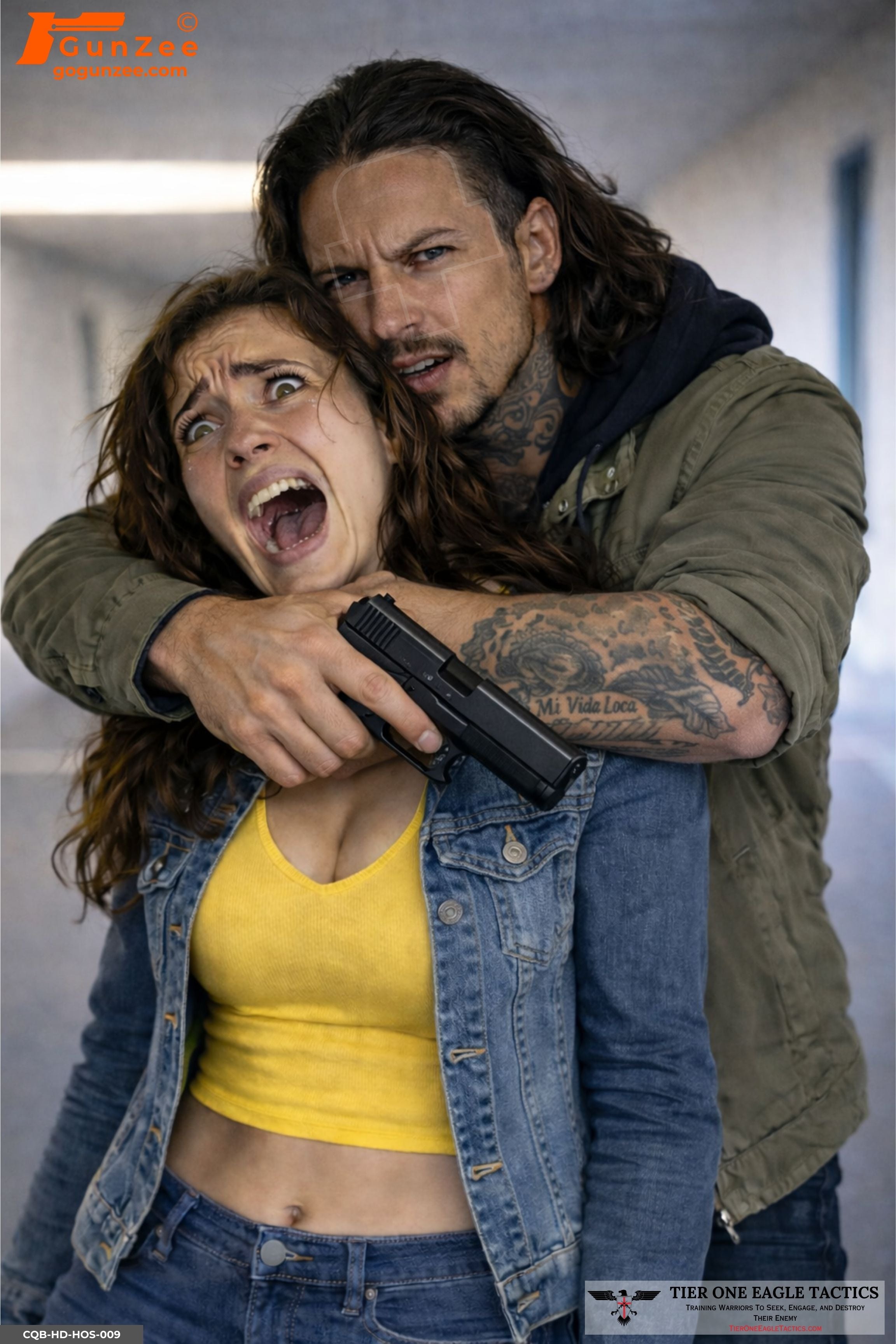
This CQB Home Defense Hostage Shooting Target depicts a high-risk close-quarters encounter where an aggressor restrains a hostage from behind while presenting a handgun in direct contact with the victim’s upper torso. The threat is unmistakable, the distance is zero, and the hostage’s position leaves virtually no margin for error.
The visual intensity of this scenario is extreme. The hostage’s panic is immediate and uncontrolled, while the aggressor’s posture reflects dominance and intent. This combination creates overwhelming pressure to act, testing whether the defender can maintain discipline and judgment when every visual cue demands urgency.
Rear-control handgun hostage situations represent one of the most unforgiving decision environments in close-quarters defense. The presence of a firearm combined with physical entanglement removes traditional standoff options and severely constrains acceptable responses.
This target is designed to train shooters to recognize when lethal force is justified while still demanding accountability for precision, timing, and consequence. It reinforces that even when a threat is confirmed, not every shot opportunity is acceptable, and restraint remains a critical component of responsible defensive action.
Many hostage targets depict clean lines of separation or unrealistic spacing. This target intentionally removes those advantages. The aggressor’s firearm is pressed close to the hostage’s body, and the hostage’s panic amplifies the emotional intensity of... ...
This CQB Home Defense Hostage Shooting Target depicts a high-risk close-quarters encounter where an aggressor restrains a hostage from behind while presenting a handgun in direct contact with the victim’s upper torso. The threat is unmistakable, the distance is zero, and the hostage’s position leaves virtually no margin for error.
The visual intensity of this scenario is extreme. The hostage’s panic is immediate and uncontrolled, while the aggressor’s posture reflects dominance and intent. This combination creates overwhelming pressure to act, testing whether the defender can maintain discipline and judgment when every visual cue demands urgency.
Rear-control handgun hostage situations represent one of the most unforgiving decision environments in close-quarters defense. The presence of a firearm combined with physical entanglement removes traditional standoff options and severely constrains acceptable responses.
This target is designed to train shooters to recognize when lethal force is justified while still demanding accountability for precision, timing, and consequence. It reinforces that even when a threat is confirmed, not every shot opportunity is acceptable, and restraint remains a critical component of responsible defensive action.
Many hostage targets depict clean lines of separation or unrealistic spacing. This target intentionally removes those advantages. The aggressor’s firearm is pressed close to the hostage’s body, and the hostage’s panic amplifies the emotional intensity of the scene.
The realism of this scenario reinforces that even correct threat identification does not guarantee a safe or viable engagement window. Shooters must process posture, muzzle orientation, and hostage offset rather than relying on reflexive responses.
This target includes a modified T-box outline that expands beyond the traditional eye-to-eye reference by incorporating a defined area in the upper forehead. This modification reflects established understanding that disruption in this region is associated with immediate incapacitation due to proximity to critical central nervous system structures.
The modified T-box is not intended to be visible or used as an aiming reference at shooting distance. It exists strictly for post-exercise analysis and instructor-led review. After the drill, the outline allows shooters to evaluate whether a true precision opportunity existed and whether engagement aligned with acceptable accountability standards given the hostage’s proximity.
Pair this target with related scenarios from across the GunZee catalog:
Public and everyday self-defense: Parking Garage Hostage Crisis – Cranial Incapacitation Training Target, Backyard Pool Knife Assault – Crowd Chaos Scenario, Storage Unit Ambiguous Encounter Shooting Target
Home defense, CQB, and hostage: CQB Home Defense Hostage – Knife Threat Rear Control Shooting Target, CQB Home Defense Hostage – Wallet Ambiguity Rear Control Shooting Target, CQB Home Defense Hostage – Child Shield Handgun Threat Shooting Target, CQB Home Defense Hostage – Rear Knife Threat Distraction Shooting Target
Vehicle and barrier: Vehicle Barrier Dual Gunmen Front-and-Rear Seat Engagement Shooting Target, Vehicle Barrier Daylight Carjacking Shooting Target, Vehicle Barrier Carjacking Confrontation Shooting Target
Anatomical: Anatomical Full-System Vital Zone Shooting Target, Anatomical Semi-Profile Handgun Threat Vital Zone Shooting Target, Anatomical Rifle Threat Vital Zone Shooting Target