
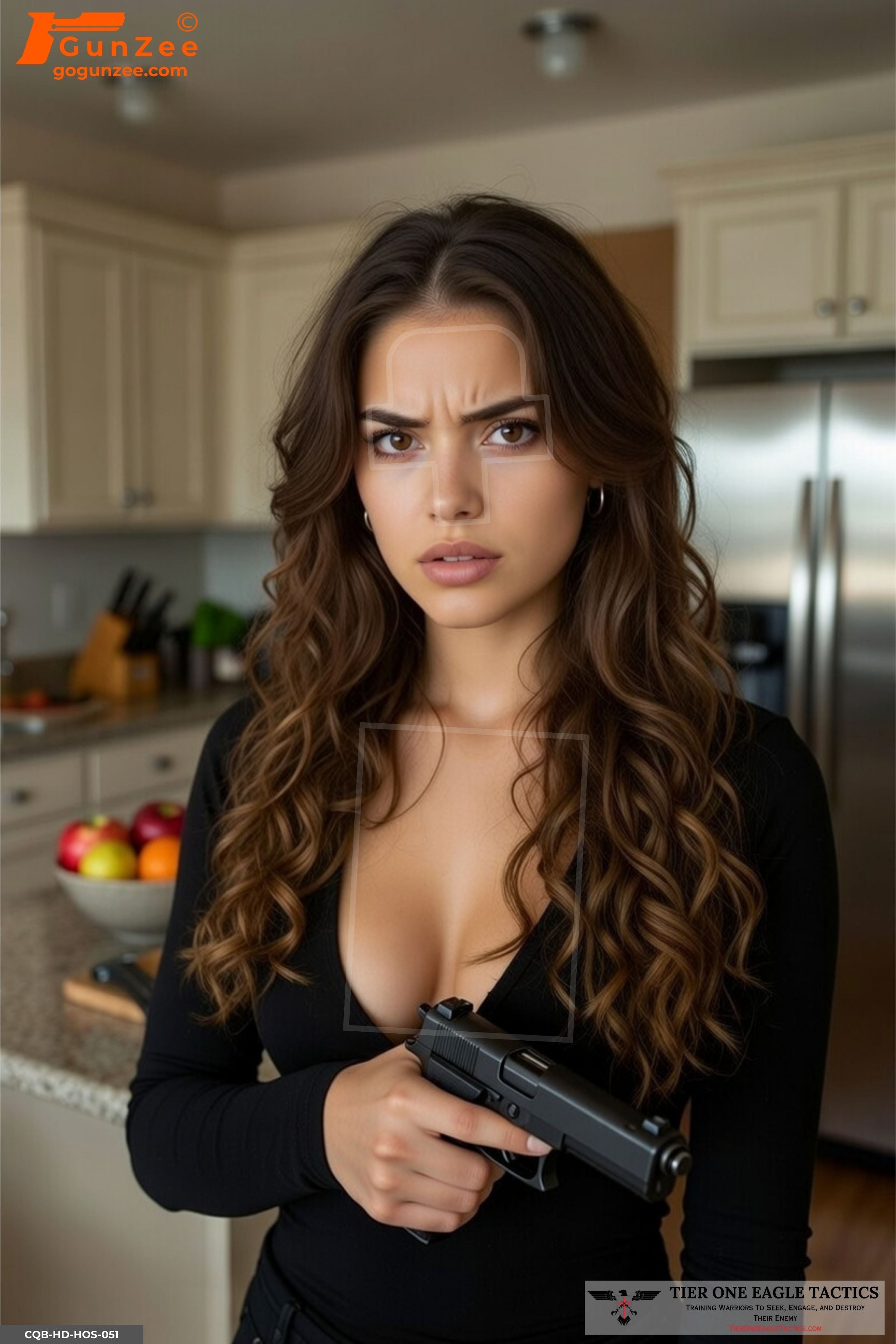
Kitchen Interior Armed Female With Distracting Clothing Shooting Target [24" x 36"]
each · sold in 5s · mix any designs
Price drops automatically: 50+ $1.85 · 100+ $1.76 · 250+ $1.66 · Up to 25% off at 999+ · Volume quote →
$40 order minimum for your whole cart, not each design. Mix any targets.
Quantity must be in increments of 5
Kitchen Interior Armed Female With Distracting Clothing Shooting Target
This target presents a high-risk home-defense encounter inside a residential kitchen where a female subject is holding a handgun at close range. The environment is familiar and well-lit, yet the subject’s clothing and appearance are intentionally distracting, drawing attention away from critical threat indicators. The shooter must maintain visual discipline, confirm the weapon, and execute precise shot placement despite competing visual stimuli.
The kitchen setting reflects a common location for sudden defensive encounters. Tight working spaces, reflective surfaces, and everyday household objects compress reaction time and increase cognitive load. This target is designed to train shooters to prioritize hands, weapon presence, and anatomy over emotional expression or visual distraction.
Training Purpose
Real-world encounters rarely occur in sterile environments or with neutral visual inputs. Clothing, body type, facial expression, and emotional cues can distract or delay correct threat identification. This target was created to reinforce disciplined visual processing and decision-making when distractions are deliberately present.
The scenario forces shooters to filter out irrelevant visual noise and focus on what matters most: weapon confirmation, intent, and anatomically effective shot placement. It reinforces that distraction is not an excuse for hesitation or poor accuracy once lethal intent is established.
This target includes a modified T-box and cardiac box to support anatomically relevant shot placement during close-quarters engagements. These reference zones reinforce accountability and precision when stress and visual overload are high.
Skills Reinforced
- Weapon confirmation despite visual distraction
- Maintaining visual discipline under stress
- Precision shot placement in close quarters
- Filtering emotional and appearance-based cues
- Accountability for every round fired
- Decision-making in familiar indoor environments
Why This Target Is Different
Most targets present clean visual lines and minimal distraction. This target deliberately introduces competing visual elements that can pull attention away from hands and weapon placement. Shooters must overcome instinctive visual bias and apply trained observation skills.
By emphasizing distraction management, this target develops a critical defensive skill often overlooked: the ability to stay focused on threat indicators when appearance, clothing, or emotion attempt to misdirect attention.
Related training targets
Pair this target with related scenarios from across the GunZee catalog:
Public and everyday self-defense: Advancing Crowd Knife Assault Shooting Target, Coffee Shop Confrontation Close Range Threat Shooting Target, Low-Light Plainclothes Officer Contact – Authority Identification Scenario
Home defense, CQB, and hostage: Kitchen Interior Female With Glasses Ambiguous Threat Shooting Target, Interior Three-Man Misdirection & Armed Threat Shooting Target, Two-Man Kitchen Armed Intrusion Shooting Target, Bathroom Doorway Armed Female Threat Shooting Target
Vehicle and barrier: Vehicle Barrier Windshield Assault Shooting Target, Vehicle Barrier Armed Subject Exiting Vehicle Shooting Target, Vehicle Barrier Dual Gunmen Front-and-Rear Seat Engagement Shooting Target
Anatomical: Anatomical Semi-Profile Handgun Threat Vital Zone Shooting Target, Anatomical Side-Profile Rifle Threat Shooting Target, Anatomical Frontal Handgun Threat Vital Zone Shooting Target