
Low-Light Plainclothes Officer Contact – Authority Identification Scenario [24" x 36"]
each · sold in 5s · mix any designs
Price drops automatically: 50+ $1.85 · 100+ $1.76 · 250+ $1.66 · Up to 25% off at 999+ · Volume quote →
$40 order minimum for your whole cart, not each design. Mix any targets.
Quantity must be in increments of 5
Low-Light Plainclothes Officer Contact – Authority Identification Scenario
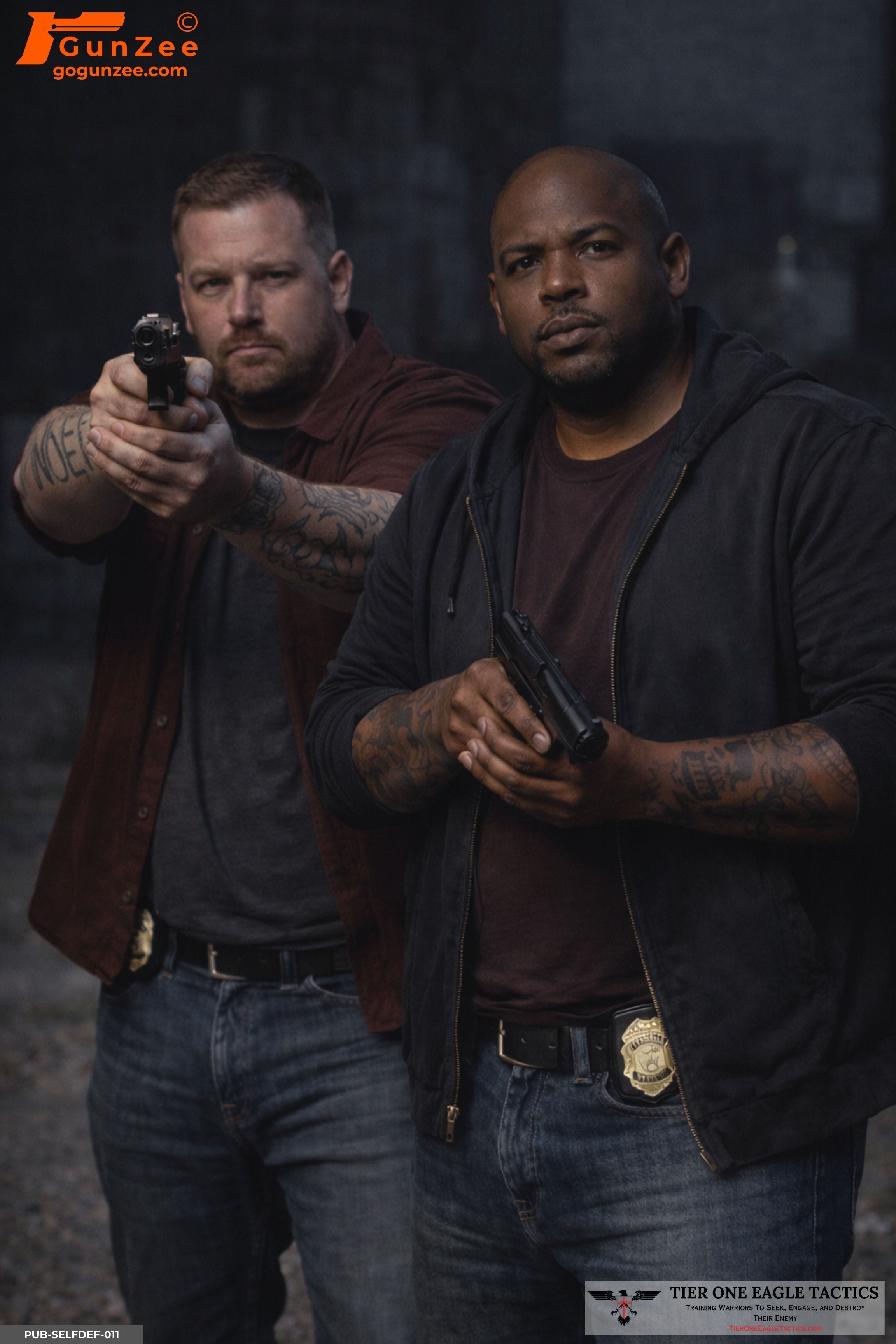
The Low-Light Plainclothes Officer Contact shooting target presents a high-risk identification scenario involving two coordinated plainclothes officers operating in reduced-visibility conditions. Both officers are armed, wearing no uniforms, and displaying subtle authority cues that must be visually confirmed under stress.
This scenario reflects one of the most legally and tactically complex environments encountered in real life: multiple lawful firearms present, limited lighting, compressed reaction time, and no margin for assumption-based decisions.
Training Purpose
Low-light encounters significantly degrade visual processing and increase the risk of misidentification. When plainclothes officers operate together in dim or transitional lighting, shooters must rely on deliberate visual confirmation of authority, weapon orientation, posture, and coordinated behavior before making any engagement decision.
This target is designed to train disciplined identification, restraint, and muzzle awareness when lighting conditions amplify stress and reduce clarity. It reinforces the requirement to confirm lawful authority before acting—even when firearms are already present.
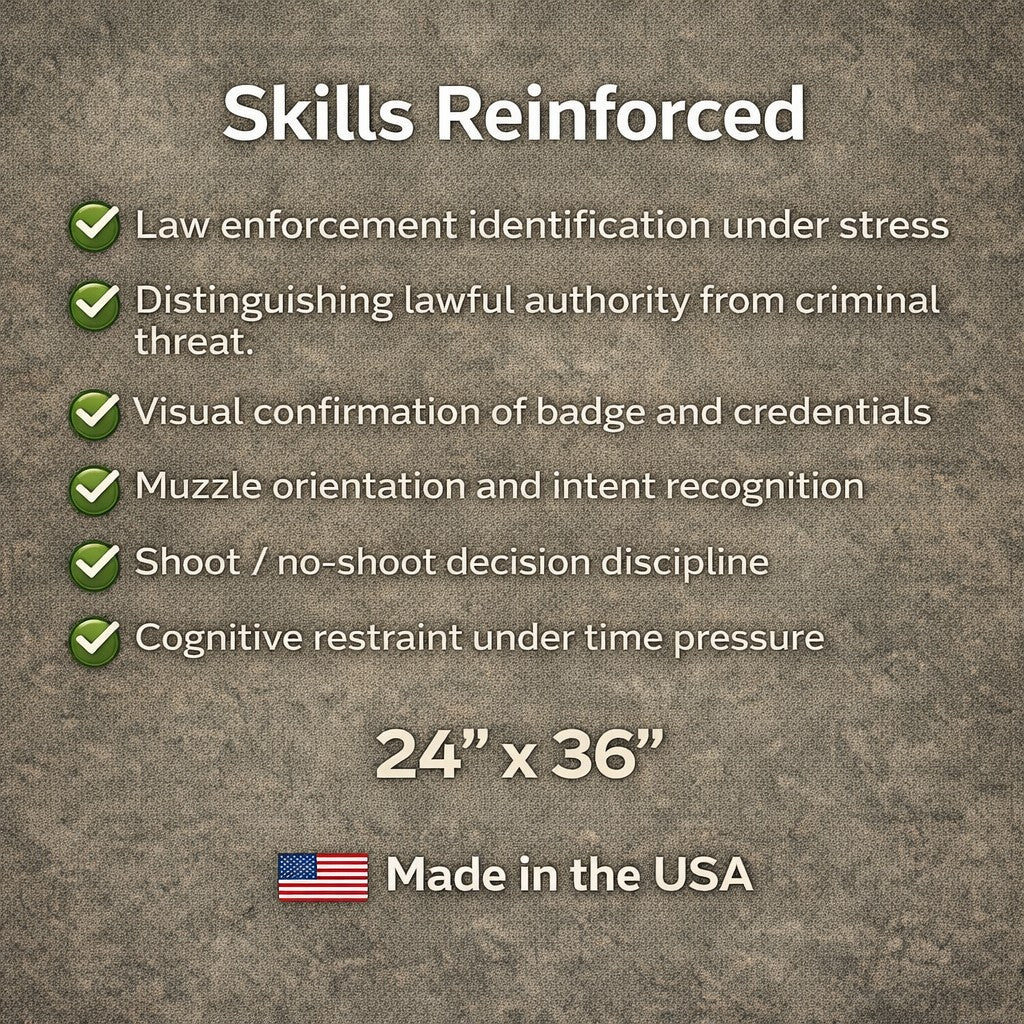
Skills Reinforced
- Law enforcement identification under low-light conditions
- Distinguishing lawful authority from criminal threat
- Visual confirmation of badges and credentials
- Muzzle orientation and intent recognition
- Shoot / no-shoot decision discipline
- Cognitive restraint under time pressure
Why This Target Is Different
Most targets simplify engagement by presenting a single, clearly hostile subject in good lighting. This target intentionally removes those advantages.
The shooter must:
- Process multiple armed officers simultaneously
- Identify authority cues in reduced visibility
- Maintain muzzle discipline with friendly forces nearby
- Avoid reflexive engagement triggered by visible weapons
This target rewards restraint, awareness, and professional judgment while exposing the dangers of tunnel vision and low-light misinterpretation.
Scenario Context (Educational)
Plainclothes officers frequently operate during evening hours, low-light transitions, and poorly illuminated environments. In these conditions, badges may be partially obscured, weapon orientation may be misread, and stress can override proper identification protocols.
This scenario emphasizes accountability, legal responsibility, and the importance of confirming context before action—especially when lighting conditions elevate uncertainty.
Related training targets
Pair this target with related scenarios from across the GunZee catalog:
Public and everyday self-defense: Low-Light Badge Presentation – Plainclothes Officer Identification Scenario, Low-Light Plainclothes Officer Threat Assessment Scenario, Plainclothes Officer Badge Reveal – Law Enforcement Identification Scenario, Plainclothes Officer Contact & Crossfire Control – Partner Coordination Scenario
Home defense, CQB, and hostage: CQB Home Defense Hostage – Bedroom Doorway Armed Subject Shooting Target, Interior Doorway Male With Phone Ambiguous Threat Shooting Target, Indoor Aggressive Dog Charging Home Defense Shooting Target
Vehicle and barrier: Vehicle Barrier Elderly Victim Carjacking Shooting Target, Vehicle Barrier Multi-Aggressor Carjacking Shooting Target, Vehicle Barrier Door-Jamb Armed Threat Shooting Target
Anatomical: Anatomical Rifle Threat Vital Zone Shooting Target, Anatomical Hostage Shield Vital Zone Shooting Target, Anatomical Semi-Profile Handgun Threat Vital Zone Shooting Target