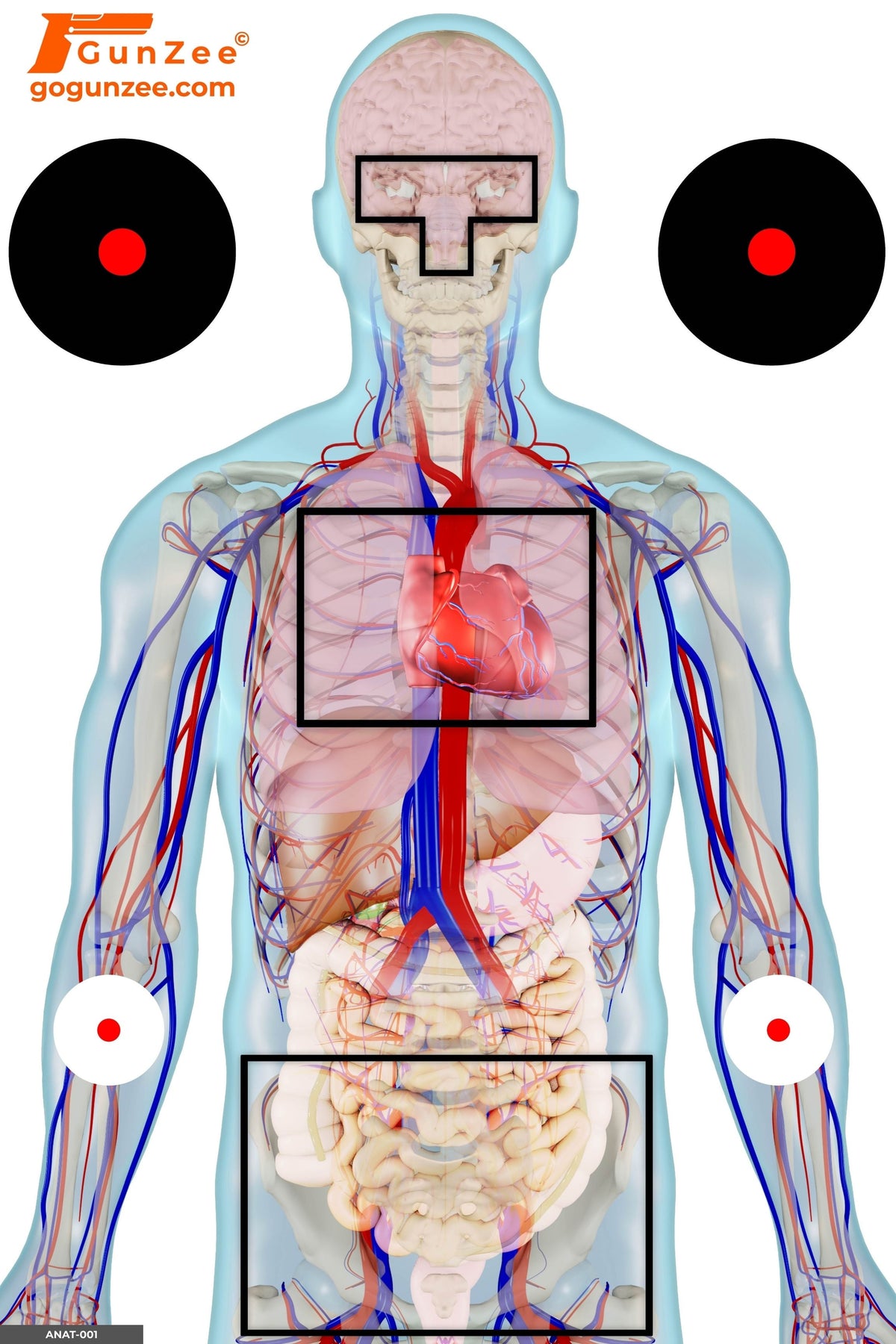
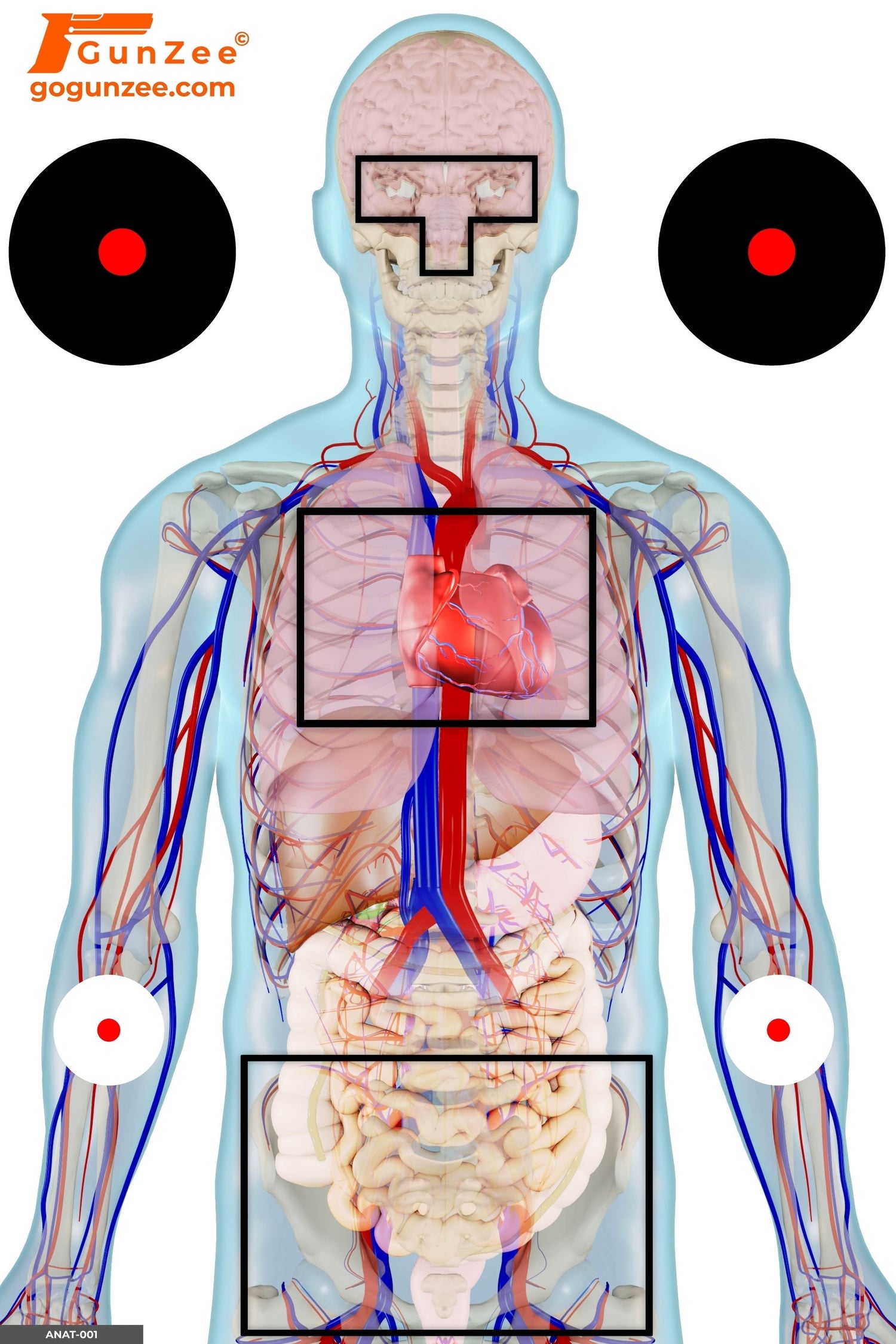
An anatomical shooting target puts the human body's actual stop zones on paper — the cardiac box, the cranial T-box, the pelvic girdle — drawn at true size and true location on a life-size figure. That single change reframes what a range session measures. A ring-scored silhouette tells you how close you came to the middle of a shape. An anatomical target tells you whether the shot you just fired would have ended a fight. This guide covers what anatomical shooting targets are, how they differ from the scored silhouettes most shooters grew up on, the full GunZee line by threat presentation, and how to choose the right ones for your training — whether that's a range bag or a department program.
What makes a target "anatomical"
Three things, and all of them have to be right:
- True vital-zone placement. The cardiac box is a roughly four-by-four-inch area of the upper chest — not the geometric center of the torso, where silhouette rings put the highest score. The cranial T-box is the eyebrow-to-upper-lip zone that reaches the brainstem, not "the head." An anatomical target draws these where they actually are, at the size they actually are. The often-skipped third zone, the pelvic girdle, doesn't end consciousness — it removes the threat's ability to stand or advance, the shot that matters when armor or angle defeats the chest.
- Life-size proportion. Zones only train correct hold-points if the figure is printed at real human scale. Every GunZee anatomical target is 24" × 36" — a full-size adult torso and head at true dimensions, so the sight picture you build on paper is the sight picture the real world presents.
- A lifelike figure under the overlay. The zones sit as semi-transparent overlays on a realistic human figure, not a blacked-out shape. That matters because aim-point selection in the real world starts with reading a body — clothing, posture, angle — and a flat outline gives your eyes nothing to practice on.
On scoring: the Full-System trainer carries the complete zone map for teaching and scoring placement. The rest of the line deliberately keeps printed zones minimal — because the end goal is holding on anatomy you can read, not searching for a printed box.
Anatomical targets vs. scored silhouettes
The B-27 and its family were built to produce comparable qualification scores, and they do that well — but their rings reward the center of a shape, which sits measurably below and wider than the real cardiac box. Decades of shooters have trained a hold-point that anatomy doesn't support. The full argument is in anatomical targets vs. bullseye scoring, and the silhouette shooting targets pillar traces the upgrade path from ring-scored outlines to anatomical realism. If you qualify on a B-27, keep qualifying on it — the B-27 spec guide has every ring dimension — but train your placement layer on anatomy.
The GunZee anatomical line, by threat presentation
Real encounters don't present square-on. The anatomical line covers the presentations that actually occur, so vital-zone geometry stays honest as the angle changes.


The line continues through semi-profile and side-profile presentations, a rifle threat, and a vehicle-window engagement. Browse the complete set in the anatomical & shot placement collection. Every target is $1.95, printed on heavyweight paper with a matte no-glare finish that stays readable under range lighting, and ships same day from Raleigh, NC.
How to choose
- Individual defensive shooters: start with the Full-System to learn the zones, then rotate the frontal and semi-frontal threats so your hold-point survives a change of angle. Two or three presentations per range session is enough.
- Instructors: the Full-System is the whiteboard; the presentation series is the curriculum. Diagnose on the overlay, then verify on the lifelike figures. Training packs cover a full class at volume pricing.
- Departments and agencies: anatomical placement is the second layer of the qualification-to-decision progression — after ring qualification, before scenario judgment. The law enforcement training targets pillar maps the full program, including where anatomical blocks fit in an annual training calendar.
Running the line as a training cycle
The presentations work as a progression, not a checklist. A practical sequence:
- Establish placement on the Full-System reference at 7 and 10 yards until cardiac-box hits are reliable.
- Add cranial T-box precision on the same target at the same distances. Expect a measurable accuracy drop — that gap is exactly what anatomical training surfaces.
- Move to the Frontal Handgun Threat — same anatomy, threat-presentation context. Track whether the cardiac-box hit rate degrades when the figure presents as a threat rather than a reference.
- Add the semi-frontal and semi-profile angles. These reveal where a shooter's mental model of "center mass" diverges from the actual cardiac box.
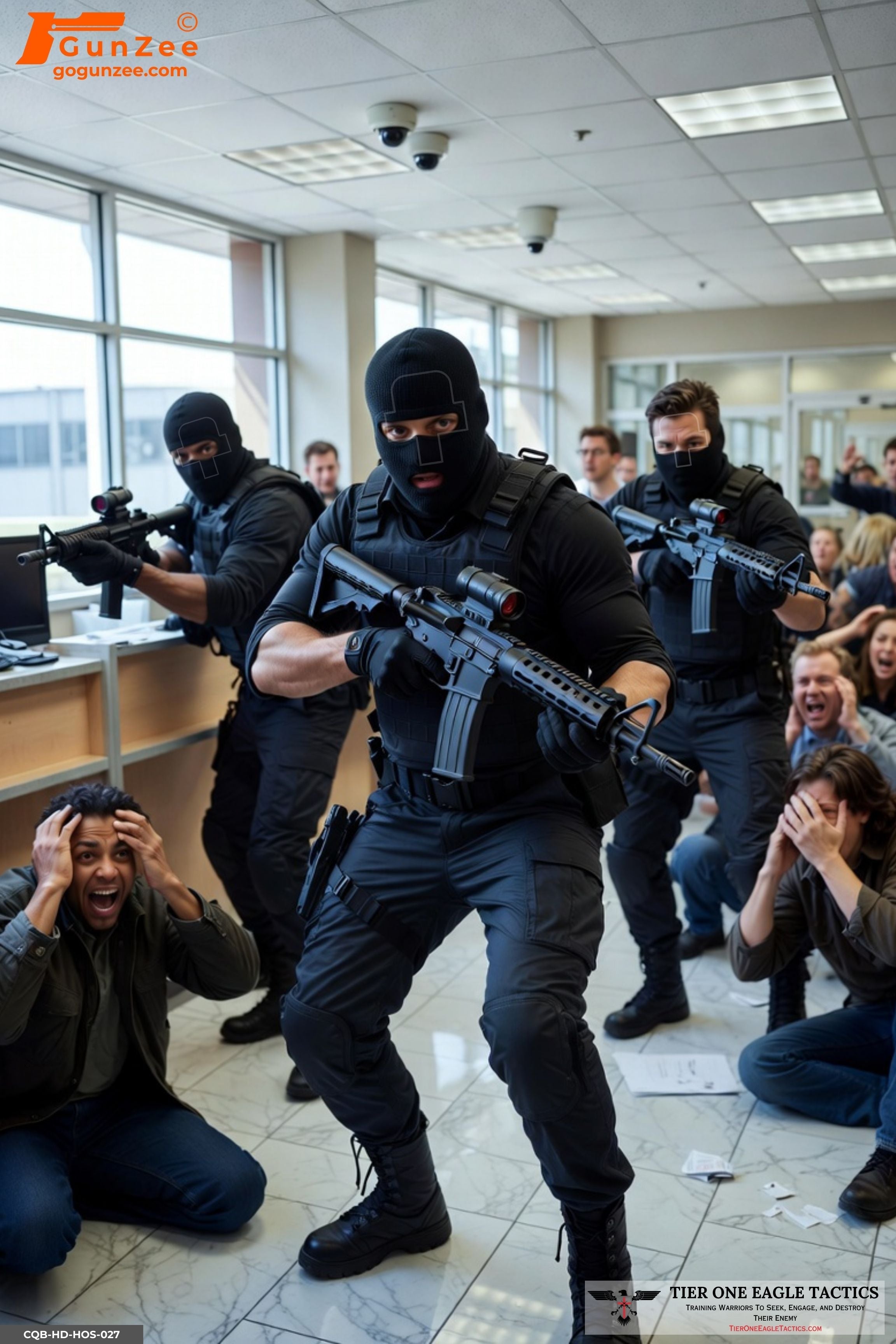
- Introduce the Hostage Shield only after the T-box hit rate on the Full-System target is consistent. T-box work under hostage geometry without prior T-box discipline produces wishful thinking and dangerous shots.
- Cover the specialty geometries — vehicle window, rifle threat, side-profile rifle — as the engagement contexts match your realistic risk profile.
The progression is the point: work the foundational target until it stabilizes, then layer complexity. Rotating all eight at random trains less than working one until it holds.
Where anatomical targets fit in the bigger rotation
Anatomy is the placement layer, not the whole stack. Fundamentals get built on simple aiming marks; placement gets built here; then judgment gets built on scenario targets where the decision comes before the shot — shoot / no-shoot drills and the scenario families in the full paper shooting targets collection. The target-type guide shows the complete rotation; the technique deep-dive on shifting between zones under pressure is in cardiac box vs. T-box.
Frequently asked questions
What is an anatomical shooting target?
A paper target that shows the human body's true stop zones — cardiac box, cranial T-box, pelvic girdle — at real size and real location on a life-size figure, so training builds hold-points that match actual anatomy instead of the center of a printed shape.
Are anatomical targets better than B-27 silhouettes?
They do different jobs. The B-27 produces standardized qualification scores; anatomical targets train where fight-stopping hits actually land. Ring rewards center-of-shape, which sits below and wider than the real cardiac box. Qualify on the silhouette, train placement on anatomy.
What size are GunZee anatomical targets?
24" × 36" — a life-size adult figure at true proportion. Zone size and location only train correct hold-points at real scale.
Which anatomical target should a beginner start with?
The Full-System Vital Zone trainer. It carries the complete zone map, so you learn where the zones are before moving to the threat-presentation targets that make you find them on a lifelike figure.
Do law enforcement agencies use anatomical targets?
Yes — anatomical placement is the standard second layer between ring qualification and scenario-based decision training. GunZee targets are used by 270+ agencies and training facilities.
Train it as a pack: placement work in volume: Anatomical 12×12 25-pack, Best Sellers 125-pack, 150-Target Training Pack — the 30 best sellers, 5 each.
Related reading
- Paper Shooting Targets: Material and Manufacturing Insights
- Self-Defense Shooting Targets: Train the Decision, Not Just the Shot
- Shooting Targets: Comprehensive Guide for Professionals
- Tactical Shooting Targets: What Counts, What Doesn’t, and How to Choose
- Carjacking Shooting Target — Buyer’s Guide
- CQB Targets — Buyer’s Guide
- Gun Targets: The Buyer’s Guide for Serious Training
- Browse: Home Defense, CQB & Hostage Scenario targets
- Browse: Hostage Rescue targets
- Hostage Scenarios: The Decision-Making Drills Most Shooters Skip
- Browse: Public & Everyday Self-Defense targets
- Browse: Vehicle & Barrier targets
-
Cardiac Box vs. T-Box: Shifting Aim Mid-Engagement
The technique layer: when and how to move between zones. -
Anatomical Targets vs. Bullseye Scoring
Why ring scores and fight-stopping placement disagree. -
Silhouette Shooting Targets: From B-27 to Life-Size Scenario Realism
The upgrade path from ring-scored outlines to realism.