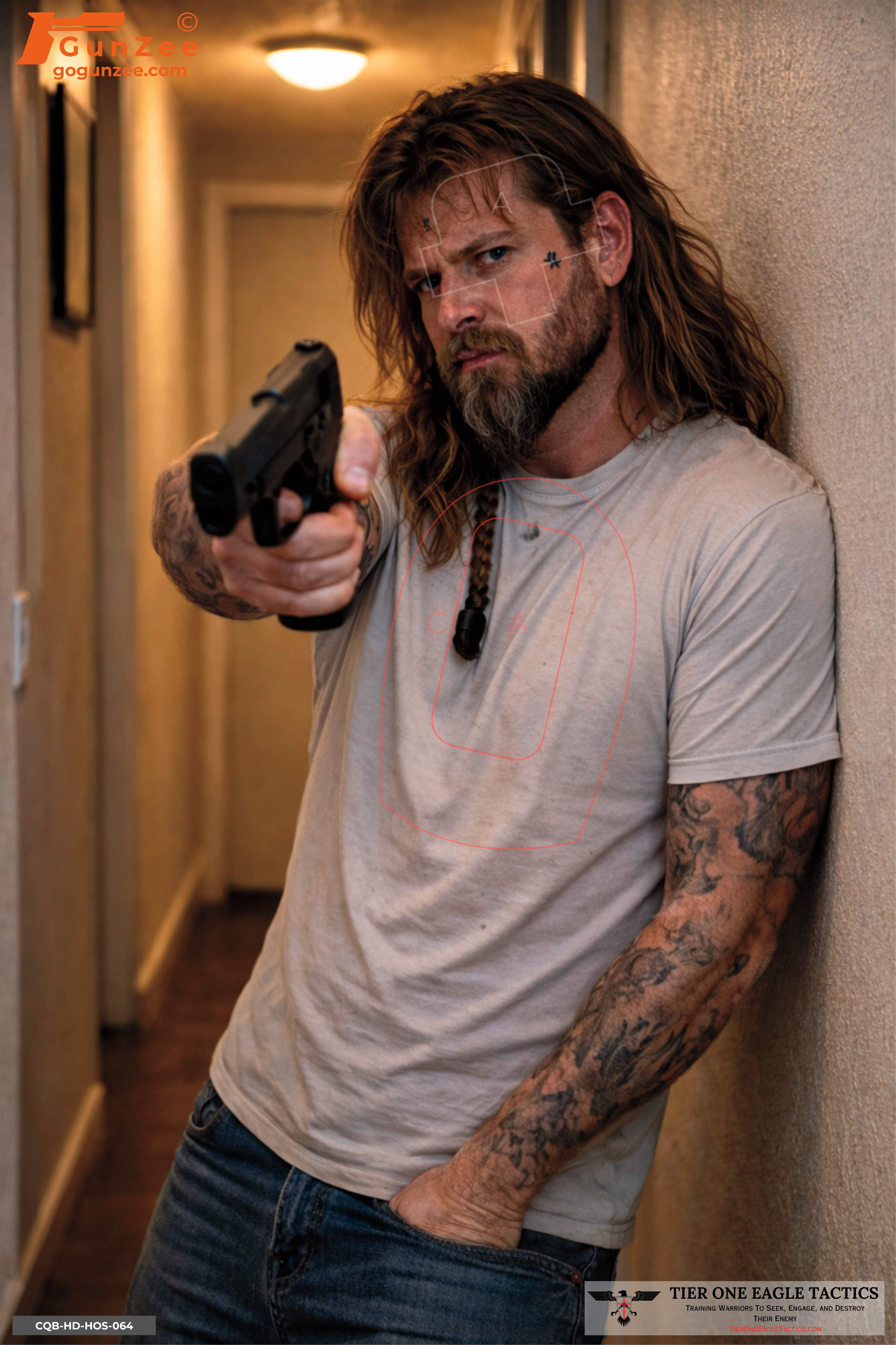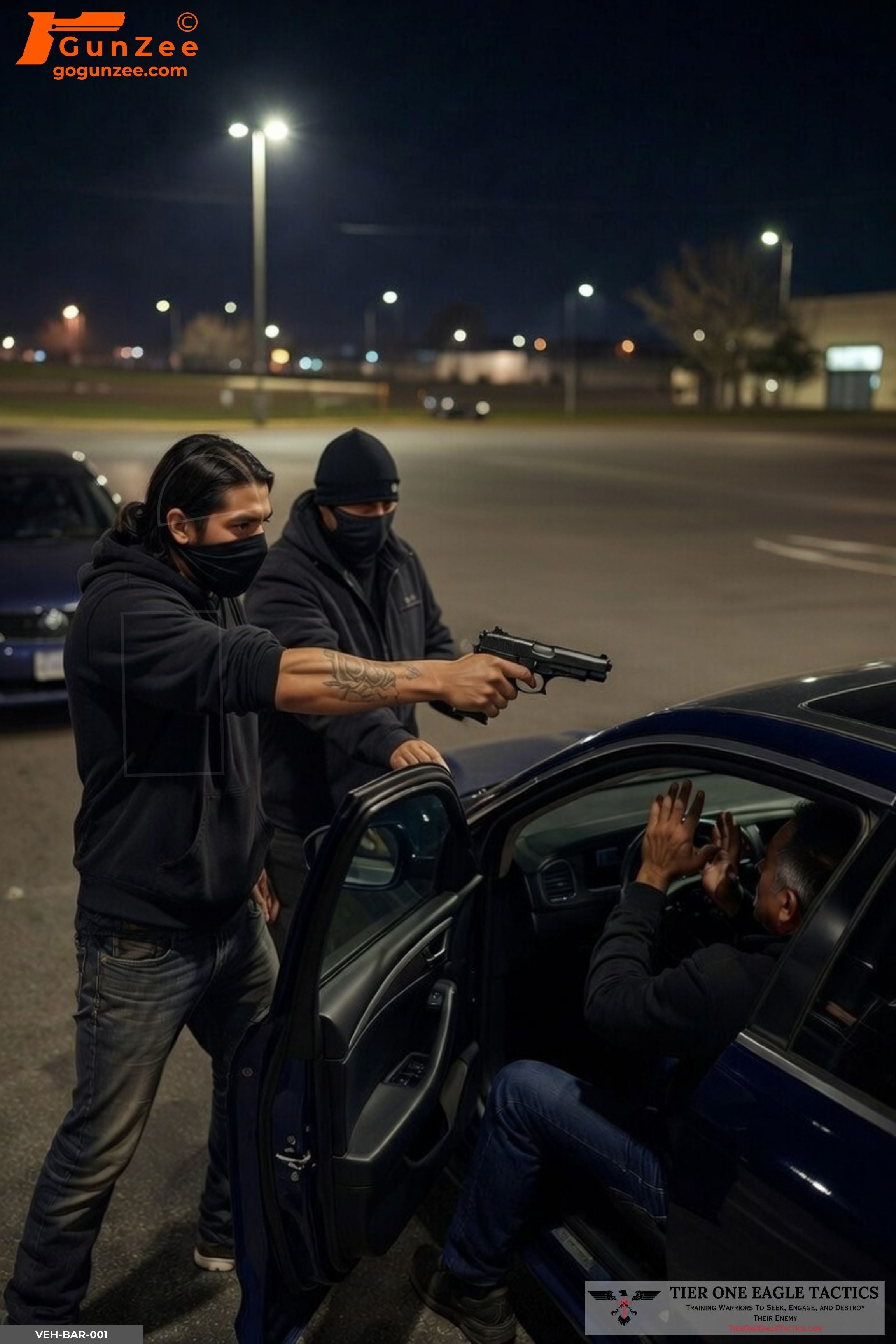
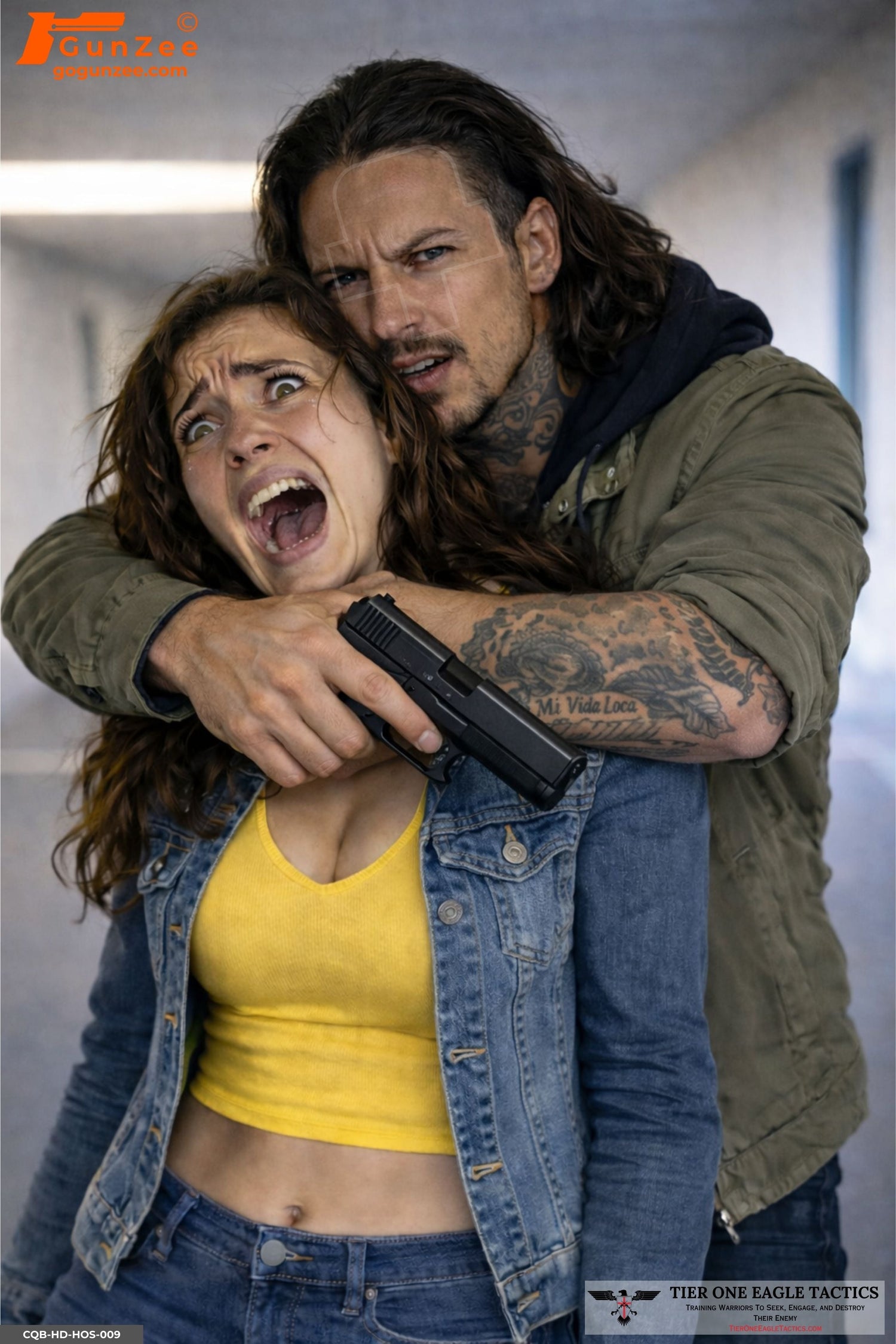
Hostage shooting targets exist for one reason: the encounters they simulate punish the wrong answer harder than any other defensive scenario. A miss into a non-combatant is a career-ending headline for an officer and a homicide charge for a civilian. A late shot is a dead hostage. There is no scoring zone wide enough to absorb either outcome — which is exactly why the targets that train for these encounters need to be picked carefully, not pulled off a clearance rack.
This is the buyer's guide for the targets that meet that bar. Read it before placing an order — for an academy, a department training cell, a contract instructor's curriculum, or a serious individual training cycle. The framework below covers what a hostage shooting target actually trains, what separates a serious one from a printed silhouette, and which specific targets in the GunZee line cover which engagement geometry.

What a hostage shooting target actually trains
A bullseye trains group size. A B-27 trains gross center-mass placement. A hostage shooting target trains a different skill stack entirely, and the four skills below are the ones that get a qualified shooter through a real hostage encounter.
Precision under stress
The viable hit zone on a hostage scenario is rarely the cardiac box — it's typically the cranial T-box or a narrow strip of upper neck and shoulder. That zone is three to four inches across, presented at distance, often partially occluded, and the shooter has to make the shot under elevated heart rate with the cognitive load of a hostage in the picture. Training this means working precision at speed against a target that punishes the imprecise shot with the worst possible visible consequence.
Friend-foe discrimination
Before the shot comes the question: is this a threat? What is in the hand — gun, phone, wallet, remote? Is the second figure a hostage or an accomplice? Photorealistic targets force the shooter to read the scene under time pressure rather than respond to a pre-labeled silhouette. This is the skill that fails first under stress and the one that decides whether the rounds go to the right person.
No-fail shot placement
On a standard silhouette, any hit inside the zone is a hit. On a hostage target, a miss of three inches in the wrong direction is a catastrophic failure. The mental model has to shift from "hit the zone" to "hit the only place a hit is acceptable." That shift only happens with repetition against targets where the cost of imprecision is visibly drawn into the scene.
Partial-cover targeting
Real hostage geometries don't present a clean target. The threat is using a person as cover. The viable shot is whatever the threat hasn't blocked — typically the head from the eyebrows up, or the strong-side shoulder, or a sliver of torso if the hostage is shorter. Training this is geometry work, not marksmanship work, and it can only be done against targets that show the partial-exposure picture accurately.
What separates a serious hostage target from a printed silhouette
Five criteria distinguish a target that builds skill from a target that wastes range time. Apply them when evaluating any hostage product — GunZee or otherwise.
1. Photorealistic depiction. A stylized illustration of a hostage scenario trains nothing. The shooter has to process the same visual information they would in a real encounter — facial expressions, hand position, weapon orientation, hostage proximity. Cartoon silhouettes short-circuit the discrimination loop that the drill is supposed to build.
2. Realistic hostage proximity. The hostage has to be where a hostage actually ends up — in front of the threat, in physical contact, often slightly shorter, with the threat's weapon visible around or above the hostage's body. Targets that draw the hostage and threat as two separate figures with daylight between them are not training hostage geometry; they're training a two-target drill.
3. A modified T-box outline. The cranial T-box (eyebrow line across, bridge of nose down to upper lip) is the textbook hostage shot — instantaneous incapacitation with no muscular response. A serious training target includes a subtle T-box outline that is invisible at training distance but available for post-drill analysis. Shooters and instructors walk to the target after the rep and assess placement against the actual incapacitation zone, not against a generic head silhouette.
4. Variety across weapon type and control position. A hostage encounter is not one scenario — it's a class of scenarios. Handgun to the head versus knife at the throat. Rear control versus front presentation. Adult hostage versus child shield. A single hostage target trains one geometry; a serious program needs five or more to defeat pattern-matching and build adaptable judgment.
5. Built-in ambiguity scenarios. Not every hostage target should resolve to "fire." The most valuable scenarios in the catalog are the shoot/no-shoot drills — the cellphone-versus-handgun ambiguity, the wallet in the hand, the hands-up compliance moment, the deceptive-familiarity encounter. These targets train restraint, which is the half of the decision that civilian and LE shooters get sued over.

The GunZee hostage shooting target line — by engagement geometry
The full hostage and CQB scenario library lives in the Home Defense, CQB & Hostage Scenarios collection. Browse it as a curriculum, not a catalog — each target is built to train a specific decision category, and a program that mixes categories beats one that drills a single scenario repeatedly.
For the room-clearing side of that library, the CQB targets guide covers selection by engagement geometry.
Foundational hostage geometry
The Rear Control Handgun Threat target is the starting point. Confirmed armed threat, hostage held in front, viable T-box exposed above the hostage's shoulder. This is the geometry every shooter needs to read fluently before layering complexity on top of it. The Armed Aggressor Forward Presentation target is the front-facing counterpart for situations where the threat is not behind the hostage but alongside.
Edged-weapon hostage scenarios
A knife changes the timeline. The Knife Threat Rear Control target and the Rear Knife Threat Distraction target cover the close-quarters edged-weapon picture, where the immediate threat is contact-distance steel and the discipline the target builds is keeping the gun out of the wrong shot under nervous-system pressure.
Shoot/no-shoot ambiguity
The highest-leverage targets in the catalog. The Cellphone Ambiguity Decision-Making target trains the most common real-world misidentification. The Wallet Ambiguity Rear Control target covers the second most common one. Every shooter who carries a firearm — qualified or otherwise — should burn reps on these before they ever need them.
Child-shield scenarios
The hardest targets in the line, and the ones a serious training program does not skip. The Child Shield Handgun Threat target trains the most consequential precision shot in the catalog. The Child Shield No-Weapon Confirmation target is the no-shoot pair — same picture, no weapon, restraint is the required answer.
Multi-actor coordination
Real encounters often involve more than one threat. The Two-Man Armed Threat Coordination target trains prioritization — which threat is engaged first, which is engaged second, and how the shooter sequences fire without losing the hostage in the picture.
Compliance and surrender
The decision that lives between "fire" and "holster." The Closet Ambush Hands-Up Compliance target trains the stop-hold-assess discipline that prevents the worst-case overshoot — firing on a subject who has already surrendered.

Recommended buying paths
Three configurations cover the spectrum from individual qualified shooter to instructor-grade department training cell.
The individual qualified shooter
Three targets. Start with the Rear Control Handgun Threat for foundational geometry. Add the Cellphone Ambiguity target for discrimination reps. Add the Two-Man Armed Threat Coordination target for sequencing. That's a full session of legitimate decision-making work for under a hundred dollars and a single range trip.
The specialized trainer or small department
The CQB Full Structure Rotation 295-Target Pack is the instructor-grade option. Every decision category covered, enough volume to rotate through a full curriculum without repeating, priced for the operational scale of a department training cycle or a contract instructor running multiple classes.
Agencies buying beyond hostage scenes can browse the full law enforcement training targets collection.
The agency or academy
The full Home Defense, CQB & Hostage Scenarios collection, ordered by category coverage. Pair the 295-target rotation pack with single-SKU repeats of the highest-use scenarios — typically the rear-control geometries and the shoot/no-shoot ambiguity targets — so range officers can drill specific decision categories on demand without burning through the rotation pack.
Why GunZee hostage targets
The training-target market is competitive, and the cheap option always exists. The case for choosing GunZee on this category specifically comes down to three things: photorealism that survives range distance, scenario depth across the decision spectrum (not just one-trick rear-control silhouettes), and the modified T-box analysis system that lets instructors run honest post-drill assessment. Print quality is range-grade — the threat cues read at training distance under realistic lighting, which matters more than catalog price when the goal is qualification-ready shooters.
The competitive bar in this market keeps rising. The right way to evaluate any hostage target — GunZee or any other vendor — is to walk the five criteria above and check the box on each one. A target that fails on photorealism, hostage proximity, T-box analysis, scenario variety, or ambiguity coverage is a target that won't survive the program it's bought for.
→ BROWSE THE HOSTAGE & CQB SCENARIOS COLLECTION
Frequently asked questions
What makes a hostage shooting target different from a regular silhouette?
A silhouette tests marksmanship against a fixed scoring zone. A hostage shooting target tests threat discrimination, partial-cover shot placement, and judgment under stress. The viable hit zone shrinks to inches of head and upper neck, the line between the muzzle and that zone runs across a non-combatant, and the shooter has to confirm threat status before committing. None of that exists on a B-27.
What should a law enforcement agency look for when buying hostage targets?
Five things: photorealistic threat depiction (no stylized silhouettes), realistic hostage proximity and partial-cover geometry, a modified T-box outline for post-drill analysis, a mix of weapon types and control positions (handgun, knife, rear control, front presentation, child shield), and ambiguity targets that include shoot/no-shoot scenarios. Print quality matters — the threat cues need to read at training distances under range lighting.
Which hostage shooting target is the right one to buy first?
The Rear Control Handgun Threat target is the foundational hostage geometry — confirmed armed threat, hostage in front, viable T-box exposed above the shoulder. It calibrates the shooter to the partial-cover shot picture before introducing decision complexity. After that, layer in an ambiguity target like the Cellphone Ambiguity Decision-Making target to add threat-confirmation reps.
Are these targets appropriate for civilian concealed-carry training?
Yes. Civilian armed self-defense is unforgiving of decision errors — there is no backup, no qualified-immunity buffer, and the legal aftermath is brutal. Hostage targets train the exact skills a CCW holder needs in a high-stakes ambiguous encounter: confirm before firing, manage partial-cover geometry, and disengage when the shot isn't there.
How many hostage targets does a training program actually need?
A serious program runs at least five distinct hostage scenarios — rear control handgun, knife control, forward armed presentation, ambiguity (cellphone or wallet), and child shield. Repeating the same target builds pattern-matching, which is the opposite of decision training. The CQB Full Structure Rotation 295-pack is built to defeat memorization by rotating scenarios.
For the broader case on hostage decision-making, see the pillar article Hostage Scenarios: The Decision-Making Drills Most Shooters Skip. For the placement foundation that hostage shooting demands, see Human Anatomy Shooting Targets: A Complete Training Guide.
Train it as a pack: the whole hostage progression comes as the Hostage Rescue 60-pack, Hostage Rescue 150-pack.
For the broader context on shooting-target selection, see our Shooting Targets Buyer's Guide — the comprehensive rundown of every category, use case, and buying consideration.
Browse the full GunZee paper shooting targets collection — 220+ designs across every category, from $1.95 each.
For the material and manufacturing side of paper targets (specs, print quality, cost tiers), see our Paper Shooting Targets: Trainer's Guide.
Go deeper: the hold/press call is the heart of hostage work — build it with shoot / no-shoot judgment drills and the shoot / no-shoot targets collection. The NKZ line carries hostage scenes with no printed zones, and the law enforcement training targets pillar covers where hostage blocks fit in a department program. Shop the full scene library in the hostage rescue targets collection.
Ready to train? The full hostage shooting targets collection — 62 rescue scenarios, $1.95 each, life-size 24" x 36" — is sorted by best-selling.