
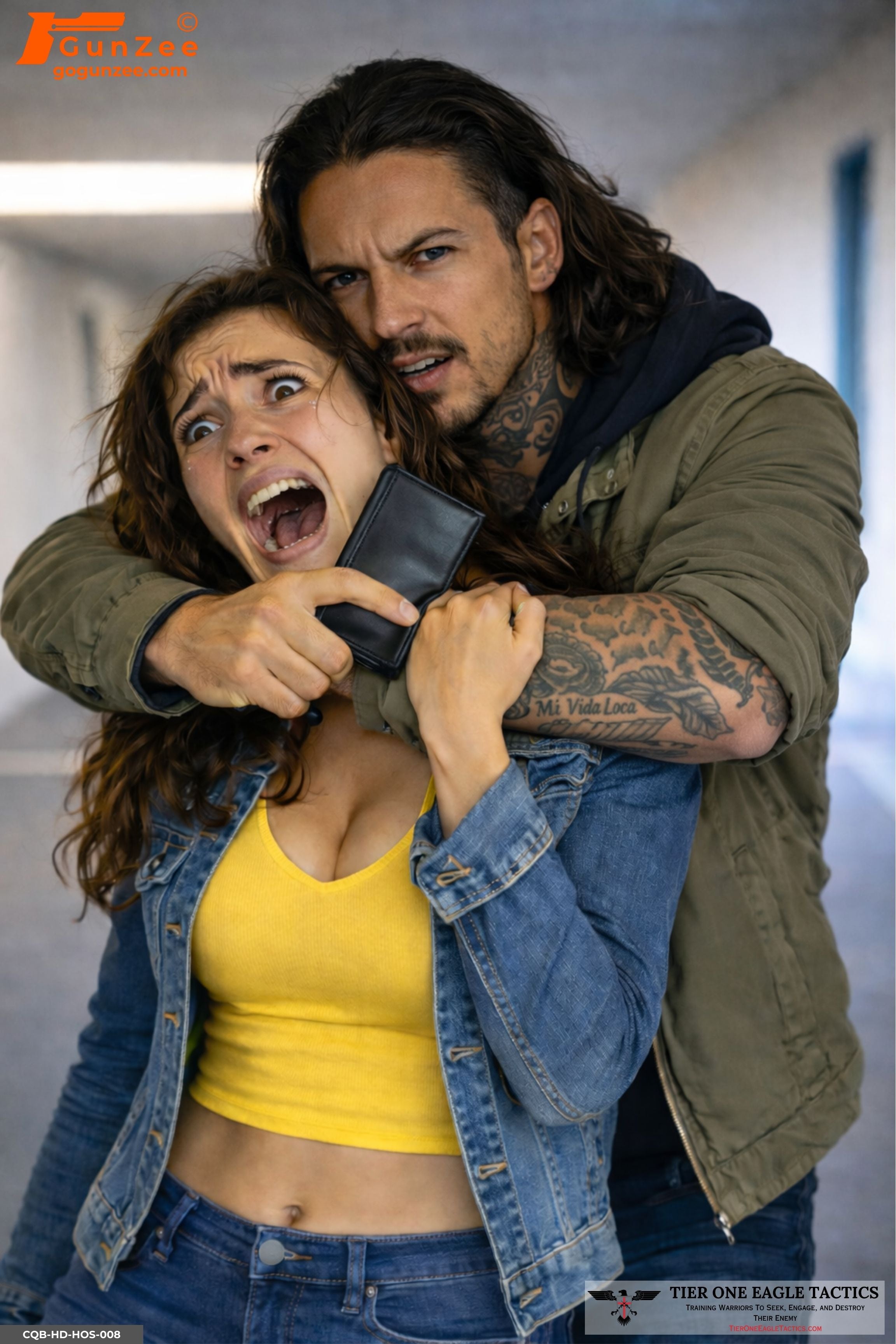
CQB Home Defense Hostage – Wallet Ambiguity Rear Control Shooting Target [24" x 36"]
each · sold in 5s · mix any designs
Price drops automatically: 50+ $1.85 · 100+ $1.76 · 250+ $1.66 · Up to 25% off at 999+ · Volume quote →
$40 order minimum for your whole cart, not each design. Mix any targets.
Quantity must be in increments of 5
CQB Home Defense Hostage – Wallet Ambiguity Rear Control Shooting Target
This CQB Home Defense Hostage Shooting Target depicts a high-stress close-quarters encounter where an aggressor controls a hostage from behind while pressing a small rectangular object against the victim’s neck. At first glance, the posture and proximity strongly suggest a lethal threat, yet the object itself is ambiguous and easily misidentified under stress.
The scene is intentionally intimate and chaotic. The hostage’s panic is overt and visceral, while the aggressor’s control is firm but not overtly violent. This combination creates a powerful cognitive trap where emotional urgency and visual proximity can override careful threat confirmation.
Training Purpose
Rear-control hostage scenarios are among the most dangerous decision-making problems in close-quarters defense. When the aggressor is physically entangled with the victim, even small misinterpretations can lead to irreversible outcomes.
This target is designed to train shooters to slow the decision cycle, confirm object type, and assess intent before committing to force. The apparent threat pressure is high, but the scenario reinforces that not every close-contact hostage situation presents a justified lethal response at the moment observed.
Skills Reinforced
- Object identification under extreme stress
- Threat confirmation versus assumption
- Managing emotional urgency in hostage scenarios
- Accountability when lethal force may be inappropriate
- Decision-making in physically entangled encounters
Why This Target Is Different
Many targets rely on obvious weapons to define threat legitimacy. This target removes that clarity. The aggressor’s grip, proximity, and dominance suggest danger, yet the object in hand does not automatically justify lethal force.
The hostage’s intense fear expression amplifies perceived urgency, increasing the likelihood of a rushed decision. This target rewards shooters who maintain visual discipline and decision restraint despite overwhelming emotional cues.
No Kill-Zone Overlays
This target intentionally includes no T-box, cardiac box, or other kill-zone outlines. The absence of overlays reinforces the core training objective: determining whether force is justified at all, rather than where to place a shot.
Post-exercise analysis focuses on threat assessment, object recognition, and timing rather than marksmanship outcomes.
Related training targets
Pair this target with related scenarios from across the GunZee catalog:
Public and everyday self-defense: Crowded Street Knife Threat Shooting Target, Convenience Store Counter Robbery – Close-Range Threat Recognition Shooting Target, Urban Street Two-Man Armed Confrontation Shooting Target
Home defense, CQB, and hostage: CQB Home Defense Hostage – Knife Threat Rear Control Shooting Target, CQB Home Defense Hostage – Rear Control Handgun Threat Shooting Target, CQB Home Defense Hostage – Cellphone Ambiguity Decision-Making Shooting Target, CQB Home Defense Hostage – Bedroom Doorway Cell Phone Ambiguity Shooting Target
Vehicle and barrier: Vehicle Barrier Windshield Assault Shooting Target, Vehicle Barrier Elderly Victim Carjacking Shooting Target, Vehicle Barrier Multi-Aggressor Carjacking Shooting Target
Anatomical: Anatomical Head-Out Vehicle Window Engagement Shooting Target, Anatomical Hostage Shield Vital Zone Shooting Target, Anatomical Semi-Profile Handgun Threat Vital Zone Shooting Target