Public Park Kneeling Hostage Execution Threat Shooting Target [24" x 36"]
each · sold in 5s · mix any designs
Price drops automatically: 50+ $1.85 · 100+ $1.76 · 250+ $1.66 · Up to 25% off at 999+ · Volume quote →
$40 order minimum for your whole cart, not each design. Mix any targets.
Quantity must be in increments of 5
Public Park Kneeling Hostage Execution Threat Shooting Target
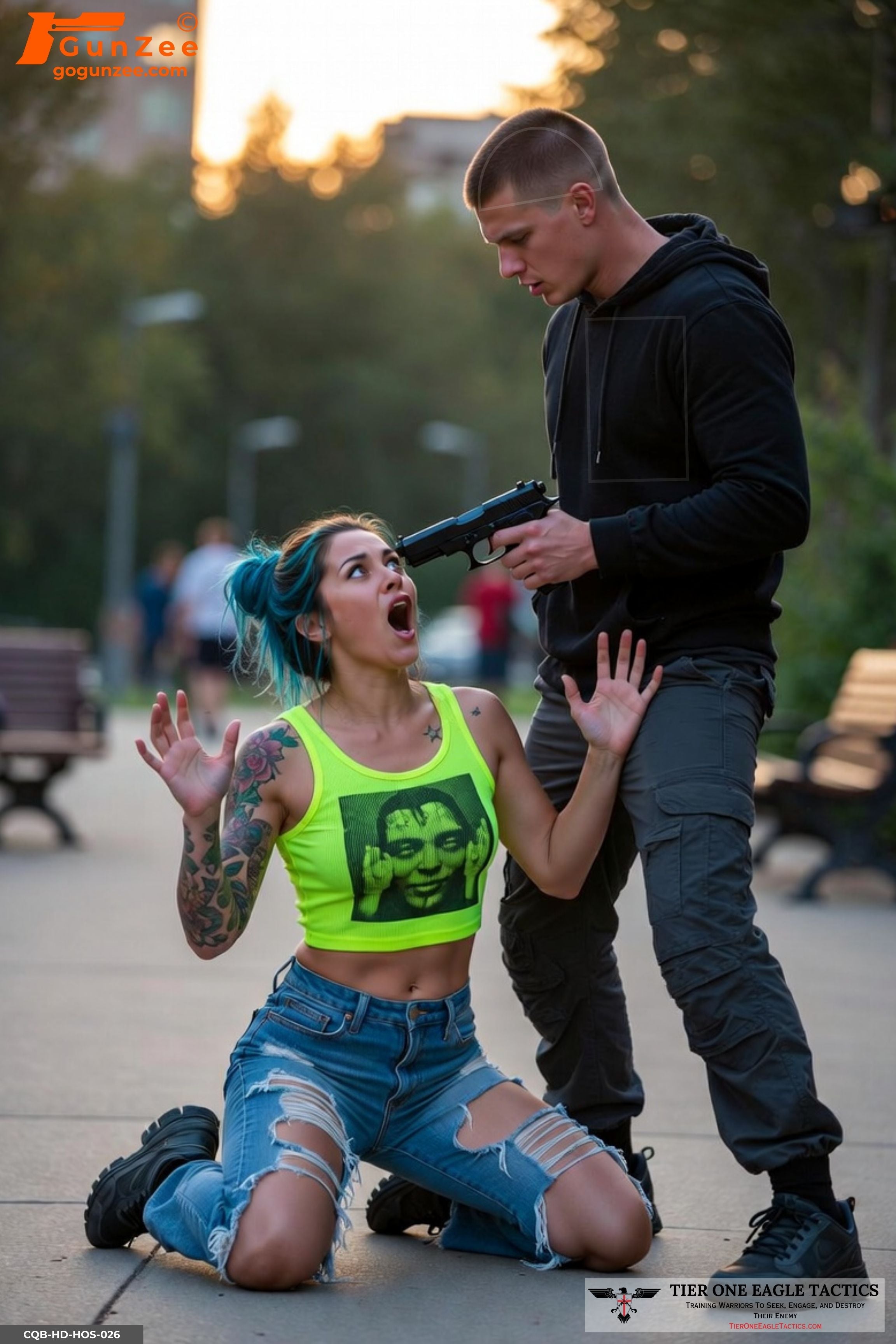
This target depicts an imminent execution-style hostage scenario unfolding in a public park environment. The aggressor stands over a kneeling female hostage, firearm positioned directly at her head, while bystanders and open space exist in the background. The contrast between the everyday public setting and the extreme violence of the encounter forces immediate threat recognition and disciplined decision-making.
The hostage’s posture, raised hands, and visible panic add emotional pressure, while the aggressor’s downward weapon angle and dominant stance create a narrow window for decisive intervention. This scenario reflects real-world events where hesitation or misjudgment carries irreversible consequences.
Training Purpose
Execution-style hostage threats represent one of the most time-critical and psychologically demanding situations a shooter may face. The shooter must instantly identify lethal intent, evaluate backdrop risk, and commit to a precise shot without the luxury of prolonged assessment.
This target trains rapid threat confirmation, precision shot placement, and emotional control under extreme stress while accounting for public-space accountability.
Skills Reinforced
- Immediate lethal intent recognition
- Precision engagement under time pressure
- Public-space accountability and backdrop awareness
- Emotional regulation during high-stress encounters
- Shot discipline with hostage proximity
- Threat prioritization when non-combatants are present
- Post-engagement decision review
Kill Zone Design
This target incorporates two defined incapacitation zones on the aggressor:
Cranial Kill Zone
A cranial kill zone is placed on the aggressor’s head to represent immediate neurological incapacitation. This zone reflects scenarios where instant threat stoppage is required to prevent execution.
Cardiac Kill Zone
A cardiac kill zone is included to represent a secondary incapacitation option when cranial engagement is not feasible. This zone supports evaluation of alternative shot placement under positional or environmental constraints.
Both zones are intentionally subtle and not designed as visual aiming references during engagement. They exist to support post-engagement analysis, shot accountability, and training evaluation.
Why This Target Is Different
This target removes ambiguity.
The aggressor’s intent is unmistakable.
The hostage is already compliant and vulnerable.
The environment introduces public-space consequences.
The window for action is extremely narrow.
Rather than testing hesitation, this target tests decisiveness, precision, and accountability when delay is no longer an option.
Related training targets
Pair this target with related scenarios from across the GunZee catalog:
Public and everyday self-defense: Nightclub Exit Hostage Crowd Crisis Shooting Target, Public Festival Armed Threat – Dense Crowd Gunman Scenario, Public Knife Assault Disarm – Close-Range Edged Weapon Encounter, Grocery Store Parking Lot Armed Approach – Public Threat Interception
Home defense, CQB, and hostage: CQB Home Defense Hostage – Child Shield No-Weapon Confirmation Shooting Target, Kitchen Interior Female With Glasses Ambiguous Threat Shooting Target, CQB Home Defense Hostage – Forward Weapon Presentation Shooting Target
Vehicle and barrier: Vehicle Barrier Closed-Door Armed Driver Shooting Target, Vehicle Barrier Armed Subject Exiting Vehicle Shooting Target, Vehicle Barrier Dual Gunmen Front-and-Rear Seat Engagement Shooting Target
Anatomical: Anatomical Head-Out Vehicle Window Engagement Shooting Target, Anatomical Rifle Threat Vital Zone Shooting Target, Anatomical Hostage Shield Vital Zone Shooting Target