Most defensive shooting curriculum is built around standing engagements at a square range. The vehicle problem is different in every meaningful way — the shooter is seated, restrained by a seat belt, looking through glass that distorts and deflects rounds, with sightlines blocked by pillars and mirrors, and an exit path that requires opening a door before any movement is possible. None of that is trained on a square range. All of it shows up in carjackings, road rage, and parking-lot ambushes.
Vehicle-as-cover and vehicle-as-concealment training closes that gap. The drills below cover the four scenarios that account for the majority of vehicle-related defensive engagements — carjacking at the driver's window, daylight intersection ambush, multi-aggressor approach, and rear-aspect parking-lot attack — plus the question every CCW holder should know the answer to: what parts of a car actually stop bullets.

Cover vs concealment — the part most shooters get wrong
A vehicle is mostly concealment, not cover. Cover stops bullets. Concealment hides the shooter but doesn't stop incoming rounds. The distinction matters because most CCW holders default to "use the car as cover" without knowing which parts of the car actually do anything.
What actually stops rounds (cover):
- The engine block — reliably stops most handgun and some rifle rounds
- Wheel hubs and wheel wells — solid metal mass
- The transmission tunnel (front of the floorpan) — variable, but often effective for handgun
What does NOT stop rounds (concealment only):
- Doors — modern car doors are thin steel + plastic. Pistol rounds pass through almost universally. Rifle rounds pass through everything.
- Glass — windshields deflect slightly but don't stop. Side windows shatter.
- Trunk — sheet metal + cardboard. No stopping power.
- Roof — same.
The practical implication: when a vehicle is the only available barrier, get to the engine block side, not the door side. Most shooters instinctively crouch behind the door — exactly the wrong position. Training the right reflex starts on paper and walkthrough drills before it ever matters live.
The four vehicle-defense scenarios that matter most
1. Carjacking at the driver's window
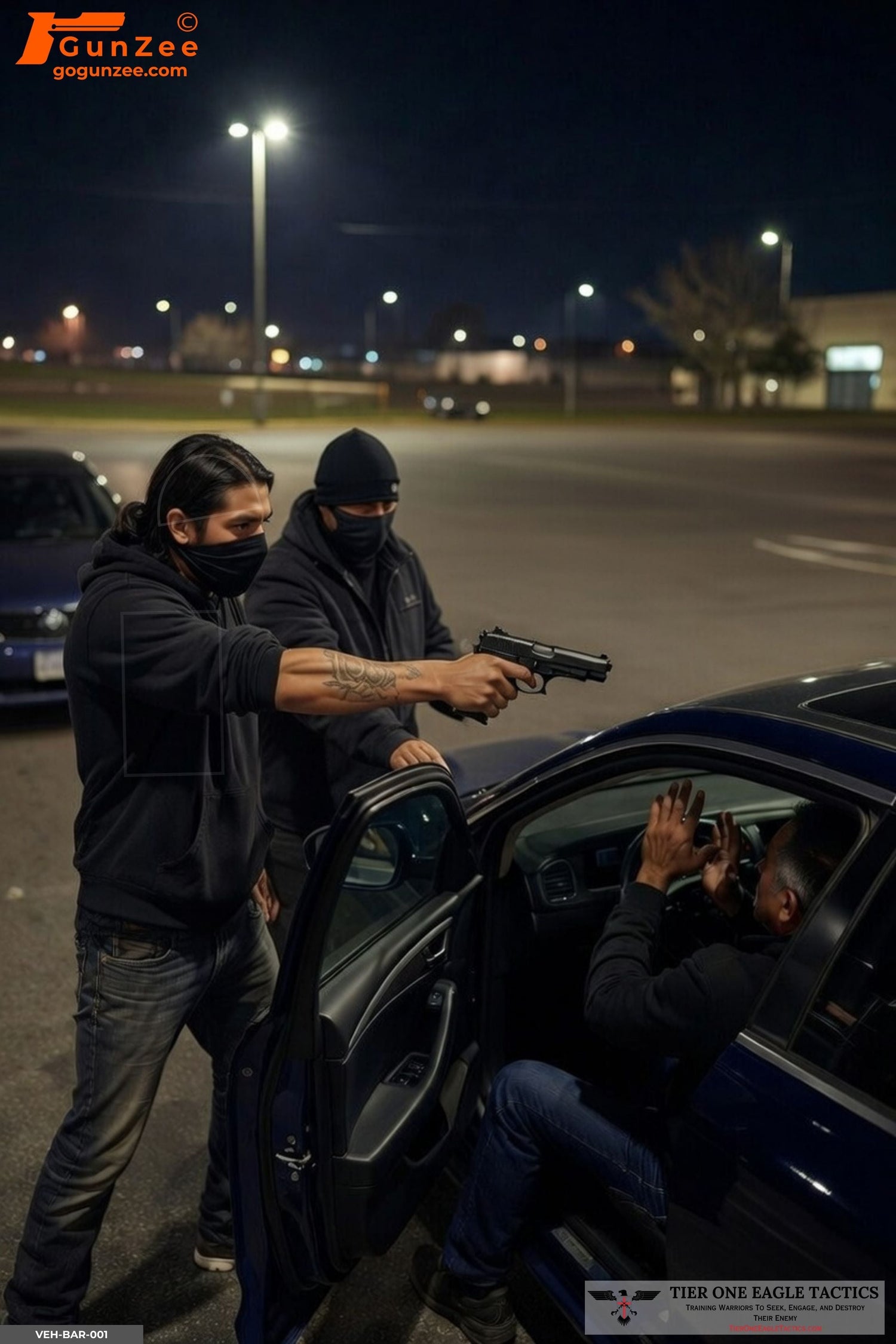
The most common vehicle-defense engagement type. An attacker approaches the closed driver's window with the vehicle stationary, often at an intersection or in a parking lot. The shooter is restrained by seat belt, sightlines are constrained by mirror and pillar, and the draw stroke must clear the steering wheel and possibly the seat belt. Most CCW carry positions don't accommodate a seated draw cleanly.
Train this on the vehicle barrier carjacking confrontation target at three to five yards with the shooter actually seated. The metric is time-to-first-good-hit from holstered, in a chair, with simulated seat belt restraint. Most shooters discover that their carry-position draw is dramatically slower seated than standing.
2. Daylight intersection ambush
Same physical setup as scenario 1 but with the threat presenting at distance — typically the next car over at a stoplight, or a pedestrian approaching from across the intersection. The shooter has time to read the situation, choose to drive away if the angle permits, or engage from inside the vehicle if not. The vehicle barrier daylight carjacking target covers this geometry. The decision tree includes "is driving away the answer" as a primary branch — sometimes the right move is the pedal, not the trigger.

3. Multi-aggressor approach
The carjacking scenario that argues for sequencing training. The vehicle barrier multi-aggressor carjacking target presents two or three attackers approaching from converging angles. The shooter has to prioritize — which one is closest to engagement range, which one is armed, which one represents the most immediate threat. From a seated position, with constrained sightlines, this is harder than the equivalent standing scenario.
The drill: read the scene from the seated position, verbalize the threat order out loud ("threat one driver side, threat two passenger side, primary engagement driver side"), then engage in sequence. The verbalization step is the discipline most shooters skip; it's also the one that makes the sequence executable under stress.
4. Elderly or vulnerable passenger
The most morally weighted scenario in the vehicle library. The vehicle barrier elderly victim carjacking target shows the carjacking scenario where the defender is also responsible for a passenger who cannot escape or move under their own power. This changes the decision tree dramatically — driving away may not be an option, engagement becomes more likely, and the shot accountability problem expands because the passenger's body is in the engagement zone.
This scenario is worth training even for shooters who don't normally carry passengers in this position. The mental rep matters — defensive engagement decisions made for a spouse, child, or aging parent in the passenger seat are different from those made alone.

The vehicle-adjacent threats most shooters forget
Vehicle defense isn't just about engagements inside the car. Two adjacent scenarios show up frequently enough to deserve dedicated training time:
The ATM ambush. The shooter is at the ATM, attention split between the screen and surroundings, with the car parked a few yards away as the planned escape. The ATM rear-aspect ambush target shows the geometry of a threat approaching from the blind side, with the car as a potential exit. The decision tree includes "engage from behind the engine block" as a viable answer.
The parking lot approach. The shooter is walking to or from the car with hands occupied — groceries, child carrier, packages. The grocery store parking lot armed approach target shows the threat closing while the shooter's hands are tied up. The training value is the realistic constraint: most CCW holders don't train the draw from a hands-full position. Vehicle-defense training should include it.
The shot from inside the vehicle — what actually works
Engaging from inside a car has constraints the square range never trains:
Glass deflection. Rounds fired through a windshield deflect slightly downward; through a side window, slightly outward. The deflection is small at close range but compounds with distance. Most defensive engagements from inside a vehicle happen at under five yards, so deflection is manageable — but the shooter needs to know it exists.
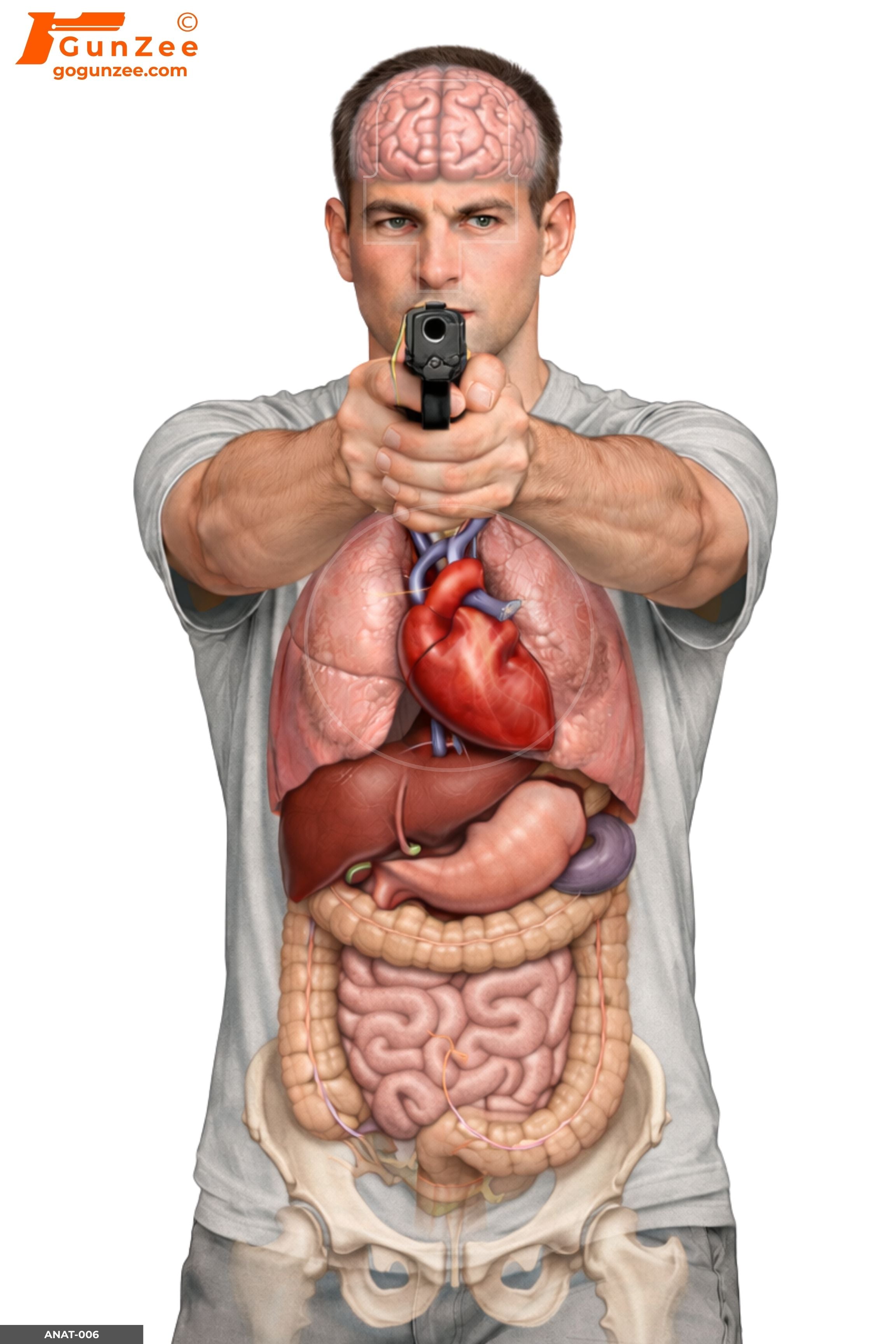
Seat belt. The seat belt blocks the draw stroke for most carry positions. The fastest reliable carry-position draw from seated, belted, is appendix inside-the-waistband (AIWB), where the gun is positioned in the gap below the seat belt buckle. Strong-side hip and shoulder rigs both fight the belt. The anatomical head-out vehicle window engagement target trains the placement against a threat at the window where engagement is most likely.
Empty-hand option. Sometimes the right move is to drop the gun, drive, and re-engage if necessary at the next opportunity. The shooter who treats every engagement as "shoot from here" is missing the option set. Train the decision tree, not just the trigger.
Where to start
For a CCW holder building their first vehicle-defense training cycle, three targets cover the foundation scenarios:
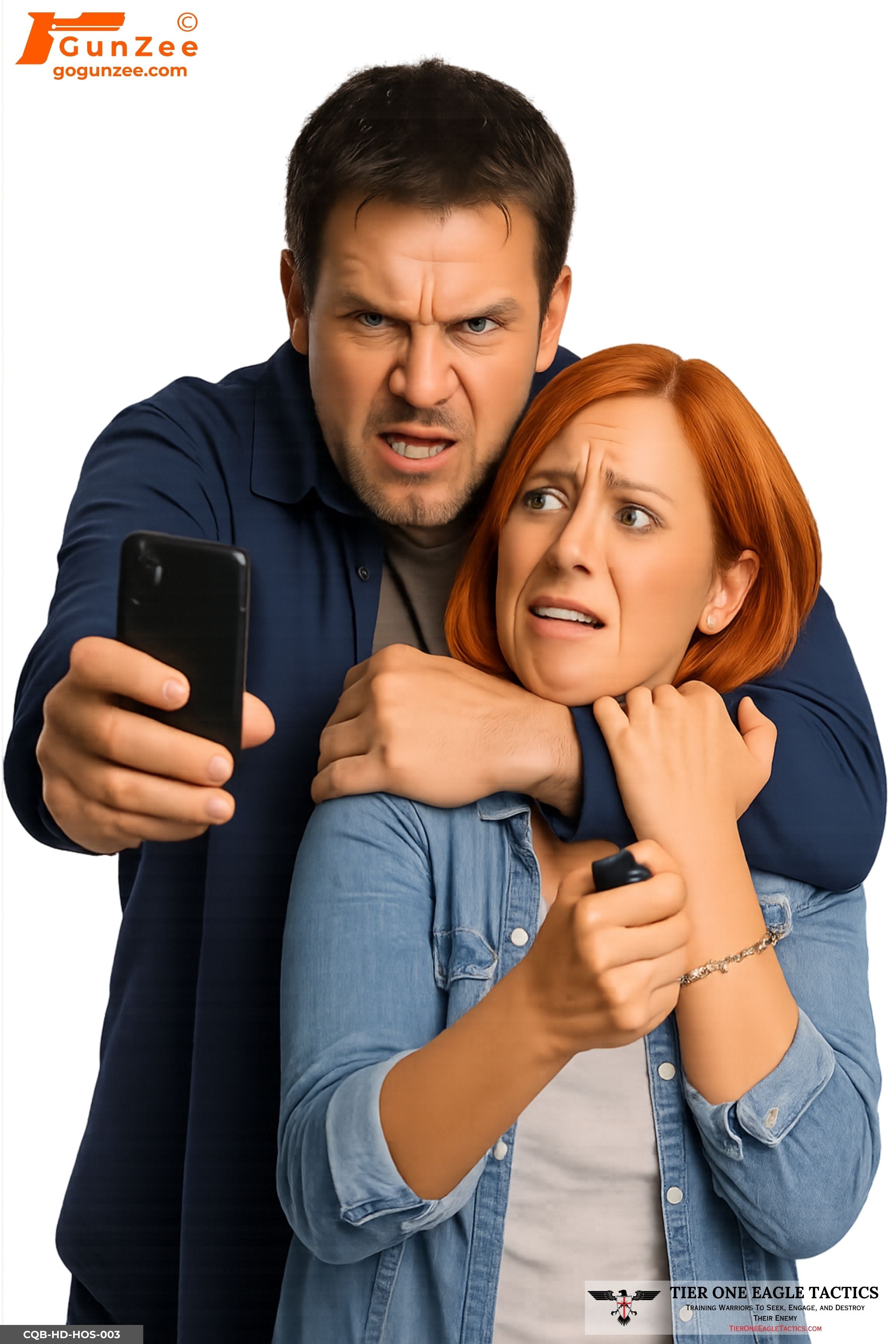
- The carjacking confrontation target — the most common vehicle engagement type, at the driver's window with a single attacker.
- The multi-aggressor carjacking target — the prioritization rep, two or three converging threats.
- The anatomical head-out vehicle window target — for placement discipline against the realistic engagement angle.
Pair these with two range sessions per month, run from a seated position with simulated seat belt restraint. A folding chair on the firing line is enough to approximate the constraint. The full vehicle library lives in the Vehicle & Barrier collection, and the other half of the problem, where the threat is the one inside the car, is covered in the vehicle barrier shooting targets guide, with adjacent parking-lot and ATM scenarios in the Public & Everyday Self-Defense collection.
→ BROWSE THE VEHICLE & BARRIER COLLECTION
Frequently asked questions
What is vehicle-as-cover training?
Vehicle-as-cover training prepares shooters to defend in and around vehicles. The constraints — seat belt, glass, pillars, exit path — are different from standing engagements and require dedicated drilling. The training also covers which parts of the car actually stop bullets (engine block, wheels) versus parts that only conceal (doors, glass, trunk).
Are car doors bullet-proof?
No. Modern car doors are thin steel and plastic — most pistol rounds pass through, and rifle rounds pass through almost everything. Treat doors as concealment, not cover. The engine block and wheel hubs are the only reliable cover on a typical passenger vehicle.
What's the best carry position for vehicle defense?
Appendix inside-the-waistband (AIWB) accommodates a seated, seat-belted draw better than strong-side hip or shoulder rigs. The seat belt buckle gap leaves AIWB position accessible; other positions fight the belt. Shooters who carry differently should at least know how much slower their draw becomes from a seated position.
Should I shoot through glass?
If the alternative is taking a round, yes. Rounds fired through windshields deflect slightly downward; through side windows, slightly outward. The deflection is manageable at close engagement distances (under five yards) but compounds at distance. Train the shot at the distances most engagements actually happen.
What's the right answer for carjacking — fight or drive?
Drive when possible. Engagement is the answer when driving isn't an option — boxed in, the attacker is already inside the engagement window, or the passenger cannot survive separation. The decision tree should include both branches; default-to-engagement is the same failure mode as default-to-comply.
How does vehicle defense training translate to parking lot scenarios?
The geometry overlaps. ATM ambushes, grocery-lot approaches, and parking-garage encounters share the constraint of a vehicle nearby as a potential cover position. Training the engine-block-side-of-the-car reflex applies to all of them. Pair vehicle-barrier targets with the parking-lot and ATM scenarios in the Public & Everyday Self-Defense collection.
Should rifle shooters train vehicle defense differently?
The doctrine is similar but the cover question changes. Most parts of a passenger vehicle stop handgun rounds inconsistently and rifle rounds not at all. Rifle threats inside a vehicle environment require either getting behind the engine block or putting more distance and barriers between the shooter and threat. The engagement equation favors movement over standing engagement when rifles are in play.
Go deeper: add the decision layer with shoot / no-shoot judgment drills, see where vehicle work fits in the target-type rotation, and browse the full collection of paper targets for shooting.