Force-on-force training is the closest civilian shooters can get to a real engagement without bullets in the air. Live role-players, marker rounds, scripted scenarios — it builds skills that no static target can. It also costs hundreds of dollars per session, requires booking against limited facility availability, and demands a training partner with comparable commitment. Most CCW holders run force-on-force once or twice a year, if ever.
The alternative is not "no force-on-force prep." It is a structured at-home methodology that builds the visual processing, decision tempo, and verbalization habits force-on-force tests — without the role-player. Done right, it preserves 80% of the cognitive value of formal FoF and turns the actual FoF day into a calibration check rather than a learning event.
The methodology below is the at-home FoF prep curriculum any CCW holder can run on their own range time. Built around photorealistic paper scenario targets, dry-fire integration, and a structured rep-and-debrief discipline.

What force-on-force trains that paper targets normally don't
Three specific skills:
Decision tempo under role-player pressure. A live opponent moves, reacts, hesitates, advances. The shooter has to decide on a moving variable rather than a static one. Paper can't move — but a properly structured drill can simulate the decision pressure by compressing the read window and adding tempo discipline (more on this below).
Verbalization under stress. Force-on-force scenarios punish shooters who freeze verbally. The drill builds the muscle of speaking commands ("show me your hands," "drop the weapon") and articulating threat reads aloud. This is fully trainable on paper.
Post-shooting actions. Holster, scan, call for help, render aid if appropriate. FoF debriefs catch shooters who forget the after-action sequence. This is also fully trainable on paper with the right discipline.
One thing paper can't replicate: the genuine emotional response to a moving human opponent. That gap closes only with real FoF. But the cognitive layer underneath — the assessment, decision, and articulation — develops on paper at a fraction of the cost.
The five-step at-home FoF preparation methodology
Step 1: Build a varied target rotation
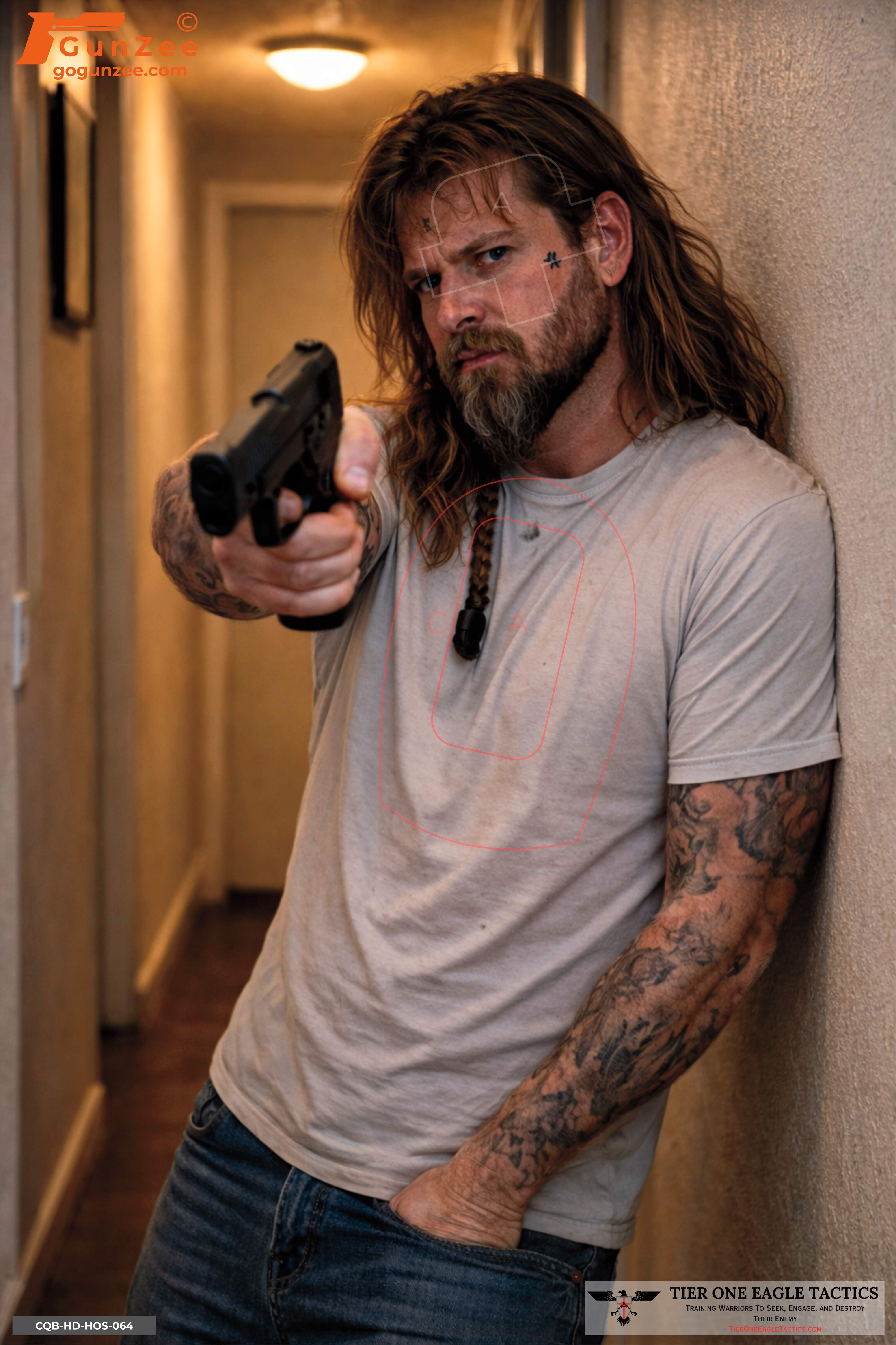
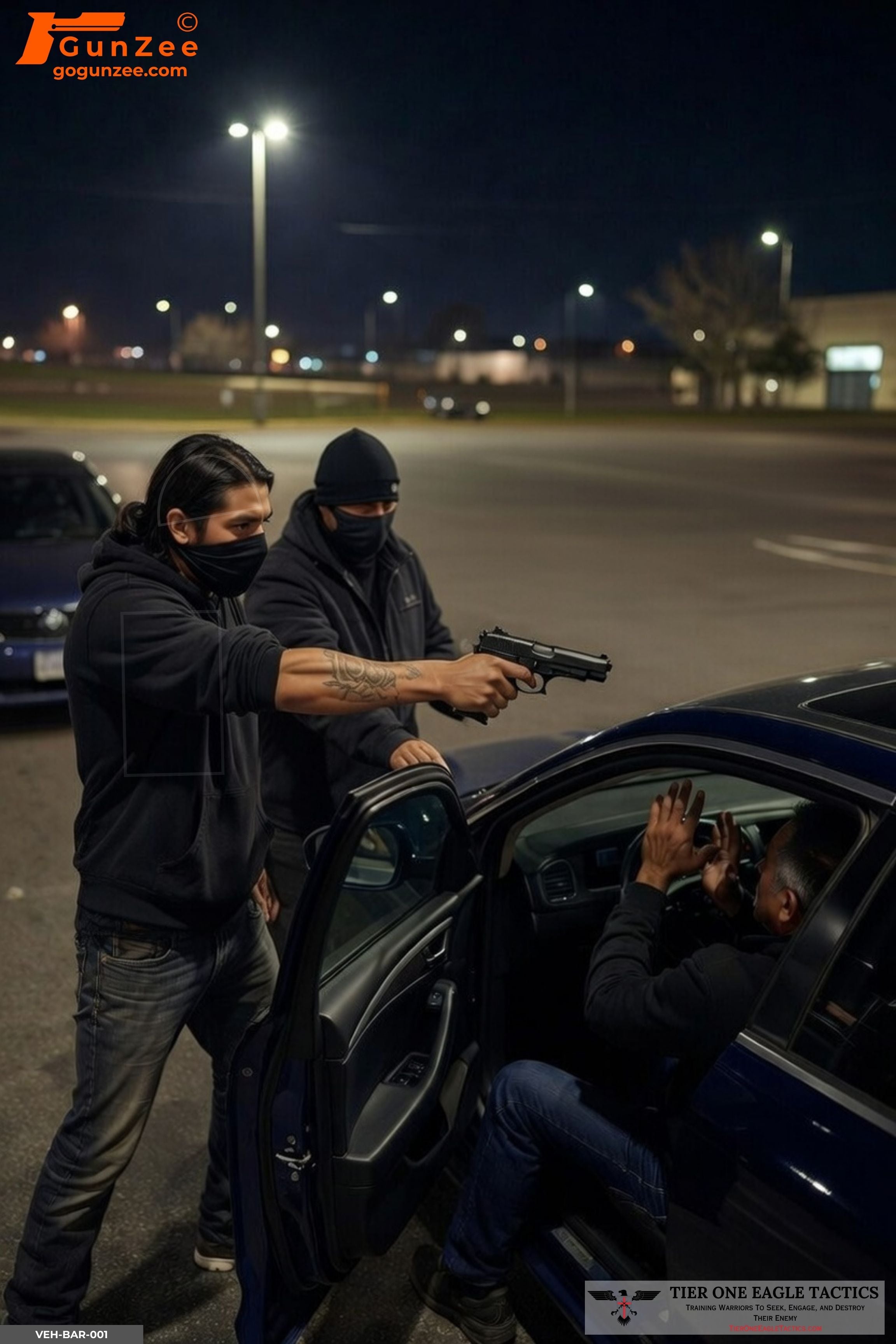
FoF day puts random scenarios in front of the shooter. At-home prep should do the same. Stage five to eight scenario targets at the bench before the session starts, in a randomized order the shooter doesn't pre-read. The session runs through the stack one target at a time. The CQB Full Structure Rotation 295-pack is the most efficient way to get this variety — it covers home-defense, hostage, and ambiguity scenarios across enough variants to run multi-month rotations without repeating.
The variety matters. Same target run dozens of times builds pattern-matching, which defeats the purpose. FoF day will not show the same scenario twice; at-home prep shouldn't either.
Step 2: Compress the read window with a count-and-engage drill
FoF compresses decision time because the role-player keeps moving. At-home, simulate the compression with a verbal three-count. The shooter approaches the firing line, sees the target only after a "go" call from a partner or an audible timer, and has three seconds to read, verbalize, and decide. At three seconds, they either engage or call "no shoot" out loud. The metric is correct-decision rate, not group size.
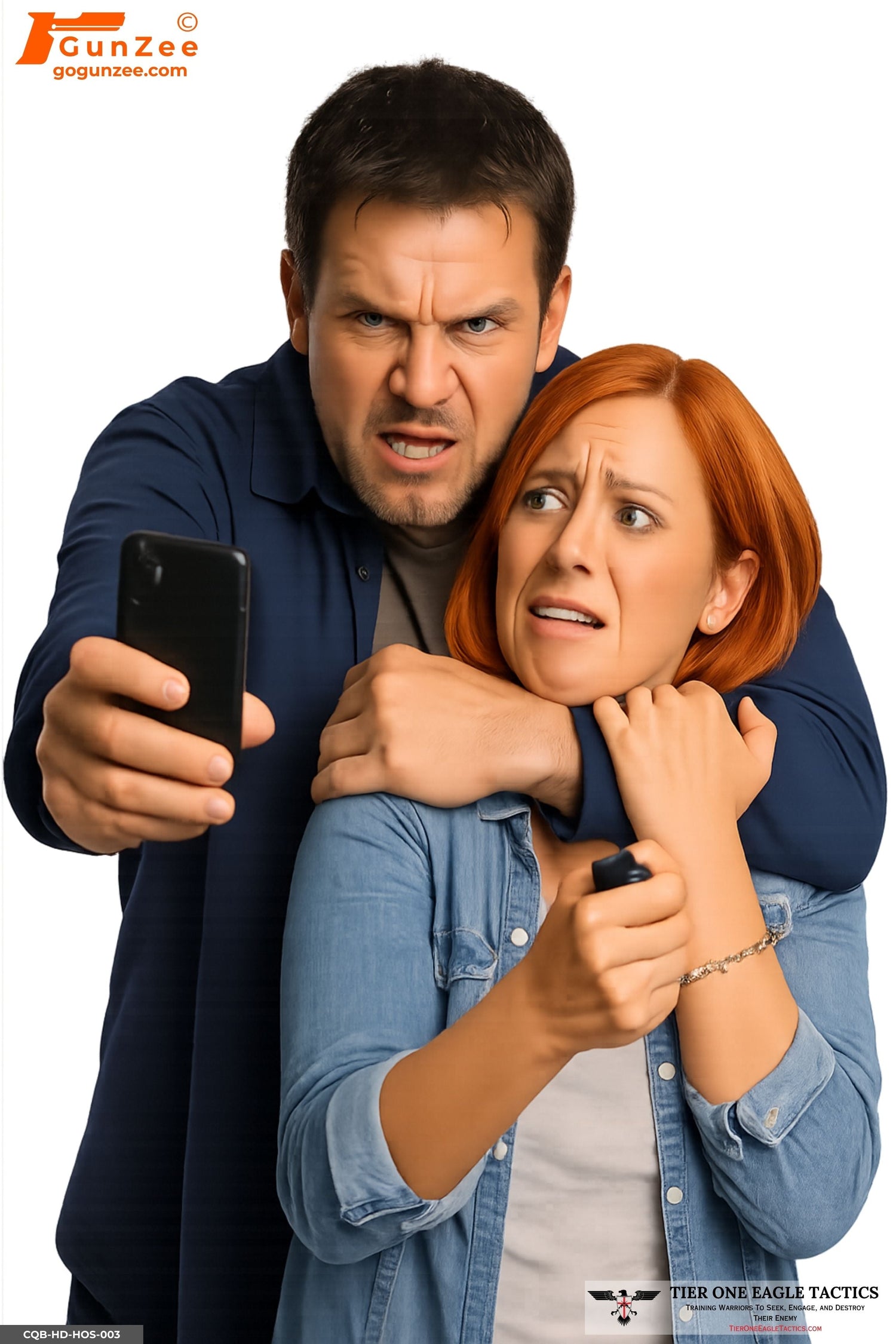
Mix in cellphone ambiguity targets randomly. The shooter doesn't know whether the next target is "shoot" or "no shoot" until the three-count starts. The whole training value lives in that uncertainty.

Step 3: Train verbalization out loud on every rep
The hardest habit to build in at-home prep is talking. Most shooters run drills silently. Force-on-force will expose this immediately — the shooter who can't verbalize "armed threat, rear control" under stress isn't going to verbalize "show me your hands" either.
Fix it on paper. Every rep, out loud, every time: identify the threat, state the shot opportunity, state the action ("engaging cardiac box" or "no shoot — empty hands"). The drill feels uncomfortable for the first few sessions. That's the point — FoF will feel exactly as uncomfortable until the muscle is built.
Step 4: Practice post-shooting actions deliberately
After every engagement rep, the shooter runs through the full after-action sequence: scan left and right, holster (if appropriate), call "stop the threat" out loud, identify cover position, simulate calling for help. FoF instructors universally report that students forget this sequence the first time it matters. Building the rep at home turns it into reflex.
This step is where home defenders separate from competitive shooters. The competition stage ends when the buzzer sounds. The defensive engagement doesn't.
Step 5: Add anatomical placement to every engagement
FoF role-players wear marker armor with high-fidelity vital zones. Engagement scoring at quality FoF schools is anatomically specific — cardiac box hits, T-box hits, peripheral hits — not just "did the round land." At-home prep should match. Stage one anatomical full-system target as the foundation rep at the start of each session, then transition to scenario targets while holding the anatomical placement discipline.
This is what most at-home shooters miss. Scenario reps without anatomical discipline produce hits that "feel good" in the drill and miss the cardiac box by two inches. FoF will catch that gap. At-home prep should close it first.

Sample weekly cadence
For a CCW holder building toward a force-on-force session three to six months out:
- Week 1-4 (foundation): Two range sessions per week. Each session opens with five reps on an anatomical target for placement discipline. The remainder runs three to five scenario targets at the count-and-engage tempo with verbalization on every rep.
- Week 5-8 (variety): Same cadence, but introduce ambiguity targets (cellphone, hands-up compliance) at random. Run the count-and-engage with no advance knowledge of which target the shooter will face.
- Week 9-12 (integration): Add the post-shooting sequence to every rep. Verbalize, scan, holster, simulate the call for help. By week 12, the sequence should be automatic.
- FoF day: Treated as calibration. The shooter walks in with the cognitive layer already built. The role-player session reveals which habits hold under live stress and which break.
Apartment vs single-family adaptation
Force-on-force schools typically run scenarios in shoothouse environments — open rooms with movable walls. For shooters defending apartments, this geometry doesn't match the actual space. Substitute the apartment hostage close-quarters control target for the doorway and entry reps. The compressed engagement distances translate directly to apartment hallway and entryway geometry.
For single-family defenders, the standard CQB-pack scenarios cover the geometry well. The CQB targets guide explains how to pick among them. The full Home Defense, CQB & Hostage Scenarios collection has both apartment-tight and single-family-spread variants.
Where to start
For a CCW holder building their first FoF prep cycle, three categories of target cover the foundation:
- One anatomical foundation target — the anatomical full-system vital zone target — staged at the start of every session for placement discipline.
- Three to five scenario variants from the CQB & Home Defense collection — rotated randomly across sessions.
- One or two ambiguity targets — cellphone ambiguity at a minimum — for the no-shoot rep.
For instructors or training groups building a full FoF prep curriculum, the CQB Full Structure Rotation 295-pack provides enough variety for a multi-month rotation across multiple students.
→ BROWSE THE CQB & HOSTAGE SCENARIO LIBRARY
Frequently asked questions
What is force-on-force training?
Force-on-force training uses non-lethal marker rounds and live role-players to simulate defensive engagements under live stress. It is the closest civilian training gets to a real engagement without bullets in the air. Sessions typically run at dedicated facilities with instructors and scripted scenarios.
Can at-home training replace force-on-force?
No — but it can replace 80% of the cognitive prep work. The emotional response to a live moving opponent only comes from real FoF. Everything else — assessment, decision tempo, verbalization, post-shooting actions — develops on paper if the methodology is right.
What targets are best for force-on-force prep?
Photorealistic scenario targets that show threats in real environments — doorways, hallways, public spaces, hostage geometry. Generic silhouettes don't trigger the same processing. The CQB Full Structure Rotation pack or curated selections from the CQB & Home Defense collection are the foundation.
How long should a force-on-force prep cycle run?
Three to six months of consistent weekly prep before the first FoF session produces the best calibration result. Shorter cycles leave the cognitive layer incomplete; the FoF session becomes a learning event rather than a calibration check, which is more expensive and less efficient.
Do I need a training partner for at-home FoF prep?
Helpful but not required. A partner enables the "go" call that compresses the read window and the post-rep debrief. Solo shooters can use an audible timer for the read window and self-debrief out loud after each rep. The methodology works either way.
How much does this cost compared to formal force-on-force?
A foundation kit — anatomical target, three to five scenario targets, ambiguity targets — costs under $100. A multi-month prep cycle adds maybe another $50-100 in targets. A formal FoF session at a quality school runs $300-800 per day plus travel. The at-home methodology is the prep that makes the formal session worth what it costs.
Is verbalization really that important?
Yes — and it's the habit most often missing from at-home training. Defensive engagements require verbal commands ("drop the weapon," "show me your hands") and articulated decisions. Silent shooters fail the verbal layer the first time it matters. Building verbalization on paper turns it into a reflex by the time live stress arrives.
Related reading
Related reading in the Range Manual
-
Use-of-Force Decision Making: When You Should and Should Not Engage
The legal and ethical doctrine underneath every force-on-force decision rep. -
CQB Training Targets — Buyer's Guide for Professional Trainers
Room-clearing target selection and drill rotation for the structure-work half of FoF prep. -
Human Anatomy Shooting Targets: A Complete Training Guide
The placement standard your decision drills should be scored against. -
Gun Targets — The Buyer's Guide for Serious Training
Comparative guide to every target type used in a full FoF preparation cycle.
Go deeper: pressure-test your judgment with shoot / no-shoot decision drills, run threat / no-threat reps on NKZ decision targets, and browse the full paper shooting targets collection.