Read the Privacy Policy
Quantity must be in increments of 5
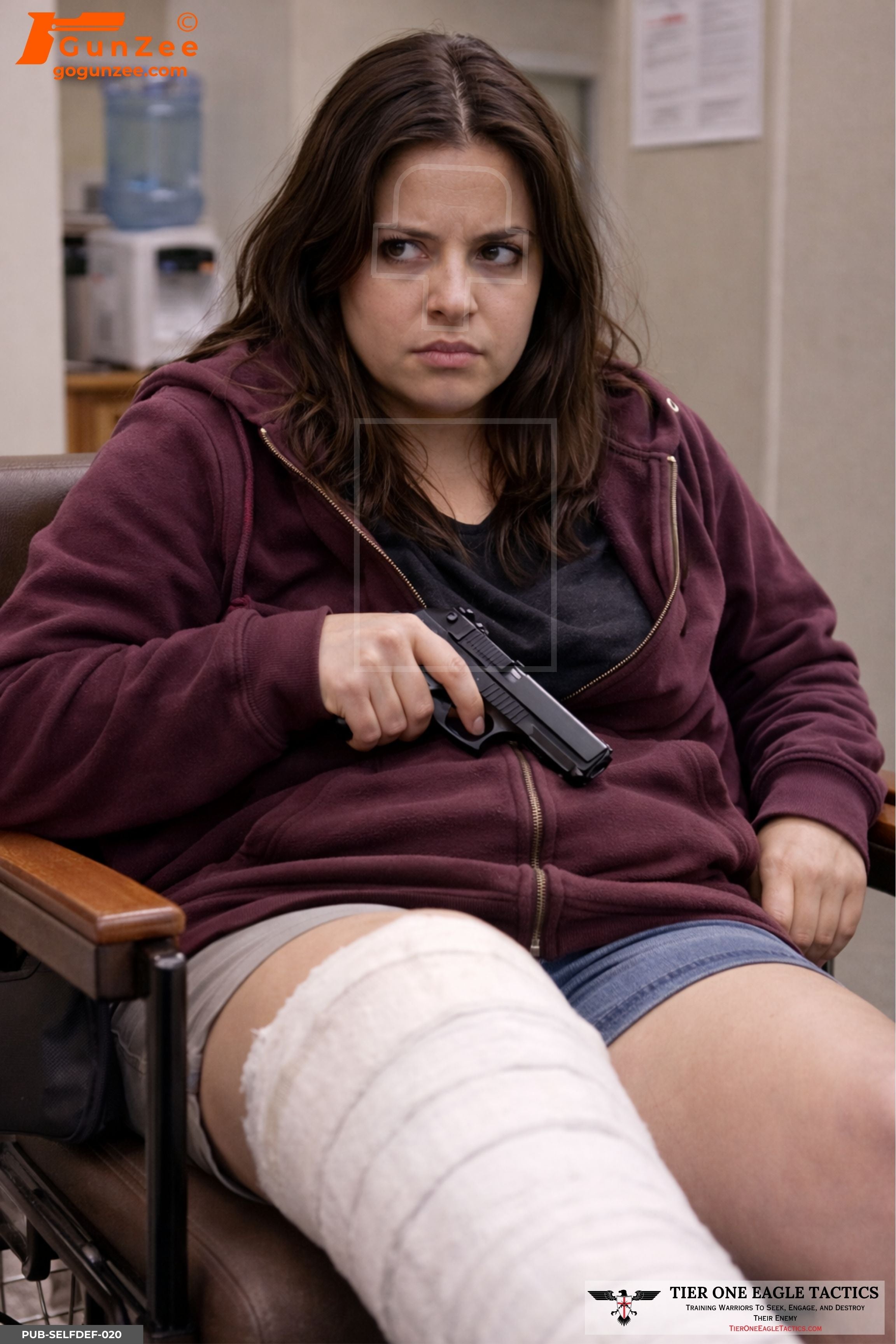
The Seated Injury Deception – Concealed Handgun Public Encounter Shooting Target presents a highly deceptive public self-defense scenario involving an individual seated with a visibly injured leg and a concealed handgun held low against the torso. The setting resembles a medical or administrative waiting area—an environment commonly perceived as low-risk and non-hostile.
This target forces shooters to confront the danger of assumption-based thinking. The subject appears injured, seated, and non-aggressive at first glance, yet maintains immediate access to a firearm. The shooter must evaluate intent, hand position, and behavioral cues rather than relying on visual stereotypes of threat or vulnerability.
Real-world violence does not always come from individuals who appear physically capable, mobile, or overtly aggressive. Injured, seated, or medically impaired individuals can still present lethal threats, particularly when a firearm is already in hand or within immediate reach.
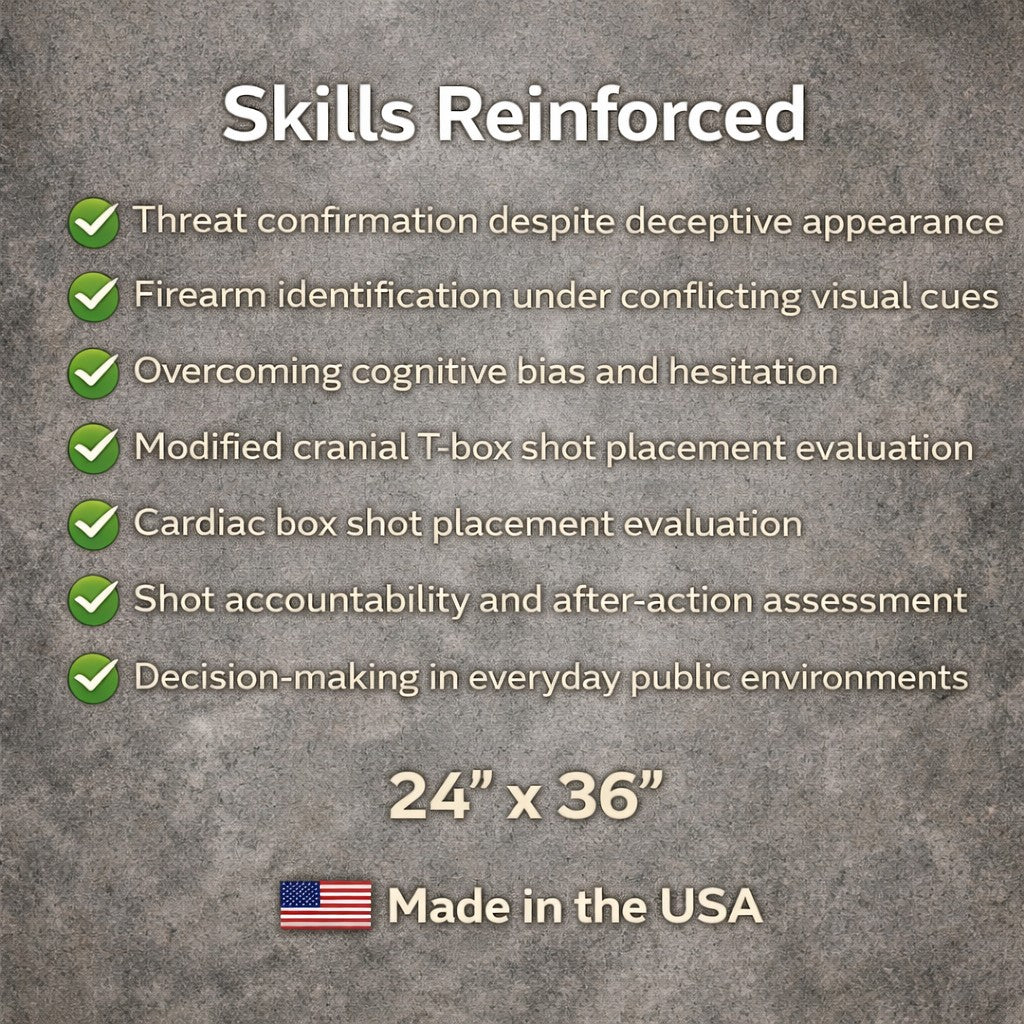
This target was created to train shooters to override emotional hesitation and cognitive bias when assessing threats in sensitive environments. The shooter must determine whether the subject’s posture and hand placement indicate imminent danger, while maintaining strict accountability for shot placement and timing.
The scenario reinforces disciplined threat confirmation in environments where the social cost of error feels high and hesitation can be fatal.
The Seated Injury Deception – Concealed Handgun Public Encounter Shooting Target presents a highly deceptive public self-defense scenario involving an individual seated with a visibly injured leg and a concealed handgun held low against the torso. The setting resembles a medical or administrative waiting area—an environment commonly perceived as low-risk and non-hostile.
This target forces shooters to confront the danger of assumption-based thinking. The subject appears injured, seated, and non-aggressive at first glance, yet maintains immediate access to a firearm. The shooter must evaluate intent, hand position, and behavioral cues rather than relying on visual stereotypes of threat or vulnerability.
Real-world violence does not always come from individuals who appear physically capable, mobile, or overtly aggressive. Injured, seated, or medically impaired individuals can still present lethal threats, particularly when a firearm is already in hand or within immediate reach.
This target was created to train shooters to override emotional hesitation and cognitive bias when assessing threats in sensitive environments. The shooter must determine whether the subject’s posture and hand placement indicate imminent danger, while maintaining strict accountability for shot placement and timing.
The scenario reinforces disciplined threat confirmation in environments where the social cost of error feels high and hesitation can be fatal.
This target includes defined evaluation zones intended for post-engagement assessment rather than prescriptive engagement.
Modified cranial T-box
The cranial zone expands beyond the traditional T-box into the upper forehead region. This area corresponds to neurological structures responsible for immediate incapacitation. The zone is used to evaluate precision, timing, and decisiveness under deceptive threat conditions.
Cardiac box
The cardiac box represents the heart and upper vascular structures responsible for rapid circulatory shutdown. This zone supports evaluation of effective center-mass shot placement and physiological incapacitation over time.
Both zones are designed to be reviewed after the drill to assess shot placement, decision timing, and outcome effectiveness.
Most public-defense targets depict standing or advancing aggressors with obvious hostile intent. This target removes those cues entirely.
The seated posture, visible leg injury, and calm environment intentionally challenge assumptions about danger. The firearm is present but not raised, forcing shooters to rely on behavioral interpretation rather than dramatic motion or overt aggression.
This scenario consistently exposes hesitation, delayed recognition, and moral conflict—factors that are rarely addressed by traditional silhouette targets.
Pair this target with related scenarios from across the GunZee catalog:
Public and everyday self-defense: Wheelchair Ambiguous Threat – Concealed Handgun Public Encounter Shooting Target, Public Knife Assault Disarm – Close-Range Edged Weapon Encounter, Public Festival Armed Threat – Dense Crowd Gunman Scenario, Grocery Store Parking Lot Armed Approach – Public Threat Interception
Home defense, CQB, and hostage: Hallway Threat Civilian in the Doorway Shooting Target, Dining Room Table Barricade Armed Male Shooting Target, CQB Home Defense Hostage – Woman Armed Forward Presentation Shooting Target
Vehicle and barrier: Vehicle Barrier Door-Jamb Armed Threat Shooting Target, Vehicle Approach Threat Advancing Gunman Shooting Target, Vehicle Barrier Armed Driver Engagement Shooting Target
Anatomical: Anatomical Semi-Frontal Handgun Threat Precision Shooting Target, Anatomical Semi-Profile Handgun Threat Vital Zone Shooting Target, Anatomical Head-Out Vehicle Window Engagement Shooting Target