Vehicle Barrier Door-Jamb Armed Threat Shooting Target [24" x 36"]
each · sold in 5s · mix any designs
Price drops automatically: 50+ $2.14 · 100+ $2.03 · 250+ $1.91 · Up to 25% off at 999+ · Volume quote →
$60 order minimum for your whole cart, not each design. Mix any targets.
Quantity must be in increments of 5
Vehicle Barrier Door-Jamb Armed Threat – Precision Engagement Behind a Vehicle Door
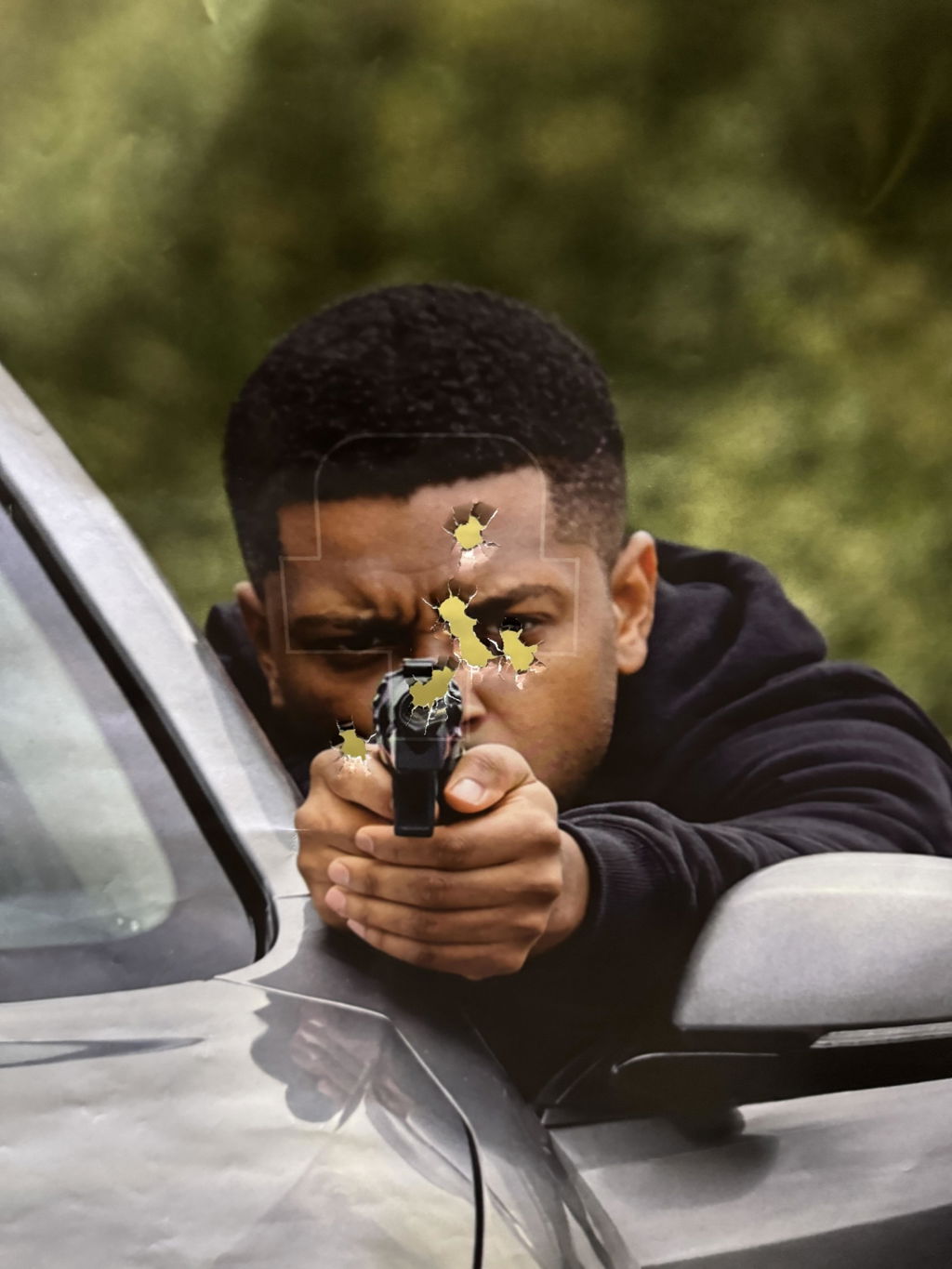
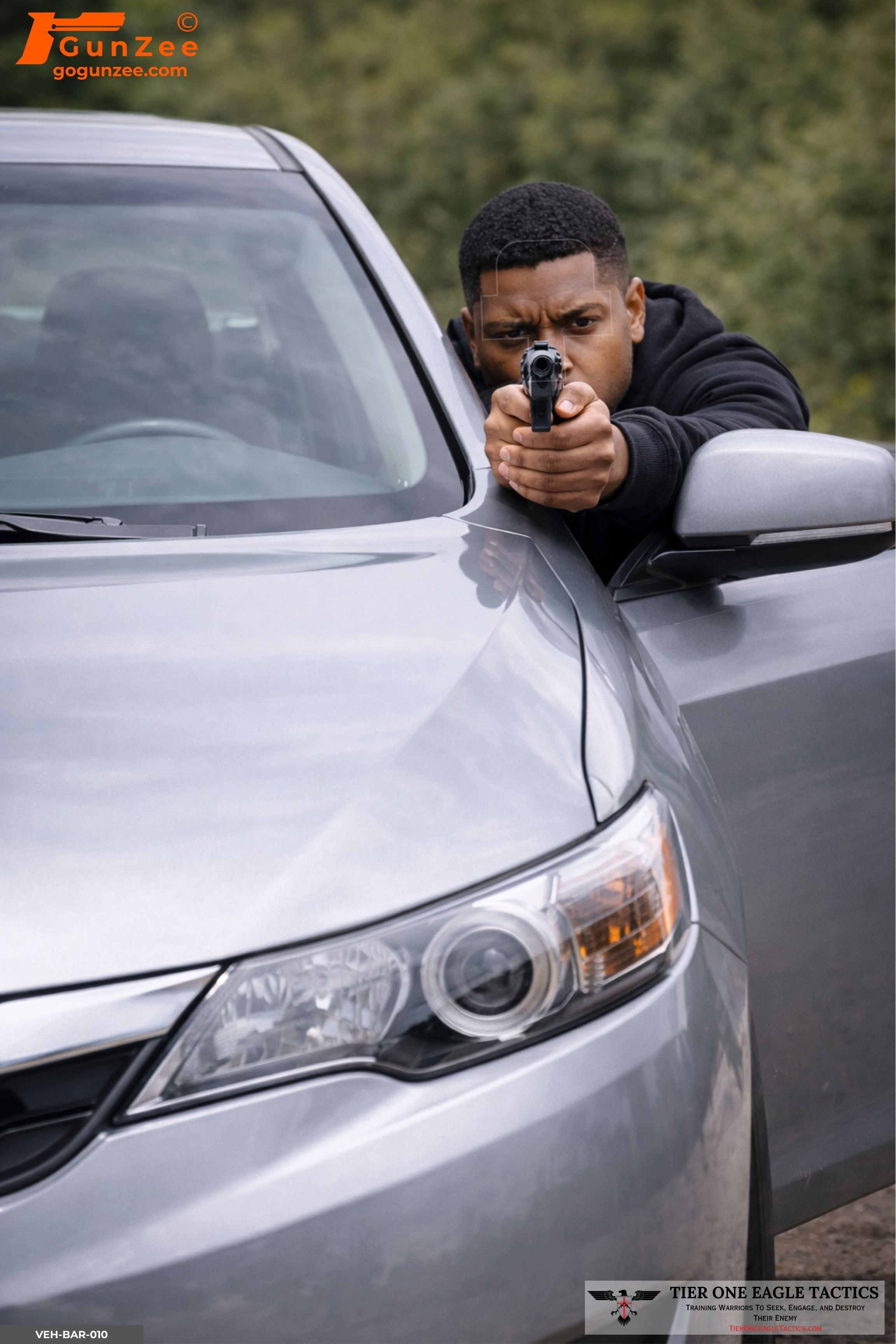
The Vehicle Barrier Door-Jamb Armed Threat Shooting Target depicts an armed aggressor using a vehicle door and door frame as concealment while actively aiming a handgun toward the defender. The attacker is partially exposed, with only the head and a narrow portion of the upper body visible as he leans out from behind the door. Distance is short, angles are compressed, and available target area is limited. For more scenes with a clear armed threat, browse our bad guy shooting targets.
This scenario forces shooters to engage a threat that is deliberately minimizing exposure while maintaining lethal capability. The presence of a modified T-box reinforces disciplined, anatomically effective shot placement when only a small portion of the head is available, emphasizing precision over volume in barrier-influenced engagements.
This target reflects real-world encounters where vehicles are used as immediate cover during ambushes, roadside confrontations, or spontaneous armed assaults.
Training Purpose
Threats using vehicle doors as cover present a unique defensive challenge. The shooter must process limited exposure, offset angles, and the reality that traditional center-mass targets may not be available. This target is designed to train shooters to recognize immediate lethal intent and engage decisively when only a narrow, high-value target zone is visible.
The aggressor’s posture and use of the door frame require shooters to visually confirm head position, alignment, and angle before committing to a shot. The scenario reinforces patience, discipline, and anatomical awareness under pressure rather than reflexive firing.
Skills Reinforced
- Immediate lethal threat recognition
- Precision engagement on limited exposed targets
- Shot placement using a modified T-box
- Understanding vehicle doors and door frames as hard cover
- Managing stress in barrier-dominated encounters
- Decision-making when torso shots are not available
Why This Target Is Different
Most shooting targets assume full or partial torso exposure. This target removes that option entirely. The aggressor is intentionally using the vehicle door as hard cover, leaving the head as the primary viable engagement zone.
The modified T-box on this target extends beyond the traditional eye-to-nose reference to include the forehead and upper cranial vault. In real-world encounters where attackers lean aggressively from behind cover, head angle, chin position, and posture often defeat a narrow, textbook cranial box. By incorporating the forehead, the modified T-box reflects anatomical realities associated with immediate neurological disruption and rapid incapacitation when lethal force is justified.
This design forces shooters to process posture, angle, and exposure rather than defaulting to idealized shot placement assumptions.
Related training targets
Pair this target with related scenarios from across the GunZee catalog:
Public and everyday self-defense: Church Aisle Hostage Crisis Shooting Target, Bank Lobby Active Robbery – Multiple Armed Suspects with Body Armor Shooting Target, Workplace Active Shooter Response Shooting Target
Home defense, CQB, and hostage: Interior Two-Man Deception & Rear Threat Shooting Target, Interior Male Wearing Body Armor With Concealed Handgun Shooting Target, Interior Male Wearing Body Armor Unarmed Threat Assessment Shooting Target
Vehicle and barrier: Vehicle Barrier Closed-Door Armed Driver Shooting Target, Vehicle Barrier Armed Driver Engagement Shooting Target, Vehicle Barrier Armed Subject Exiting Vehicle Shooting Target, Vehicle Barrier Carjacking Confrontation Shooting Target
Anatomical: Anatomical Rifle Threat Vital Zone Shooting Target, Anatomical Semi-Frontal Handgun Threat Precision Shooting Target, Anatomical Frontal Handgun Threat Vital Zone Shooting Target