Close-quarters battle training is built on a team model. Two-man, four-man, stack formations, sectors of responsibility — the textbook assumes other operators down the hallway with the shooter. A civilian defending a home rarely has any of that. The realistic CQB problem for a CCW holder is the solo shooter problem: one person, one weapon, one hallway, no backup.
Which prints to run these drills on is covered in the CQB targets buyer's guide.
The drills below are designed for that reality. Each one isolates a specific solo-CQB skill — angle clearing, doorway processing, ambush response, room entry decisions — on paper, where the shooter can build the visual and physical reps before the variables get harder. Photorealistic targets in residential contexts make the drills match the spaces a solo shooter actually defends.

The five solo-CQB skill drills every home defender should run
1. Doorway processing — slow is fast
The doorway is where most home-defense engagements happen. Solo shooters who train doorway processing have a meaningful advantage over those who don't, because doorway entries reward methodical reading and punish speed. The drill: stand outside the door at three yards. Count to three while reading the visible portion of the target. Identify the threat, the hand position, the weapon presence, the geometry. Then enter. The bedroom doorway armed subject target is the workhorse for this drill. Run it ten reps, slowly. Speed develops from clean reads, not from hurry.
2. Cellphone ambiguity — the no-shoot decision
Every solo-CQB drill cycle needs at least one ambiguity rep. The doorway scenario flips: same setup, same lighting, but the figure is holding a cellphone instead of a weapon. The bedroom doorway cellphone ambiguity target trains the discipline of confirming before committing. Mix this target into doorway reps unannounced — the shooter doesn't know which target is up until they read the scene. That uncertainty is the entire training value.

3. Hallway ambush response
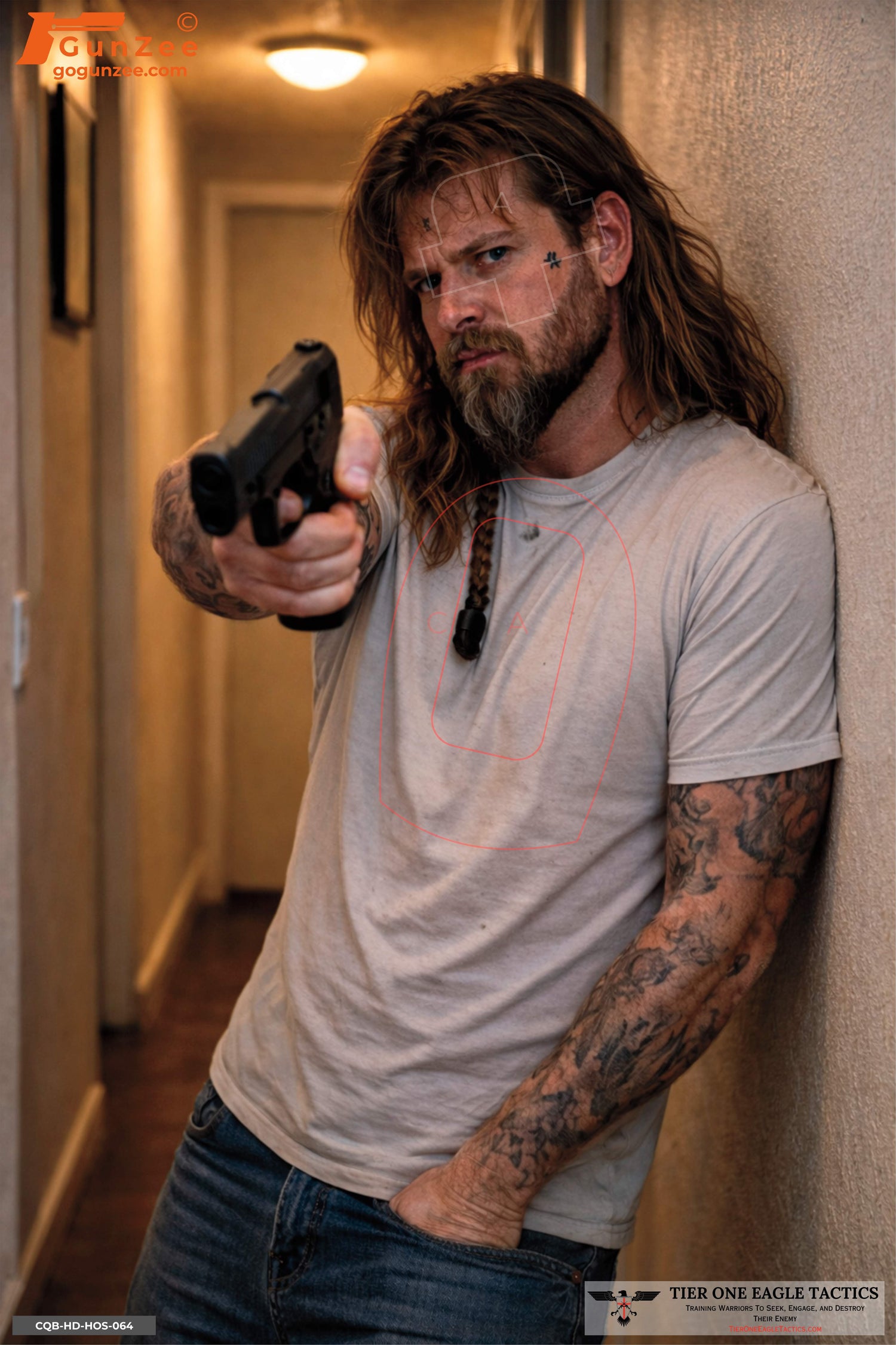
The scenario the solo shooter most fears: a threat appears in the hallway already drawn, already moving, already inside the OODA loop. The hallway ambush immediate threat target trains the response that has to happen when the read-the-scene step is compressed to under a second. Run this drill at five yards with the shooter at the holstered draw. The metric is time-to-first-good-hit, not group size. Most solo shooters discover that their realistic engagement window is shorter than they thought.
4. Flashlight integration — low-light room processing
Most home-defense engagements happen in low light. A flashlight in the support hand changes draw stroke, sight picture, and grip geometry in ways that pure live-fire range work doesn't expose. The armed intruder with flashlight home-defense target shows the threat illuminating the shooter's position — the worst-case low-light geometry. Run this drill at three to five yards in actual low light if range conditions allow, or with reduced ambient if not. The flashlight discipline is the rep that matters.

5. Closet ambush — the worst-case room entry
Room entries with concealed-space threats are the hardest solo-CQB scenario by a margin. A threat in a closet, behind a curtain, or in a corner the shooter can't pre-clear is a tactical problem with no clean answer for a solo operator. The closet ambush armed subject target trains the rep that matters most: don't enter rooms that contain threats unless absolutely necessary. The training value is recognizing the situation before the gunfight, not winning the gunfight inside it. Many of these drills are run as "no-go" decisions on paper — that is the right answer.
How a solo shooter should structure a CQB training cycle
The solo CQB cycle is different from a team CQB cycle in three ways:
Solo movement is slower than team movement. Without a partner to cover sectors, every angle the shooter clears costs time. A solo training cycle should emphasize methodical clearing over speed clearing. The drills above are built for that tempo.
The right answer is more often "don't engage." A team can flow into a room and dominate corners. A solo shooter rarely should. The right move is often to hold a position, control the entry to a defensible space, and call for backup. Train decision drills that end in "hold position" as often as drills that end in "engage."
The body of training time should weight scenarios over speed. Speed kills in solo CQB — not the threat's speed, the shooter's. Slow reads, clean decisions, and disciplined movement beat fast everything. The training cycle should reflect that ratio.
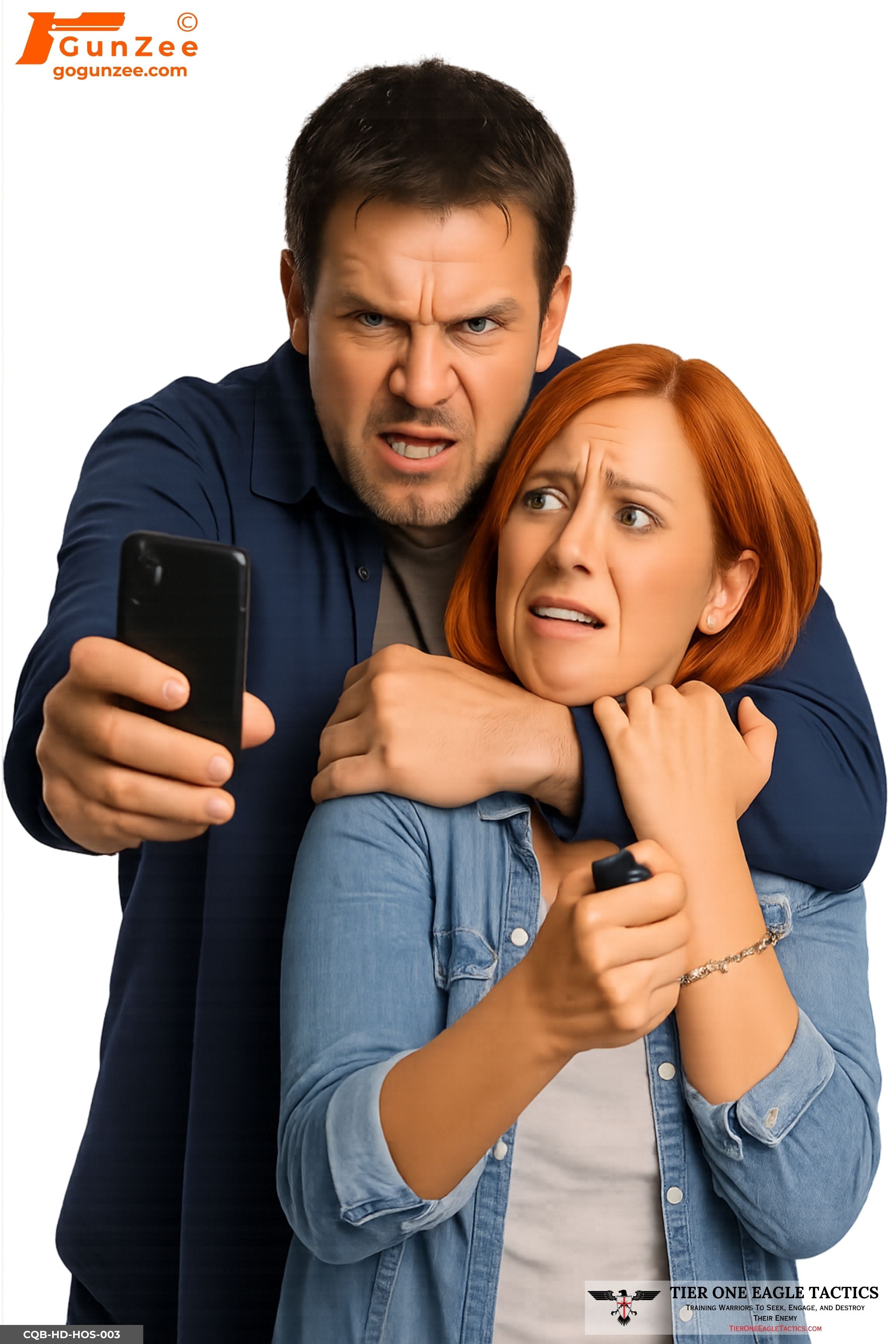
For the hardest version of the no-shoot problem, add hostage shooting targets, where the threat is partly covered by a person who must not be hit.
A reasonable monthly cadence for a CCW holder serious about home-defense CQB: two range sessions, eight to ten reps per drill across the five drills above, plus one structured walkthrough of the actual home with a dummy weapon (no live ammunition) to map the angles before they matter.
Apartment vs single-family geometry
The drills don't change much. The angles do. An apartment hallway is shorter, the engagement distances tighter, the backstop more constrained (neighbors). The apartment hostage close-quarters control target shows the engagement geometry specific to multi-family residential. For shooters who live in apartments, this is the most realistic single target in the library.
Single-family home geometry adds longer hallways, more rooms, and stair landings that complicate movement. The full Home Defense, CQB & Hostage Scenarios collection covers both contexts. Build a training cycle around the home actually being defended — not a generic floor plan.
Where to start
For a CCW holder new to solo-CQB training, three targets cover the highest-frequency scenarios:
- The bedroom doorway armed subject target — paired with the cellphone-ambiguity variant for the no-shoot rep — covers the most common home-defense engagement type.
- The hallway ambush immediate threat target for the speed-response rep when reading time is compressed.
- The armed intruder with flashlight target for the low-light flashlight integration rep most CCW holders never train.
For instructors, training groups, or shooters running multi-month CQB cycles, the CQB Full Structure Rotation 295-pack covers every drill above with volume for rotation across multiple students.
→ BROWSE THE HOME DEFENSE & CQB SCENARIO LIBRARY
Frequently asked questions
What is a solo CQB drill?
A solo CQB drill is a close-quarters battle training rep designed for one shooter without a team or partner. The angles, tempo, and decision points are different from team CQB — the drill emphasizes methodical clearing, decision discipline, and recognizing when not to engage.
Is solo CQB training relevant for civilian home defense?
Yes — most home-defense engagements happen exactly this way: one defender, one weapon, one home. Team-CQB techniques don't apply directly. Solo drills built around residential geometry are the right preparation for the realistic civilian scenario.
How does CQB training differ from general defensive shooting?
CQB adds three variables most defensive training doesn't address: confined spaces, doorways and corners, and the requirement to move through structure. The shot is still important, but the movement and decision-making before and after the shot are weighted more heavily than in open-range training.
What distance should solo CQB drills be run at?
Three to seven yards covers the vast majority of residential engagement geometry. Some apartment-specific scenarios are closer (one to three yards). Hallway and stair engagements may extend to ten yards. Use what matches the actual home being defended.
Should CQB drills be run in low light?
Yes, when possible. Most home-defense engagements happen in low light. A training cycle that only runs in full daylight misses the flashlight, sight picture, and target identification problems that low light introduces. Indoor ranges that allow reduced ambient or red-light drills are ideal.
How often should a CCW holder train solo CQB?
At least once per month for shooters serious about home-defense readiness. The decision-making and movement skills are more perishable than pure marksmanship. Monthly reps maintain the skill; quarterly reps allow it to degrade.
What's the best way to translate paper CQB drills to real preparedness?
Combine paper drills with structured walkthroughs of the actual home. Walk every angle with a dummy weapon (cleared, no live ammunition) and note where the engagement geometry would force a decision. Map the no-shoot zones — children's rooms, walls shared with neighbors, the direction of streetside windows. The paper drills build the skill; the walkthrough applies it to the real space.
Run these drills against scenario-based paper shooting targets — CQB doorways, hostage takes, and public-defense environments printed on 24×36 paper.
Go deeper: add the decision layer with shoot / no-shoot judgment drills, stock a full session with training packs<