Read the Privacy Policy
Quantity must be in increments of 5
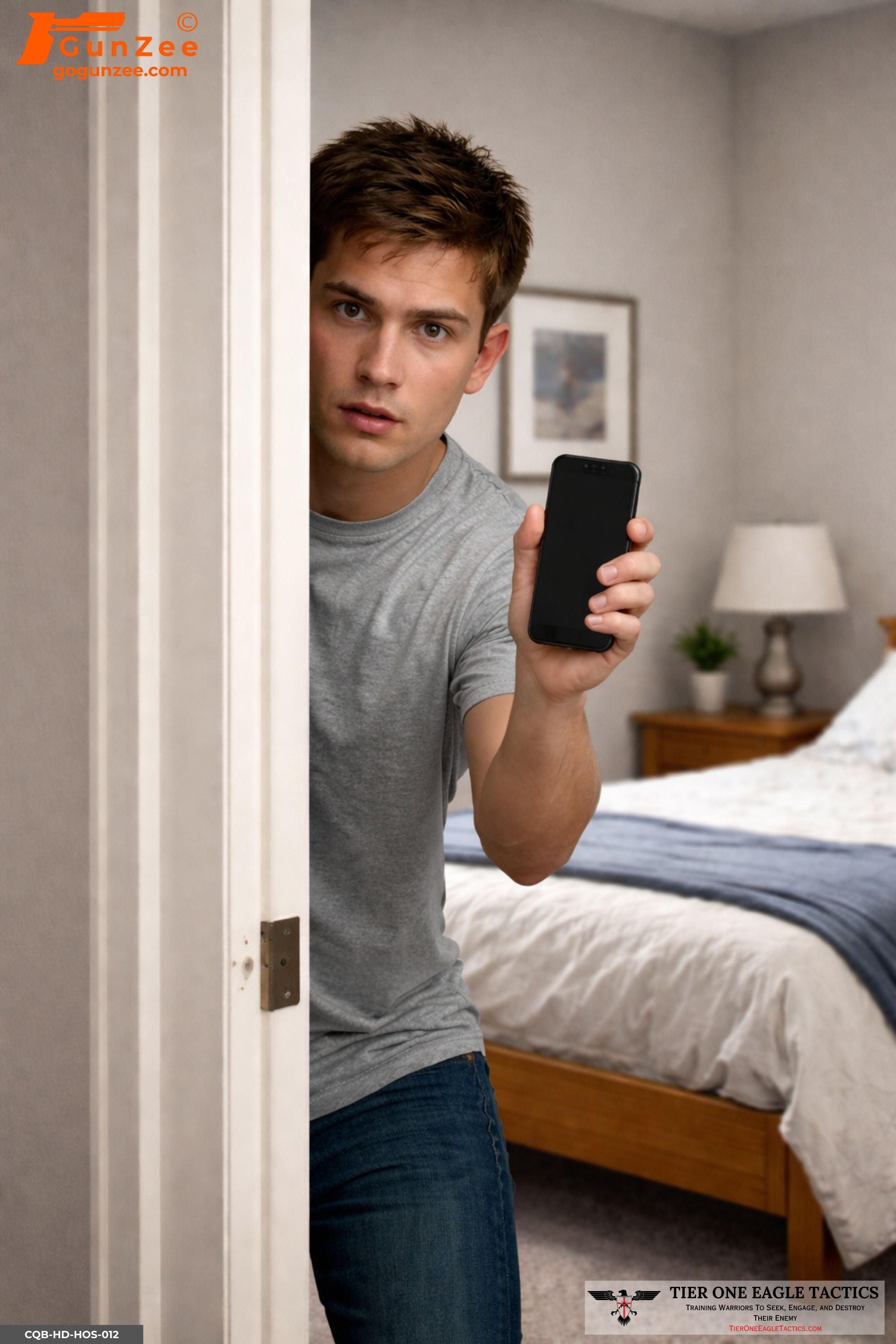
This CQB Home Defense Hostage Shooting Target depicts a tense residential encounter where a male subject emerges from a bedroom doorway holding a cellphone forward toward the defender. The environment, posture, and positioning closely resemble an armed threat scenario, yet the object in the subject’s hand is non-lethal.
The familiarity of the setting and the subject’s cautious, uncertain expression create a powerful ambiguity trap. In low light or high stress, the difference between a firearm and a cellphone can be easily misread, making this scenario one of the most common and dangerous decision points in home defense.
Doorway encounters inside the home are among the most frequent and emotionally charged defensive situations. When a subject appears unexpectedly from a private space, the defender must rapidly determine intent, object type, and threat legitimacy under extreme pressure.
This target is designed to train shooters to slow the decision cycle long enough to confirm what is actually present. It reinforces that visual discipline and restraint are as critical as speed, particularly when loved ones, guests, or family members may be moving inside the home.
Many CQB targets condition shooters to equate doorway emergence with immediate threat. This target deliberately challenges that assumption. The subject’s neutral-to-concerned facial expression, relaxed posture, and non-threatening object force shooters to reconcile visual... ...
This CQB Home Defense Hostage Shooting Target depicts a tense residential encounter where a male subject emerges from a bedroom doorway holding a cellphone forward toward the defender. The environment, posture, and positioning closely resemble an armed threat scenario, yet the object in the subject’s hand is non-lethal.
The familiarity of the setting and the subject’s cautious, uncertain expression create a powerful ambiguity trap. In low light or high stress, the difference between a firearm and a cellphone can be easily misread, making this scenario one of the most common and dangerous decision points in home defense.
Doorway encounters inside the home are among the most frequent and emotionally charged defensive situations. When a subject appears unexpectedly from a private space, the defender must rapidly determine intent, object type, and threat legitimacy under extreme pressure.
This target is designed to train shooters to slow the decision cycle long enough to confirm what is actually present. It reinforces that visual discipline and restraint are as critical as speed, particularly when loved ones, guests, or family members may be moving inside the home.
Many CQB targets condition shooters to equate doorway emergence with immediate threat. This target deliberately challenges that assumption. The subject’s neutral-to-concerned facial expression, relaxed posture, and non-threatening object force shooters to reconcile visual cues rather than reacting reflexively.
This design mirrors real-world incidents where cellphones, remote controls, or household items have been tragically misidentified. The target rewards disciplined observation and reinforces that correct decisions often involve withholding force.
This target intentionally includes no T-box, cardiac box, or other kill-zone outlines. The absence of overlays reinforces the core training objective: determining whether force is appropriate at all, rather than where a shot would land.
Post-exercise analysis focuses on threat assessment, object recognition, and timing rather than marksmanship.
Pair this target with related scenarios from across the GunZee catalog:
Public and everyday self-defense: Public Festival Armed Threat – Dense Crowd Gunman Scenario, Forest Trail Advancing Knife Threat Shooting Target, Bank Lobby Active Robbery – Multiple Armed Suspects with Body Armor Shooting Target
Home defense, CQB, and hostage: CQB Home Defense Hostage – Bedroom Doorway Armed Subject Shooting Target, CQB Home Defense Hostage – Cellphone Ambiguity Decision-Making Shooting Target, CQB Home Defense Hostage – Wallet Ambiguity Rear Control Shooting Target, CQB Home Defense Hostage – Forward Weapon Presentation Shooting Target
Vehicle and barrier: Vehicle Barrier Windshield Assault Shooting Target, Vehicle Barrier Armed Subject Exiting Vehicle Shooting Target, Vehicle Barrier Door-Jamb Armed Threat Shooting Target
Anatomical: Anatomical Full-System Vital Zone Shooting Target, Anatomical Semi-Profile Handgun Threat Vital Zone Shooting Target, Anatomical Side-Profile Rifle Threat Shooting Target