Read the Privacy Policy
Quantity must be in increments of 5
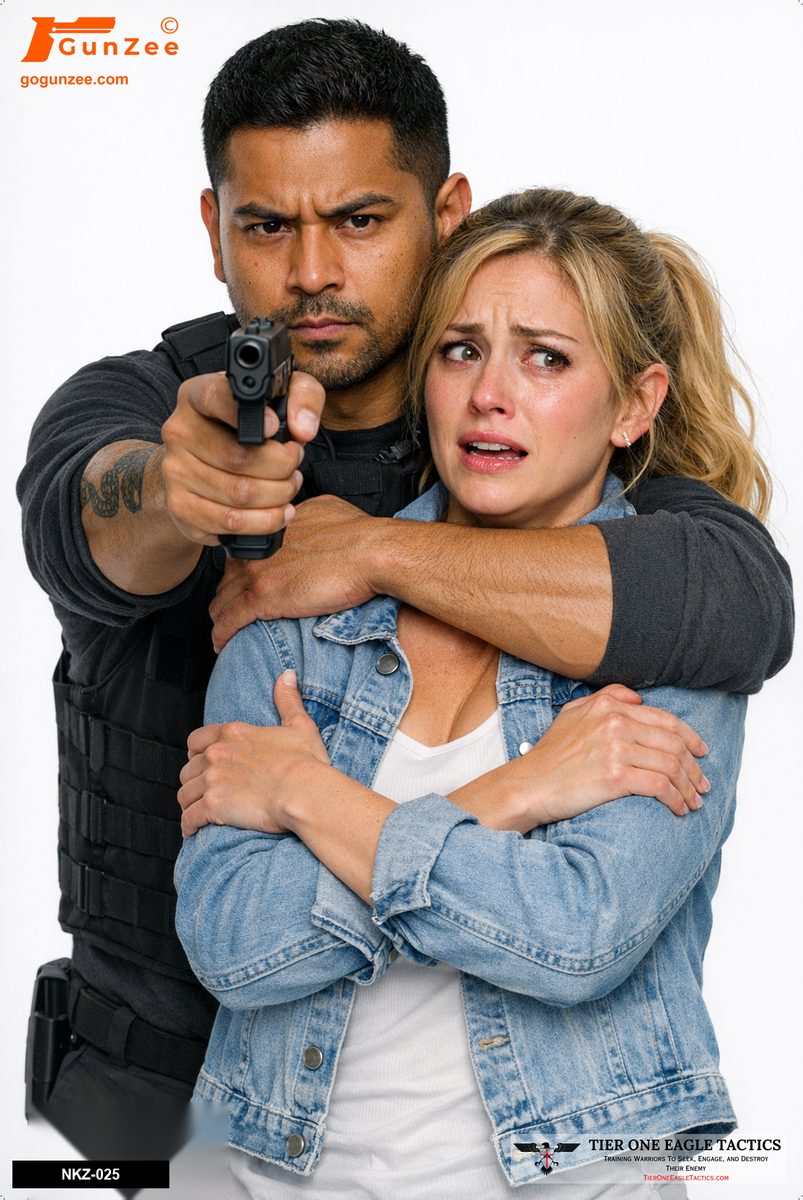
Life-size 24" x 36" scenario target depicting a hostage engagement in the Hostage Situation Pistol Threat scenario, with an armed aggressor and a non-threat in the same frame. Trains precision shot placement under maximum consequence, hostage-proximity engagement geometry, and background management — no printed T-boxes or scoring zones on the threat figure. Built for LE tactical teams, SWAT operators, and advanced instructor-led precision drills.
This scenario mirrors real-world hostage situations encountered by law enforcement, SWAT teams, and defensive shooters. The close proximity of the hostage to the armed subject necessitates precision and careful decision-making. The indoor environment, with its confined space and immediate threat level, challenges trainees to assess and engage under pressure. The complexity of the scene requires a quick yet calculated response, emphasizing the importance of shot placement and hostage safety. Trainees must navigate the compressed decision window, balancing speed with accuracy to neutralize the threat without endangering the hostage.
This target is designed to sharpen the shooter's ability to apply anatomical shot-placement knowledge in a realistic scenario without printed guides. The shooter must read the threat's anatomy from posture, orientation, and clothing, as there are no cardiac boxes, T-boxes, or scoring zones on the figure. This approach emphasizes the importance of identifying and engaging vital zones based on the context provided by the scene.
Instructors can utilize this target for cold cognitive drills, where shooters engage the target without prior exposure to simulate surprise encounters. Timed engagements can add stress, testing the shooter's ability to respond quickly and accurately. By stringing this target with other NKZ targets, instructors can create complex training scenarios that require dynamic decision-making and adaptation.
Life-size 24" x 36" scenario target depicting a hostage engagement in the Hostage Situation Pistol Threat scenario, with an armed aggressor and a non-threat in the same frame. Trains precision shot placement under maximum consequence, hostage-proximity engagement geometry, and background management — no printed T-boxes or scoring zones on the threat figure. Built for LE tactical teams, SWAT operators, and advanced instructor-led precision drills.
This scenario mirrors real-world hostage situations encountered by law enforcement, SWAT teams, and defensive shooters. The close proximity of the hostage to the armed subject necessitates precision and careful decision-making. The indoor environment, with its confined space and immediate threat level, challenges trainees to assess and engage under pressure. The complexity of the scene requires a quick yet calculated response, emphasizing the importance of shot placement and hostage safety. Trainees must navigate the compressed decision window, balancing speed with accuracy to neutralize the threat without endangering the hostage.
This target is designed to sharpen the shooter's ability to apply anatomical shot-placement knowledge in a realistic scenario without printed guides. The shooter must read the threat's anatomy from posture, orientation, and clothing, as there are no cardiac boxes, T-boxes, or scoring zones on the figure. This approach emphasizes the importance of identifying and engaging vital zones based on the context provided by the scene.
Instructors can utilize this target for cold cognitive drills, where shooters engage the target without prior exposure to simulate surprise encounters. Timed engagements can add stress, testing the shooter's ability to respond quickly and accurately. By stringing this target with other NKZ targets, instructors can create complex training scenarios that require dynamic decision-making and adaptation.
NKZ targets are crafted without any printed kill boxes, T-boxes, cardiac boxes, or scoring zones on the threat. This series is tailored for shooters who have mastered shot-placement anatomy and are ready to apply that expertise without visual aids. The NKZ series offers intermediate-to-advanced training, pushing shooters to rely on their knowledge and skills in realistic scenarios.
The realism of the scene replaces the need for printed overlays. Body posture, orientation, and clothing become the anatomical reference points, requiring the shooter to identify vital-zone locations from what they see, not from what's printed. This approach enhances the realism and demands a higher level of skill and judgment from the shooter.
Instructors should set a recommended engagement distance of 5-10 yards to simulate close-quarters situations typical in hostage scenarios. Shooters should start from a holstered or ready position, and the drill can be run cold to simulate real-world surprise encounters. Scoring is based on shooter self-report or instructor observation, as there is no printed grid to reference. This target can be integrated with other paper shooting targets to create a comprehensive training session covering multiple threat types.
This target is ideal for shooters who have completed foundational anatomy and shot placement training on diagrammatic targets and are ready to advance to more realistic scenarios. It is suited for law enforcement qualification refreshers, instructor-led scenario immersion, advanced concealed carry training, and military pre-deployment exercises. This target helps develop the skills necessary for high-stakes engagements where precision and judgment are critical.
Browse the full NKZ — No Kill Zone Scenario Targets collection for all 59 targets in this series. See also the parent Paper Shooting Targets keystone, and the related Hostage Rescue Targets + Shoot / No-Shoot Targets keystones.
Pair this target with other NKZ scenarios to build a mixed decision-making deck. Instructors: stringing 3-5 NKZ targets across a training block trains the shooter to process each new scene cold, without knowing whether the next reveal is an armed threat, a no-shoot, or a hostage engagement.
Browse the full NKZ — No Kill Zone Scenario Targets collection for all 59 targets in this series. See also the parent Paper Shooting Targets keystone, and the related Hostage Rescue Targets + Shoot / No-Shoot Targets keystones.