
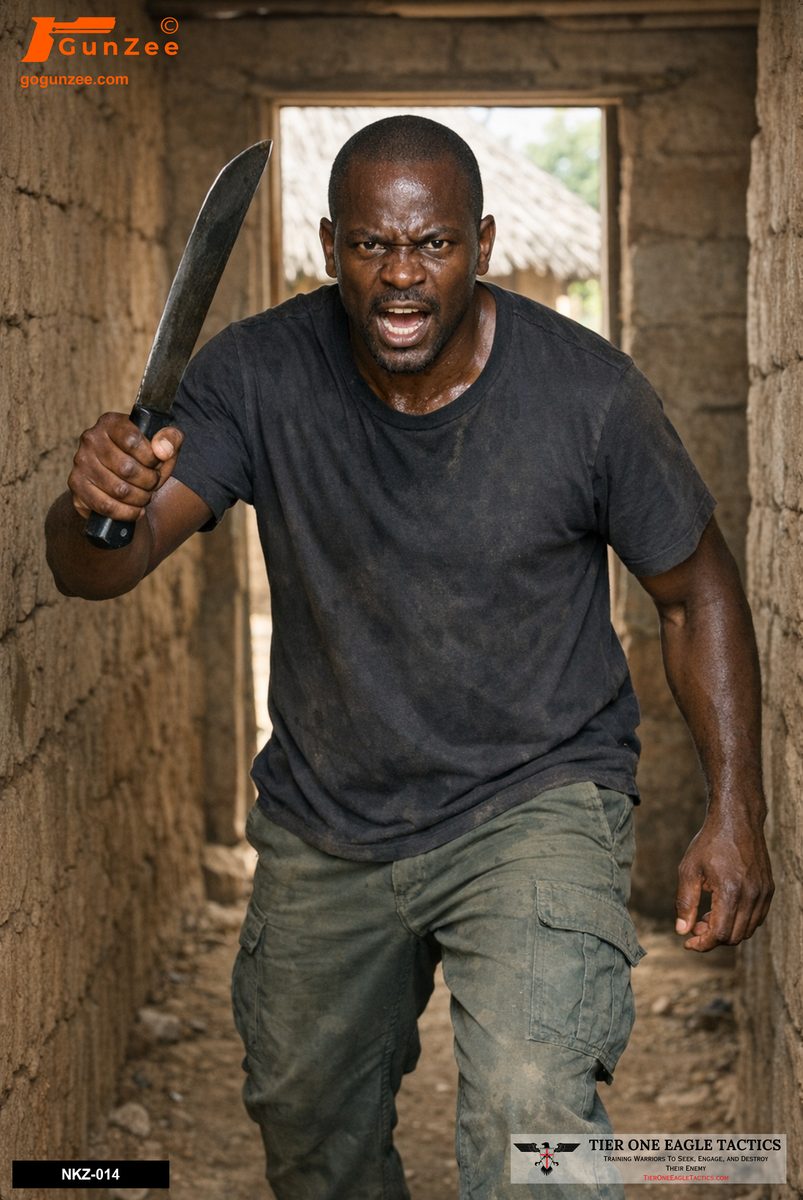
Compound Hallway Machete Threat Shooting Target [24" x 36"]
each · sold in 5s · mix any designs
Price drops automatically: 50+ $1.85 · 100+ $1.76 · 250+ $1.66 · Up to 25% off at 999+ · Volume quote →
$40 order minimum for your whole cart, not each design. Mix any targets.
Quantity must be in increments of 5
Compound Hallway Machete Threat Shooting Target
Life-size 24" x 36" scenario target depicting an edged-weapon aggressor in the Compound Hallway Machete Threat scenario. Trains close-range decision-making, distance management, and precision engagement of an unconventional-weapon threat under realistic conditions. Built for LE officers, defensive-shooting civilians training reactionary-gap discipline, and instructors running edged-weapon defense blocks.
This scenario mirrors real-world encounters that law enforcement officers, military personnel, and defensive shooters may face in hostile environments. The setting's confined space and the subject's aggressive posture create a high-pressure situation that demands quick decision-making and precise action. Training for such scenarios is vital for patrol officers and tactical teams who may encounter similar threats in urban or rural settings. The narrow hallway limits options for retreat or repositioning, emphasizing the need for immediate and effective response. The presence of potential exits in the background, partially obscured by the aggressor, adds complexity to the decision-making process, requiring the shooter to assess both immediate threats and potential escape routes.
Training Purpose
This target is designed to refine the shooter's ability to apply anatomical shot-placement knowledge in a realistic scenario without printed guides. The shooter must interpret the threat's anatomy based on posture, orientation, and clothing, as there are no cardiac boxes, T-boxes, or scoring zones on the figure. This approach reinforces advanced skills in reading the scene and making precise shot placements based on real-time assessment.
Instructors can utilize this target for cold cognitive drills, timed engagements, and to string with other NKZ targets to enhance training complexity. Starting with holstered firearms and using shot timers can simulate the stress and urgency of real-life encounters. Integrating this target into a series with others in the NKZ collection can elevate cognitive load and decision-making skills under pressure.
Skills Reinforced
- Applying anatomical shot placement without visual overlays
- Reading vital-zone location from body position... ...
Compound Hallway Machete Threat Shooting Target
Life-size 24" x 36" scenario target depicting an edged-weapon aggressor in the Compound Hallway Machete Threat scenario. Trains close-range decision-making, distance management, and precision engagement of an unconventional-weapon threat under realistic conditions. Built for LE officers, defensive-shooting civilians training reactionary-gap discipline, and instructors running edged-weapon defense blocks.
This scenario mirrors real-world encounters that law enforcement officers, military personnel, and defensive shooters may face in hostile environments. The setting's confined space and the subject's aggressive posture create a high-pressure situation that demands quick decision-making and precise action. Training for such scenarios is vital for patrol officers and tactical teams who may encounter similar threats in urban or rural settings. The narrow hallway limits options for retreat or repositioning, emphasizing the need for immediate and effective response. The presence of potential exits in the background, partially obscured by the aggressor, adds complexity to the decision-making process, requiring the shooter to assess both immediate threats and potential escape routes.
Training Purpose
This target is designed to refine the shooter's ability to apply anatomical shot-placement knowledge in a realistic scenario without printed guides. The shooter must interpret the threat's anatomy based on posture, orientation, and clothing, as there are no cardiac boxes, T-boxes, or scoring zones on the figure. This approach reinforces advanced skills in reading the scene and making precise shot placements based on real-time assessment.
Instructors can utilize this target for cold cognitive drills, timed engagements, and to string with other NKZ targets to enhance training complexity. Starting with holstered firearms and using shot timers can simulate the stress and urgency of real-life encounters. Integrating this target into a series with others in the NKZ collection can elevate cognitive load and decision-making skills under pressure.
Skills Reinforced
- Applying anatomical shot placement without visual overlays
- Reading vital-zone location from body position and orientation
- Precision engagement without diagrammatic guides
- Dynamic threat assessment under realistic conditions
- Situational awareness in confined spaces
- Decision making under stress
- Movement and positioning in restricted environments
- Time management in high-pressure scenarios
- Environmental assessment for tactical advantage
NKZ Series — No Printed Kill Boxes, No Scoring Zones
NKZ targets are crafted without any printed kill boxes, T-boxes, cardiac boxes, or scoring zones on the threat figure. This series is specifically designed for shooters who have mastered shot-placement anatomy and are ready to apply that knowledge without visual aids, marking a step into intermediate-to-advanced training.
The realism of the scene replaces the need for overlays. Body posture, orientation, and clothing become the anatomical reference points, requiring the shooter to identify vital-zone locations from what they see, not from printed guides. This method enhances the shooter's ability to assess and respond to threats in a more realistic and effective manner.
Instructor Notes
For optimal training, instructors should vary engagement distances to simulate real-world scenarios. Begin with the shooter in a holstered or ready position, possibly using a cold presentation to enhance decision-making skills. Scoring is based on shot placement accuracy and response time, assessed by shooter self-report or instructor observation, as there is no printed grid to reference. Incorporating this target into a mixed deck with other NKZ scenarios can provide comprehensive training opportunities.
Who This Target Is For
This target is ideal for law enforcement officers, military personnel, and defensive shooting instructors who have completed foundational anatomy and shot placement training. It serves as an excellent tool for qualification refreshers, instructor-led scenario immersion, advanced concealed carry training, and military pre-deployment exercises. By simulating high-stakes encounters, this target prepares shooters for situations requiring quick, decisive action to ensure safety and neutralize threats.
Product Details
- Size: 24" x 36" paper — full-size, torso-plus-frame for realistic engagement distance
- Price: $1.95 each · volume tier discounts apply (50-99 = 5% off, 100-249 = 10% off, up to 25% at 999+)
- Print: True-to-life scenario imagery, life-like realism on heavy paper stock
- No printed kill boxes, T-boxes, or scoring zones on the threat figure
- Ships: Same day from Raleigh, NC — orders in by 2pm ET ship the same afternoon
- SKU: NKZ-014
Related NKZ Targets
Pair this target with other NKZ scenarios to build a mixed decision-making deck. Instructors: stringing 3-5 NKZ targets across a training block trains the shooter to process each new scene cold, without knowing whether the next reveal is an armed threat, a no-shoot, or a hostage engagement.
- Compound Interior Edged Weapon Threat
- Urban Alley Explosive Threat
- Afghan Interior Engagement Scenario
- Hotel Room Aggressor with Rifle
- Urban Ruins Armed Aggressor AK-47
Browse the full NKZ — No Kill Zone Scenario Targets collection for all 59 targets in this series. See also the parent Paper Shooting Targets keystone, and the related Hostage Rescue Targets + Shoot / No-Shoot Targets keystones.
Also ships in: NKZ 150-pack, Knife & Edged Weapon 80-pack, Best Sellers 125-pack — five of each design, priced below singles.