
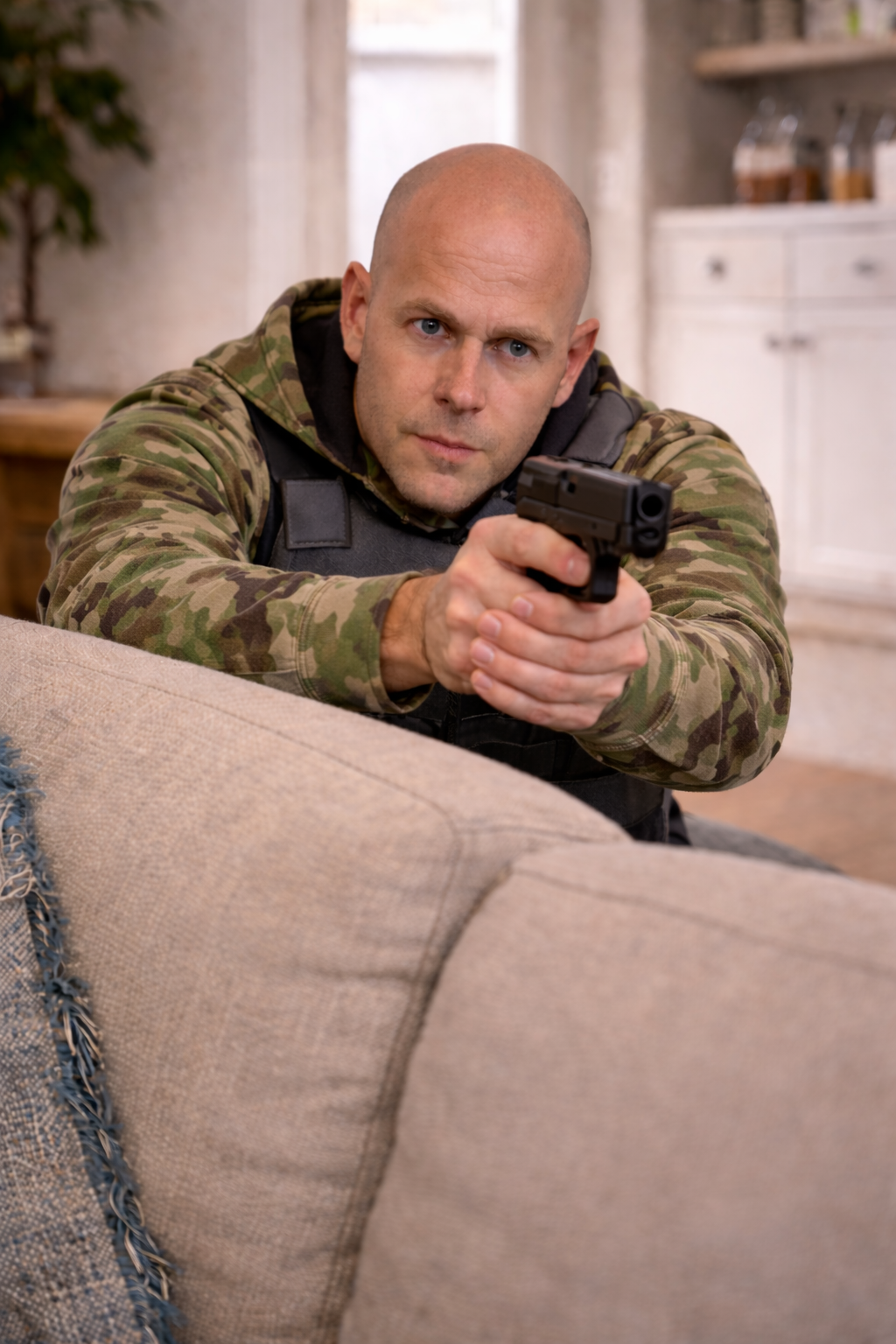
If you have spent any time around range culture or training content, you have probably heard the term CQB. People use it like everyone knows what it means, but when you ask ten shooters, you can get ten different answers.
So, what is CQB training in plain terms?
CQB stands for close quarters battle. Traditionally, it refers to structured training for working in tight spaces where decisions happen quickly and there is less time to react. That background comes mostly from military and law-enforcement contexts. For civilians, the “civilian perspective” matters because your goals, your legal environment, and your training needs are not the same as a professional unit.
This article is about responsible education. It is not a guide to tactics or room clearing. It is about understanding the concept, avoiding common misunderstandings, and learning how to practice CQB-style skills safely and ethically using range-appropriate methods and paper targets.
If you want to see the type of paper targets built around this category, you can start with GunZee CQB Shooting Targets and compare them with the full GunZee Shooting Targets collection.
What CQB means, and why the term gets confusing
“Close quarters” describes an environment. Tight spaces. Limited visibility. Short reaction windows. More decision pressure.
“Training” describes the method. Practice designed to build capability inside constraints.
The confusion happens because people treat CQB like a vibe instead of a training goal. Some folks hear CQB and think “fast.” Others think “special forces.” Some assume it means “home defense practice.” That is why the term gets misused.
A better way to frame CQB is this:
CQB training is about building disciplined performance under pressure in close, cluttered environments.
That includes things like:
-
controlled accuracy at shorter distances
-
target identification
-
transitions between multiple aiming points
-
staying accountable when time pressure increases
-
safe weapon handling habits when movement and stress exist
For civilians, the healthiest mindset is to treat CQB as a set of skills to be learned responsibly, not a set of tactics to imitate.
What CQB training is not for civilians
This is important, because the wrong expectation leads to sloppy practice.
It is not a shortcut to “being ready”
Training is not a magic switch. You do not become more capable because you watched a few videos or ran a few “CQB drills” once. Real improvement is consistency, measurement, and safe repetition.
It is not a reason to practice unsafe behaviors
If your range rules do not allow movement, drawing from concealment, or certain target setups, you do not bend the rules to “train realistically.” Good training respects safety constraints.
It is not something to do alone in your house with live weapons
This should be obvious, but it needs to be said. CQB is an environment where small mistakes become big mistakes fast. If you want CQB-style education, seek qualified instruction in a controlled setting.
It is not only about speed
Speed without accountability is noise. CQB-style skill is being able to perform with control when your time window feels smaller.
If you keep that perspective, you avoid most of the problems people run into when they chase CQB as an identity instead of a training discipline.
Why civilians are interested in CQB style training
People do not search for CQB because they love acronyms. They search because they want answers to practical concerns:
-
“How do I get better at transitioning between targets?”
-
“How do I stay accurate when my heart rate goes up?”
-
“How do I practice decision-making, not just shooting?”
-
“How do I stop falling apart when I try to go faster?”
Those are legitimate training questions. The key is answering them in a way that is safe, lawful, and grounded in fundamentals.
The core skills CQB training tries to build
You can understand CQB better by focusing on the skills it emphasizes. Think of these as training priorities, not tactical instructions.
Target identification and decision discipline
In close quarters, there is less time to process information. That is why good training emphasizes slowing your mind down even when your body wants to rush.
For civilians, this is where paper targets can help. Targets that include decision cues can remind you to pause, confirm, and stay accountable.
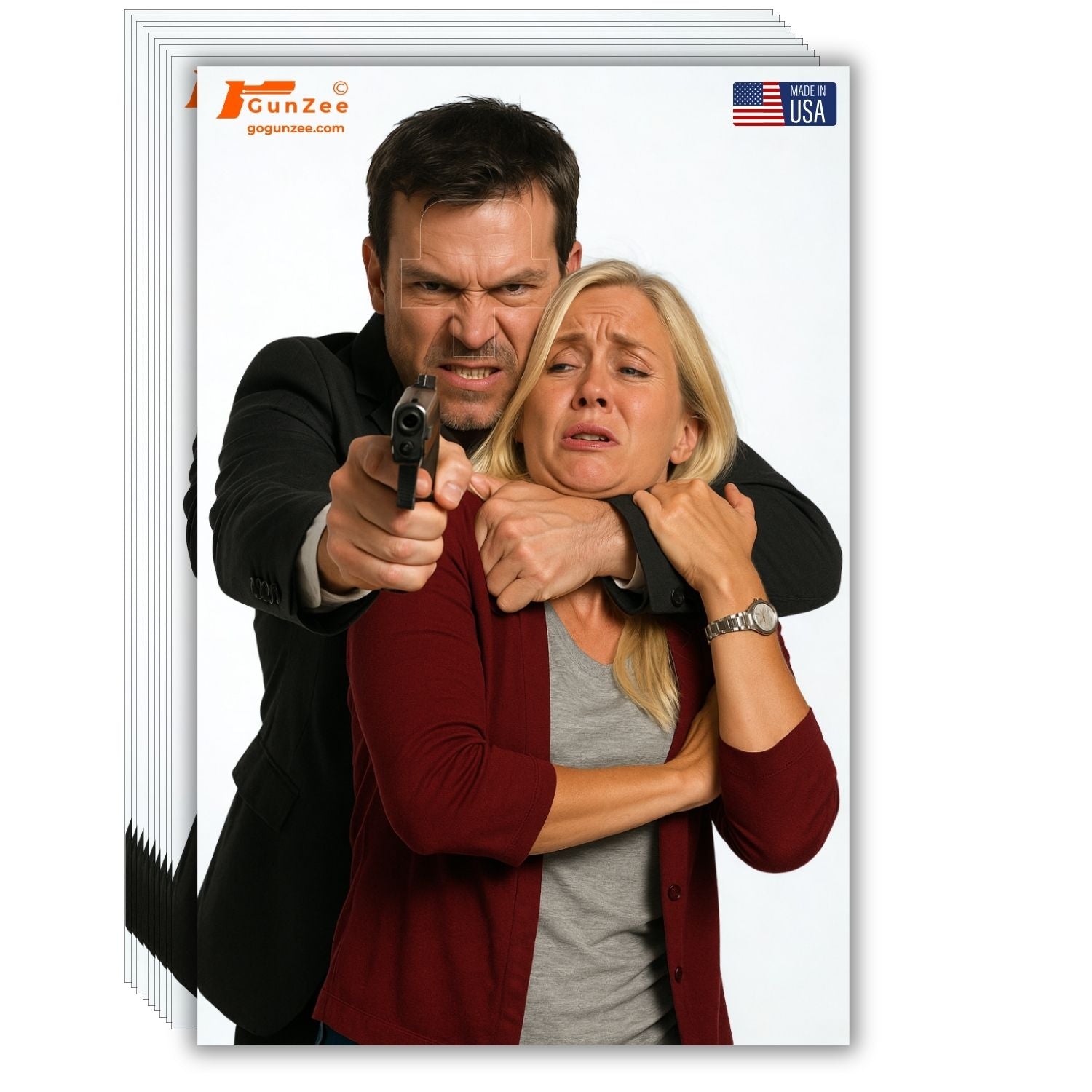
If this is a skill you want to build, GunZee Hostage and Threat Assessment targets are designed around that “think before you act” style of practice.
Transitions and visual control
A lot of shooters are accurate on one target, then struggle the moment they have to move their eyes and sights to a second target. CQB-style training often emphasizes transitions because close environments can involve multiple points of focus.
The training goal is not “snap faster.” The goal is “move your eyes first, settle, then press clean.”
Accountability at shorter distances
Close distance does not mean easy. It can actually tempt people to get sloppy. CQB-style practice often pushes you to keep a tight standard even when the target is near.
This is where zone-based scoring and clear aiming references matter.
Stress management and repeatability
CQB environments are stressful by nature. The training goal is learning to perform without your standards collapsing.
For civilians, stress management often looks like:
-
building a routine you can repeat
-
tracking results
-
gradually increasing pace only when accuracy stays stable
Safe handling habits
Close spaces demand discipline. Even in a range setting, CQB-style practice should reinforce safe habits and respect for rules.
The more you build safe habits, the more useful your training becomes.
Range-safe ways civilians can practice CQB-style skills
You do not need to simulate rooms to improve CQB-related skills. You can build the same fundamentals and decision habits using paper targets and structured practice.
Here are range-appropriate ideas that stay focused on safety and measurability, without turning into tactical instruction.
Practice with structured target layouts
Targets that offer multiple aim points let you practice transitions with accountability. You can keep the pace slow and still gain a lot by staying consistent with your standards.
A practical approach is to choose a target with multiple zones, then run simple, repeatable strings where your only goal is to keep hits inside the defined scoring areas.
If you want targets built specifically for repetition and performance tracking, GunZee Skill Builder targets are a strong match because they are designed to make scoring and comparison easy.
Build “decision pause” into your practice
CQB is as much mental as physical. A simple habit that helps is adding a deliberate pause to confirm your sight picture and your target before each string.
Decision targets support this by making you slow down and aim with intention instead of rushing.
Use clear scoring standards
If you want CQB-style practice to actually improve you, keep standards simple:
-
“All shots inside the scoring zone”
-
“No rushed shots that break the standard”
-
“Repeat the same result twice”
The point is consistency. Not showing off.
Keep your practice honest
The easiest way to fake progress is to go faster and accept sloppier hits. CQB-style training is useful only when you stay honest about results.
If accuracy drops, slow down and rebuild. That is not failure, that is training.
How to choose CQB targets without getting lost
CQB targets can vary a lot. Some are simple. Some are busy. The best choice depends on what you are trying to train.
Choose the right amount of information
If you are newer, a target that is too detailed can become distracting. Start with a layout that gives you:
-
a few clear aim points
-
high contrast
-
enough space to track multiple strings
Then add complexity only when you can maintain your standards.
Choose a size you can score from your line
If you cannot clearly see your scoring zones, your session turns into guessing. Choose a size that matches your range distances and lighting.
Choose targets that fit your training intent
If your goal is transitions, pick a target with multiple distinct aim points.
If your goal is decision discipline, pick a target designed for judgment.
If your goal is measurable progression, choose a structured drill layout.
If you want a broad starting point before narrowing down, the main GunZee Shooting Targets collection is the best overview.
FAQs
What is CQB training in simple words?
It is training focused on performing with control in close, cluttered environments where decisions and transitions happen quickly. For civilians, it is best understood as skill-building, not tactics.
Can civilians benefit from CQB-style practice?
Yes, if the focus is on safe fundamentals, target identification habits, and accountable practice. The value comes from measurable improvement, not from trying to copy professional tactics.
Do I need special equipment for CQB training?
Not necessarily. Many CQB-related skills can be trained safely with paper targets, clear scoring standards, and structured practice.
What targets work best for CQB-style training at a standard range?
Targets with multiple aim points and clear scoring areas are a strong fit. CQB targets and skill builder layouts can make transitions and tracking easier.
What is the biggest mistake people make with CQB training?
Chasing speed and complexity without accountability. If your standards drop, the training becomes noise instead of improvement.
How do I keep CQB practice responsible?
Follow range rules, keep practice measurable, avoid unsafe behavior, and seek qualified instruction for advanced training. Use targets that reinforce decision discipline rather than encouraging rushing.

