
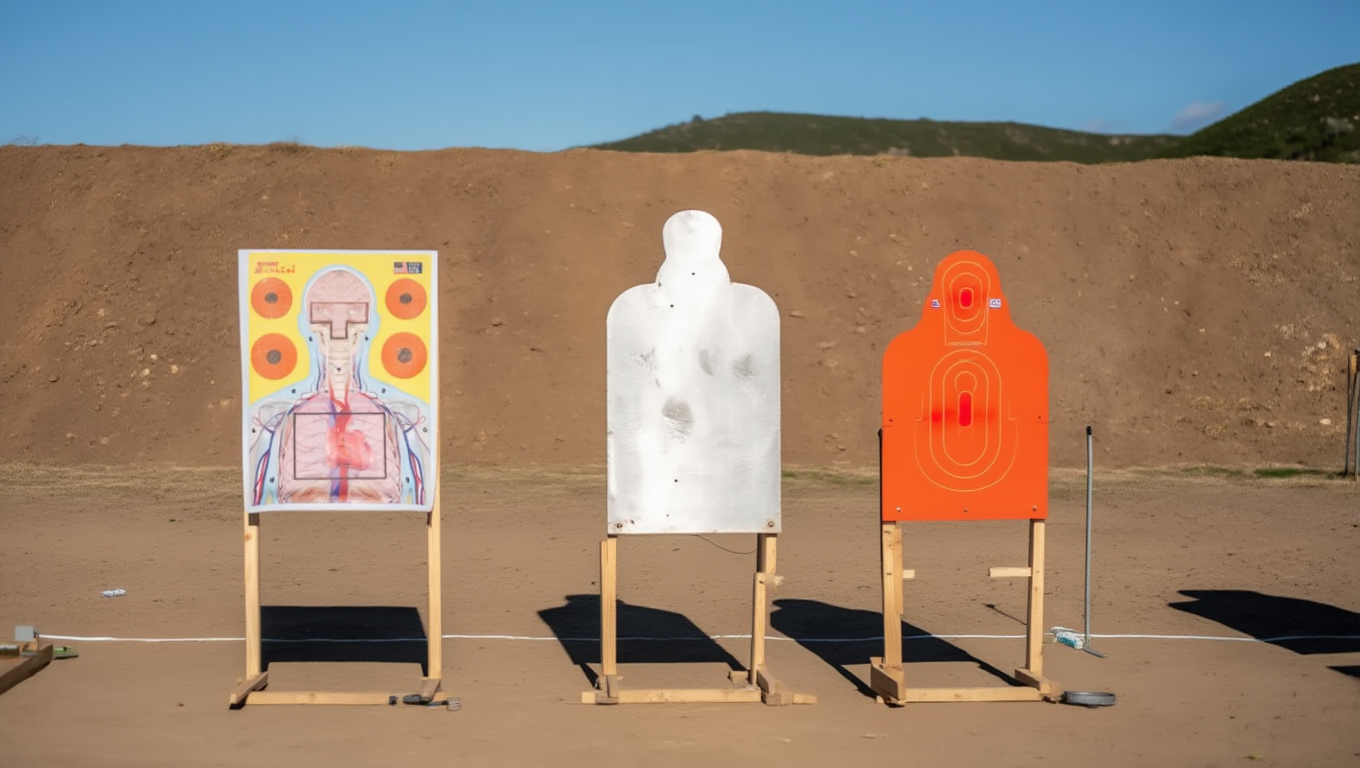
Walk into almost any range and you will see the same debate play out sooner or later. One person swears by paper because it tells the truth. Another loves steel because it is instant feedback and just more fun. Someone else brings reactive targets because they keep things interesting and make practice feel less repetitive.
The real answer is not “one target is best.” The answer is that each target type is good at a different job.
If you want to make smarter choices, the paper vs steel vs reactive targets comparison comes down to four practical questions:
What kind of feedback do you need today
What does your range allow and what is safe there
How much do you want to spend over time
What training goal are you trying to support
This guide breaks all of that down in plain language so you can choose targets with purpose, not just preference.
If you want to browse all the paper target options that fit GunZee’s training categories, start with the GunZee Shooting Targets collection and then narrow by the training style you want.
What makes a target “good” for training
Before we compare types, it helps to define what you are really buying.
A target is not just a thing you shoot. It is a feedback system.
A good target should help you answer questions like:
Did my hits land where I thought they did
Did my group open up when I increased pace
Am I repeating the same error pattern
Can I track improvement over multiple sessions
That is why “fun” and “useful” are not always the same. A target can be fun and still not give you the kind of feedback you need for measurable progress.
Paper targets: best for truth and measurement
Paper targets are the standard for one big reason. They show you exactly what happened.
Why paper targets are so effective
Paper targets for accuracy are hard to beat because they:
Show precise hit location
Allow you to measure group size and consistency
Make patterns obvious (high, low, left, right, scattered)
Let you label strings, drills, and notes right on the target
Work at almost every indoor and outdoor range
If you are trying to improve fundamentals or track progress week to week, paper is usually the foundation.
This is also why paper targets are often the best choice for structured training categories like skill building and anatomy based feedback. You can explore those formats in the Skill Builder Shooting Targets collection or the Anatomical Shooting Targets collection depending on what you want to measure.

Where paper targets shine most
Paper targets are ideal when your goal is:
Tight groups and clean fundamentals
Tracking progress over time
Comparing different distances
Evaluating consistency under controlled pace
Working on precision and accountability
Paper also works well for new shooters because it makes improvement visible. When you can literally see your group tighten over a session, confidence grows for the right reasons.
The main downside of paper
Paper does not give instant audio feedback like steel. You often have to walk downrange or use a spotting scope to confirm results, depending on your range setup.
Paper also requires replacing targets more often, especially if you are doing multiple strings and you want your target to remain readable.
The fix is simple. Bring more targets than you think you need. Swap them when feedback becomes unclear. A target that is too shot up stops being a tool and starts being a guess.
Steel targets: best for instant feedback and engagement
Steel targets are popular because they make practice feel alive. There is something satisfying about immediate confirmation.
Why steel is fun and useful
Steel target practice is motivating because:
You get instant feedback through sound
You can keep moving through repetitions without constantly checking paper
It encourages consistency and rhythm when you are working on recoil control
It keeps practice engaging over longer sessions
Steel is especially good when your goal is not “measure a one inch group,” but instead something like: keep hits on a defined plate area while staying smooth and consistent.
Where steel works best
Steel is ideal when your goal is:
Maintaining a steady cadence
Building confidence through immediate feedback
Keeping training engaging for longer sessions
Practicing repeatable hits on a consistent zone
A lot of shooters find steel helps them train longer because it feels less like homework. That matters. Training that you actually do is more valuable than a perfect plan you never stick with.
Steel has real safety requirements
Steel targets are not “just hang it and shoot.” Safe steel use depends on:
Range rules and approval
Proper mounting angle and condition
Appropriate distance guidelines for your range
Using the right target type for the firearm and ammunition allowed there
Eye protection and general range safety discipline
Because every range is different, the safe and responsible approach is simple: follow your range’s policies and do not assume steel is allowed or suitable everywhere.
The main downside of steel for skill tracking
Steel does not show exact hit placement the way paper does. A hit is a hit. That can be great for motivation, but it can hide patterns you need to see if you are trying to refine fundamentals.
If your goal is precision improvement, steel is better as a complement, not a replacement.
Reactive targets: best for motivation and visible confirmation
Reactive shooting targets are designed to move, fall, spin, or show a visible change when hit. They can make training feel more rewarding, especially for newer shooters or anyone who wants more immediate proof of success.
Why reactive targets work
Reactive targets are useful because they:
Give obvious visual feedback without walking downrange
Keep practice engaging
Help you focus on a clear result
Make certain sessions feel less repetitive
Reactive targets are often used as a “reward” tool. You do your measured work on paper first, then use reactive targets to keep motivation high.
Where reactive targets shine
Reactive targets are ideal when your goal is:
Making practice engaging and stickier over time
Getting visible confirmation from a distance
Breaking up long training sessions
Adding variety without changing your whole routine
For some shooters, reactive targets are the difference between training occasionally and training consistently.
The downside of reactive targets
Reactive targets are not always great for detailed measurement. They show that you hit, but they may not show exactly where or why.
They can also become expensive if you rely on them for every session.
A smart approach is using reactive targets as a supplement. Let paper handle measurement and let reactive targets handle motivation.
Target feedback training: what feedback do you actually need?
Here is the simplest decision rule you can use.
If you need detailed feedback, choose paper.
If you need immediate feedback, choose steel or reactive.
If you need both, combine them.
Paper feedback is “where did it go”
Paper tells you the story of your mechanics. It shows whether you are repeating the same error or improving over time.

Steel feedback is “did it hit”
Steel gives you confirmation and rhythm. It helps you stay consistent through repetition.
Reactive feedback is “did it work”
Reactive targets are highly motivating and visually clear, especially at ranges where it is hard to see paper hits.
How to choose the right target for different goals
Targets should match the goal of the session. This is the heart of training target selection.
Goal: measurable improvement and accountability
Go with paper targets. You want clean aiming references and the ability to compare results across sessions.
A strong starting point is the GunZee Shooting Targets collection, then choosing a layout that supports how you like to measure progress.
Goal: build confidence and stay consistent
Steel or reactive targets can help you stay engaged and keep your sessions enjoyable, especially if motivation is the biggest barrier.
Goal: precision and zone awareness
Paper targets with defined zones are the best fit. If you like anatomy based zone feedback, the Anatomical Shooting Targets collection is designed for that type of training feedback.
Goal: repetition and performance tracking
Paper targets built for drills and repetition help you run consistent sessions. The Skill Builder Shooting Targets category is a good match when your focus is performance and consistency.
Cost and convenience: what you pay over time
Cost is not just the price tag today. It is what you spend over a month of training.
Paper: low cost per session, ongoing replacement
Paper is typically the most economical for frequent practice. You replace it often, but each target is affordable and easy to store.
Steel: higher upfront cost, long lifespan
Steel targets can last a long time if used properly, but they cost more initially and require safe setup and range approval.
Reactive: moderate cost, often higher per session
Reactive targets can add up, especially if you use them as your main target type. They are best when used strategically.
The best approach for most shooters: use a simple mix
Most people get the best results from a two target system:
Paper for measurement
Steel or reactive for engagement
That way you get honest feedback and you also keep training enjoyable.
A practical example looks like this:
Start with paper for your main work
End with steel or reactive for a few confidence strings
Track one or two measurable metrics each session (group size, consistency, clean hits on a zone)
You do not need a complicated plan. You need a repeatable one.
A comfort note that affects training more than people admit
Target choice matters, but comfort affects whether you train at all.
If your carry setup creates hot spots, pressure points, or constant discomfort, it can distract you during training and reduce how often you show up. Small comfort improvements can remove friction and make practice easier to stick with.
If that applies to your setup, you can check the GunZee Classic Series holster pads as a comfort focused option that supports longer, more consistent training days.
Comfort is not about avoiding effort. It is about removing distractions so you can focus on clean repetitions.
FAQs
Which is better for beginners, paper or steel?
Paper is usually best for beginners because it shows exactly where shots landed, which helps you build fundamentals and understand patterns. Steel can be motivating, but it does not show precise placement.
Are reactive targets worth it?
They can be, especially if they help you train more often or stay engaged. They are most effective as a supplement to paper targets, not a full replacement.
What target type helps improve accuracy fastest?
Paper targets help improve accuracy fastest because they give precise feedback and allow measurable tracking over multiple sessions.
Can I use steel targets at any range?
Not always. Many ranges have rules about steel targets, distances, and setup. Follow your range’s policies and safety requirements.
How do I choose a target when I am not sure what to train?
Pick paper and focus on one measurable goal, like tightening groups or staying consistent within a scoring zone. Start with a versatile option from the GunZee Shooting Targets collection.
Should I use the same target every session?
Using the same target style for a few sessions helps you track progress. Once you have a baseline, rotate targets to support new goals without losing measurability.


