
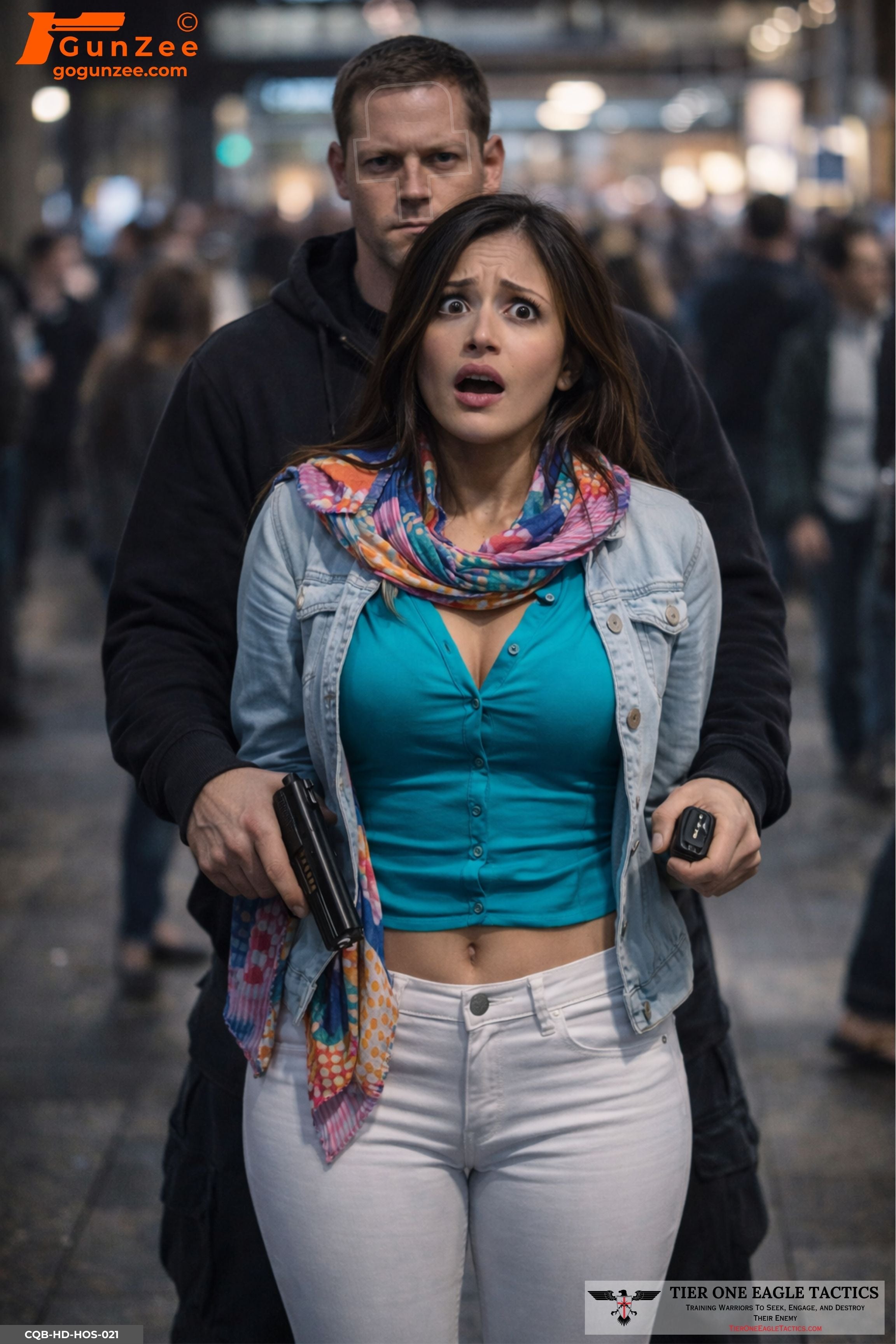
Crowded Street Hostage Control with Concealed Gunman Shooting Target [24" x 36"]
each · sold in 5s · mix any designs
Price drops automatically: 50+ $1.85 · 100+ $1.76 · 250+ $1.66 · Up to 25% off at 999+ · Volume quote →
$40 order minimum for your whole cart, not each design. Mix any targets.
Quantity must be in increments of 5
Crowded Street Hostage Control with Concealed Gunman Shooting Target
This target depicts a high-risk public hostage scenario unfolding in a densely populated urban environment. A visibly distressed female hostage is restrained from behind by a male aggressor who maintains close physical control while concealing a firearm low and tight to the body. The surrounding crowd creates visual noise, depth compression, and psychological pressure that closely mirrors real-world public encounters.
The attacker’s calm posture contrasts sharply with the hostage’s fear and surprise, forcing the shooter to rely on behavioral cues, body positioning, and threat indicators rather than exaggerated aggression. This scenario intentionally challenges shooters to detect lethal intent early, despite minimal overt movement and significant background distraction.
Training Purpose
This target is designed to develop decision-making and threat identification in crowded public settings where bystanders, motion, and emotional interference complicate engagement. The shooter must isolate the true threat, account for crowd presence, and apply disciplined judgment before committing to a shot.
The aggressor’s concealed firearm position reinforces the need to recognize threat posture, grip mechanics, and proximity control rather than waiting for a fully extended weapon presentation.
Skills Reinforced
- Public hostage rescue decision-making
- Threat recognition with partially concealed weapons
- Visual discipline in crowded environments
- Managing bystander risk and background accountability
- Precision shot placement under emotional stress
- Early detection of lethal intent
Modified T-Box Analysis
This target includes a modified T-box on the gunman. The outline is intentionally subtle and not intended to be visible at typical shooting distances. Its purpose is post-exercise evaluation, allowing shooters and instructors to assess shot placement after the drill concludes.
The modified T-box expands beyond the traditional ocular-nasal window to include a high-probability incapacitation area in the upper forehead. This modification reflects real-world constraints where conventional cranial options may be partially obstructed by hostage positioning, clothing, or movement, yet immediate incapacitation is still required to prevent harm.
Why This Target Is Different
Most hostage targets occur in controlled or isolated environments. This design introduces crowd density, visual clutter, and emotional overload, demanding higher-level processing and restraint. The attacker’s composed demeanor and concealed firearm placement punish rushed decisions and reward disciplined observation.
This target is particularly effective for training shooters to resist tunnel vision and maintain accountability in unpredictable public settings.
Related training targets
Pair this target with related scenarios from across the GunZee catalog:
Public and everyday self-defense: Crowded Street Knife Threat Shooting Target, Parking Garage Close-Contact Hostage Control Shooting Target, Church Aisle Hostage Physical Control Scenario Shooting Target, Urban Street Two-Man Armed Confrontation Shooting Target
Home defense, CQB, and hostage: CQB Home Defense Hostage – Child Shield No-Weapon Confirmation Shooting Target, CQB Home Defense Hostage – Rear Knife Threat Distraction Shooting Target, CQB Home Defense Hostage – Self-Directed Gun Threat Decision-Making Shooting Target
Vehicle and barrier: Vehicle Barrier Daylight Carjacking Shooting Target, Vehicle Barrier Carjacking Confrontation Shooting Target, Vehicle Barrier Door-Jamb Armed Threat Shooting Target
Anatomical: Anatomical Side-Profile Rifle Threat Shooting Target, Anatomical Hostage Shield Vital Zone Shooting Target, Anatomical Full-System Vital Zone Shooting Target