If you are new to the range, shooting targets might seem simple. You hang paper, you shoot holes, you go home. But once you spend a little time training with purpose, you realise targets are not just something to aim at. They are feedback tools. They help you measure progress, expose mistakes, build consistency, and make practice sessions feel structured instead of random.
So, what are shooting targets used for in real life? They are used to do three big jobs: give you a clear aiming reference, show you what happened after each string of fire, and support specific training goals like accuracy, speed, transitions, and decision making. The right target turns a casual range trip into a repeatable practice session you can improve from.
In this guide, we will break down the most common uses of shooting targets, the major shooting target types, and how to pick targets that match your goals without over complicating it.
Shooting targets are used to create measurable practice
A good practice session has two parts: a plan and proof. Targets provide the proof.
When you shoot a target, you can answer questions like:
-
Did my group tighten or spread as I sped up?
-
Am I consistently pulling shots in one direction?
-
Did I improve between the first and last string?
-
Can I repeat the same performance next week?
That is what makes targets more than paper. They are the scoreboard for your training.
Targets help you track accuracy and consistency
Accuracy is not just about hitting the paper. It is about hitting what you intended to hit, repeatedly.
This is why many paper shooting targets use numbered areas, rings, or reference points. They help you compare one session to the next. If your group is tight but always low left, that tells you something different than a group that is centered but scattered.
If you want a simple starting point, begin with paper targets that give you clear reference zones and easy visual feedback. You can explore options in the GunZee Shooting Targets collection and pick a style that matches how you like to train.
Targets reveal patterns and bad habits
Targets do not judge you, but they do tell the truth.
A few common examples:
-
A consistent drift to one side often points to grip or trigger control issues
-
A vertical string can point to inconsistent sight picture or anticipation
-
A scattered group can point to rushing, poor stance, or lack of follow through
Without a target that shows these patterns clearly, it is hard to diagnose what is happening. With the right target, the problem often becomes obvious.

Shooting targets are used to build better fundamentals
Most skill building at the range comes down to mastering basics. Targets support that by giving you a clear focus point and a clear result.
Aiming reference: your eyes need a job
Your eyes want something specific to lock onto. When the target is vague or cluttered, your attention drifts and your consistency suffers. A clean, high contrast aiming point makes it easier to practice sight alignment, sight picture, and follow through.
This is why some shooters like simple bullseye style targets for early practice. Others prefer silhouettes because they give a more realistic visual, especially when working on centering, cadence, and controlled follow up shots. The best choice is the one that keeps you honest and focused.
Confidence building for new shooters
For beginners, targets reduce guesswork. They turn practice into small wins:
-
pick a small aiming point
-
fire a slow string
-
confirm where hits landed
-
adjust and repeat
That loop builds confidence quickly, especially when the target makes hits easy to see.
If you are helping a new shooter, start with targets that make feedback obvious. This keeps the session positive while still being productive.
Shooting targets are used to practice specific skills, not just accuracy
Once you can place shots reliably, your goals usually change. You might want to shoot faster, manage recoil better, transition between aiming points, or run a structured drill. Targets help by giving you a framework.
Speed vs accuracy: targets help balance both
Speed without accuracy is noise. Accuracy without speed can be too slow for some training goals. Targets help you find the balance by giving you:
-
a defined scoring area
-
a way to time strings
-
a way to compare results at different paces
A good range practice target helps you answer the question: “Can I go faster without losing control?”
Targets support transitions and multiple aim points
A single bullseye trains one thing: placing hits on one point. But many drills require moving your eyes and sights to a new point, then pressing a clean shot again.
Targets with multiple zones, numbers, or separate shapes support:
-
target transitions
-
cadence control
-
re-acquiring sight picture
-
consistency under movement (where range rules allow)
This is where more structured target layouts can make training more engaging and more repeatable.
Shooting targets are used to add training realism in a responsible way
“Realism” in training does not mean being reckless or trying to imitate a movie. It means reducing the gap between range performance and real world performance by adding context and stress in safe, controlled ways.
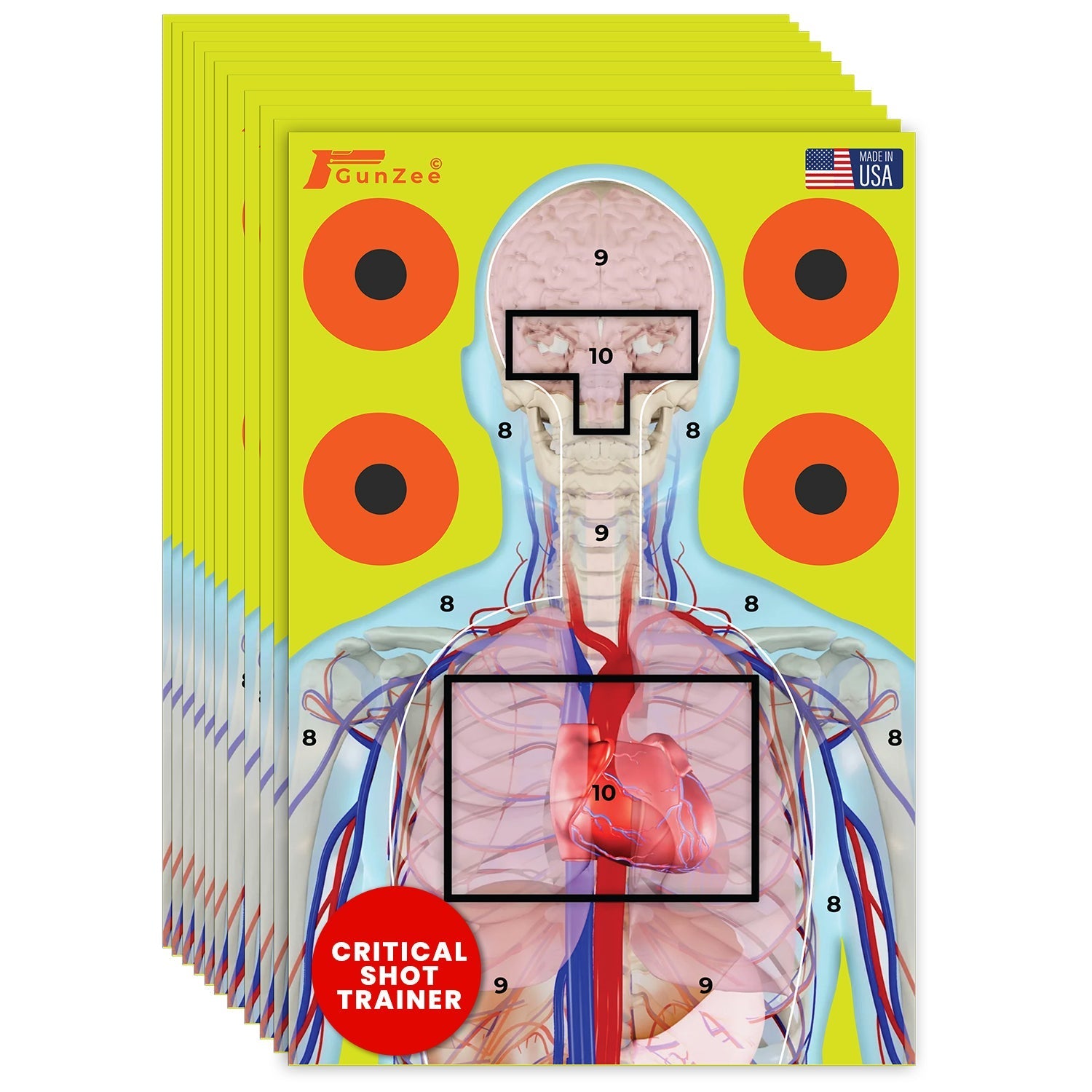
Anatomical targets help connect precision to feedback
Some shooters like targets that show anatomy references because it turns random holes into meaningful feedback. It helps you think about:
-
aiming small
-
shot placement discipline
-
consistency under time
If anatomical style training is part of your goals, you can look at GunZee Anatomical Shooting Targets and choose sizes that match your range setup and distance.
Important note: any “realism” should still be trained with strict safety and a responsible mindset. Most people improve faster when they stay focused on fundamentals, measurable drills, and clean execution.
Decision based targets teach restraint and awareness
Some targets are designed around judgment and identification. These are not about shooting more, they are about thinking better.
They can support skills like:
-
slowing down when you need precision
-
confirming before acting
-
recognizing cues and avoiding assumptions
Used correctly, these targets reinforce the idea that good training includes restraint, not just speed.
Understanding shooting target types
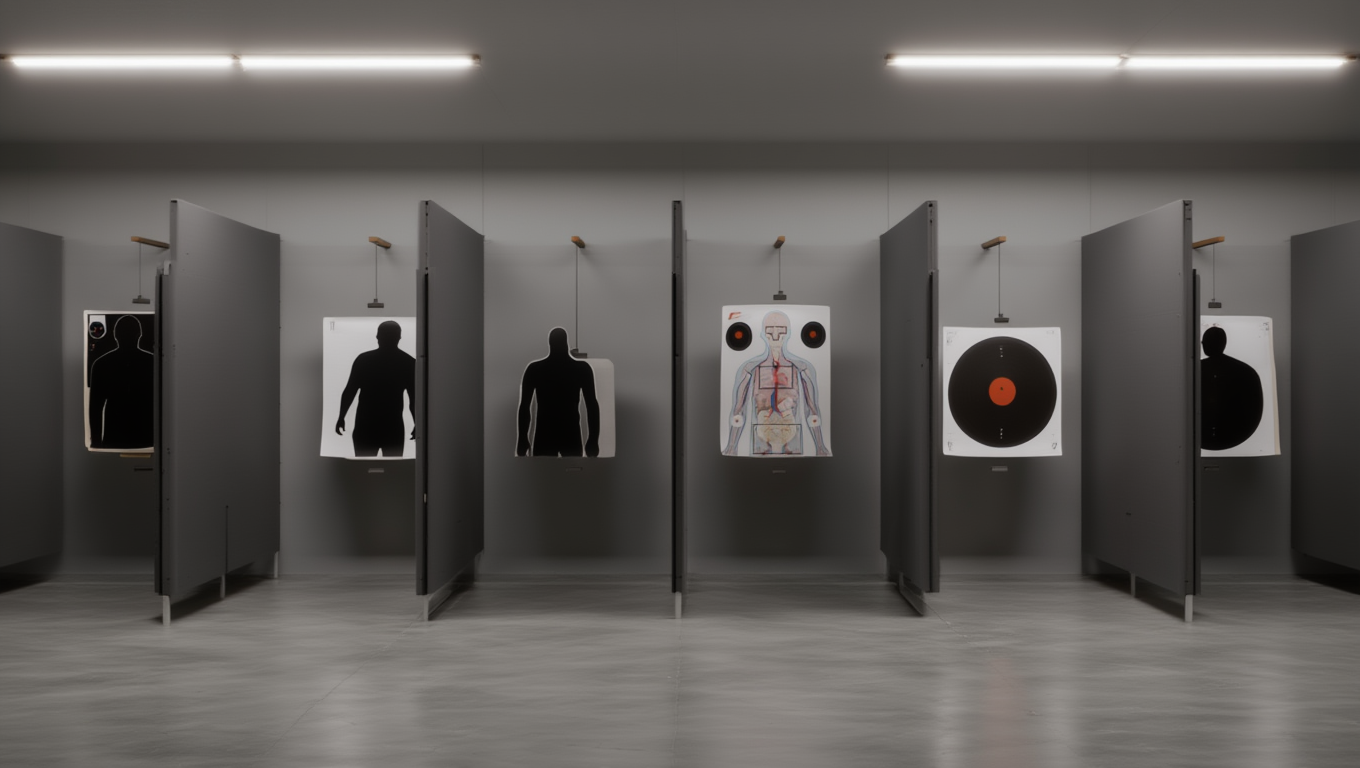
There are many shooting target types, but most fall into a few broad categories. Knowing what each is best for makes choosing much easier.
Paper targets
Paper targets are the most common for a reason. They are affordable, easy to transport, easy to replace, and give clear evidence of hits.
Best for:
-
accuracy tracking
-
drill repetition
-
scoring and group measurement
-
training at most indoor and outdoor ranges
If you want the simplest training setup, paper is usually the answer.

Steel targets
Steel is great for instant feedback because you can hear hits. It can be fun and motivating. It also requires strict safety rules and proper setup.
Best for:
-
immediate feedback
-
recoil management cadence work
-
enjoyment and engagement
Not ideal for:
-
precise group measurement
-
ranges that do not allow steel
Reactive targets
Reactive targets are designed to move, fall, or visually change when hit. They can help keep practice interesting, but they are not always the best for measuring tight improvements over time.
Best for:
-
engagement and motivation
-
instant feedback
-
breaking up long practice sessions
Not ideal for:
-
detailed shot placement tracking
How to choose the right target for your next range session
If you ever feel overwhelmed by choices, use this simple approach: match the target to the goal.
Step 1: Decide what you are training today
Pick one main objective:
-
Tight groups
-
Faster follow up shots
-
Transitions
-
Precision on smaller zones
-
Consistency over a full session
When you choose one objective, choosing a target gets easier.
Step 2: Pick a target that makes feedback obvious
Good targets make results easy to understand at a glance. Look for:
-
high contrast zones
-
clear scoring rings or numbered references
-
enough space to run multiple strings without confusion
If you want a quick way to browse different layouts and sizes, start with the GunZee Shooting Targets collection and choose based on your objective instead of guessing.
Step 3: Use the same target style for a few sessions
Switching targets every single session makes it harder to track progress. Stick with one style for a few weeks so you can compare apples to apples.
Once you see improvement, then add variety.
How often should you replace shooting targets?
Targets should be replaced when they stop giving you clear feedback.
Here are simple signs it is time:
-
you cannot see group edges clearly
-
holes overlap so much that scoring is a guess
-
the aiming point is shredded or torn
-
you are no longer sure which shots belong to which drill
For paper targets, replacement is part of the process. Many shooters bring extras and swap targets mid session so every drill stays measurable.
A quick comfort note for better training sessions
One thing people do not talk about enough is how comfort affects training quality. If your gear setup makes you miserable, you train less. Or you rush sessions. Or you spend half the time adjusting instead of practicing.
If concealed carry comfort is part of your world, improving comfort can remove friction from training days. That is where products like holster pads come in, especially for longer sessions where hot spots and pressure points distract you. If you want to explore options, start with the GunZee Classic Series holster pads and choose a size that fits your carry setup.
Comfort is not about being soft. It is about removing distractions so you can focus on doing clean reps.
FAQs
What are shooting targets used for besides just aiming?
They are used to measure performance, track improvement, reveal patterns, support drills, and create structure so practice becomes repeatable and purposeful.
Are paper shooting targets good enough for most training?
Yes. For most shooters, paper targets offer the best balance of clear feedback, affordability, and compatibility with most ranges.
What target should a beginner start with?
A beginner should start with a simple paper target that has a clear aiming point and visible scoring or reference zones, so hits are easy to confirm and adjust from.
Do anatomical targets make you a better shooter?
They can, if used responsibly, because they encourage aiming small and thinking about precision. They work best when paired with fundamentals and measurable drills.
How do I know if my target choice is helping?
If you can clearly see what changed from one string to the next, and you can repeat a drill and compare results, the target is doing its job.
How many targets should I bring to the range?
Bring more than you think you need. It is common to swap targets mid session so each drill stays readable and measurable.