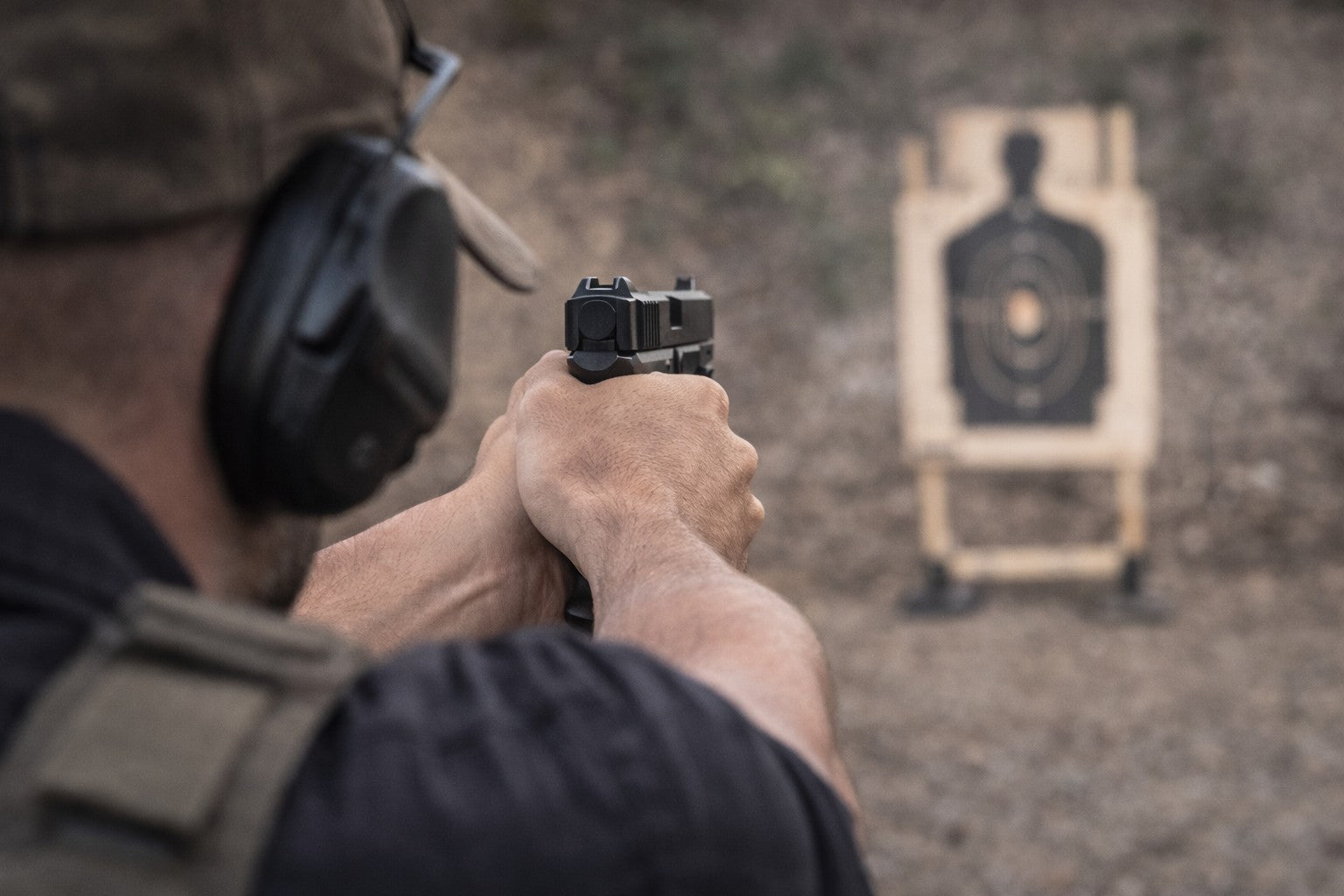
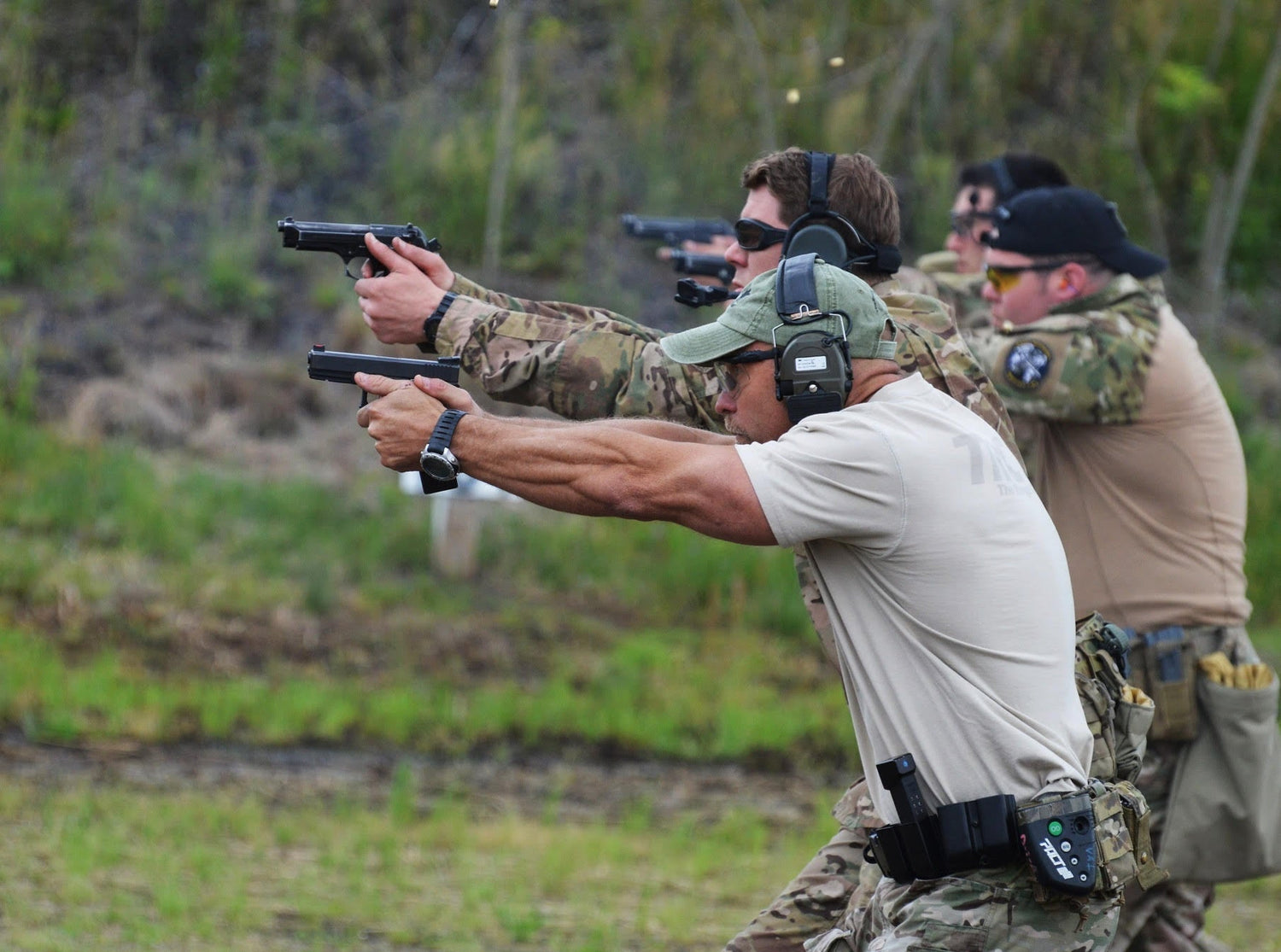
Few shooting errors are as common — or as frustrating — as anticipation and flinch.
You line up the sights perfectly. You press the trigger. The shot breaks — and the round impacts low, left, or unpredictably off target. You know the fundamentals. You know what should happen. But under pressure, your body reacts before your brain can stop it.
Trigger control under pressure is one of the most important skills in defensive shooting. Mastering it builds consistency, accuracy, and confidence.
This guide explains why flinch happens — and how to eliminate it through deliberate training.
Why Flinch Happens
Flinch is not a character flaw. It’s a biological response.
When a shooter anticipates:
- Recoil
- Muzzle blast
- Noise
- Concussion
The body attempts to brace for impact.
This manifests as:
- Pushing the muzzle downward
- Tightening the entire hand abruptly
- Jerking the trigger
- Dipping the head or shoulders
Under stress, the brain prioritizes protection over precision.
The key is not fighting flinch with tension — it’s retraining the trigger press to remain smooth and uninterrupted despite the expectation of recoil.
The Ball-and-Dummy Drill
The ball-and-dummy drill is one of the most effective tools for diagnosing anticipation.
How It Works
- Load a magazine with a random mix of live rounds and inert dummy rounds.
- Fire normally without knowing when a dummy round will appear.
- When the trigger is pressed on a dummy round:
- The gun does not fire.
- Any flinch becomes immediately visible.
If the muzzle dips or the sights jump, you are anticipating recoil.
This drill exposes what live fire can conceal.
Training Goal
The objective is simple:
When the trigger breaks — live or dummy — the sights should not move.
This builds:
- Trust in your trigger press
- Confidence in sight discipline
- Awareness of subtle errors
Reset vs Slap
One of the most misunderstood aspects of trigger control is reset.
Trigger Slapping
Trigger slapping happens when:
- The shooter releases the trigger completely
- Immediately jerks it again for the next shot
This introduces unnecessary movement and disrupts sight alignment.
Slapping becomes more common as shooters try to increase speed.
Controlled Reset
A proper reset involves:
- Allowing the trigger to move forward only until you feel or hear the reset click.
- Immediately pressing smoothly rearward again.
This minimizes unnecessary motion.
The trigger should move:
Rearward → Break → Reset → Rearward
Not:
Break → Full release → Reacquire → Slam
Efficient reset improves both accuracy and cadence.
Cadence Building
Many shooters lose trigger discipline when increasing speed.
Speed does not come from faster trigger jerks — it comes from consistent rhythm.
Start With Controlled Pairs
- Fire one accurate shot.
- Reset deliberately.
- Fire a second accurate shot.
Focus on:
- Seeing the sights lift
- Seeing them return
- Pressing only when aligned
Build Rhythm Gradually
Increase pace only when:
- Sight tracking remains visible
- Trigger press remains smooth
- Hits remain consistent
Accuracy should dictate speed — not ego.
Dry Fire Protocol for Trigger Discipline
Dry fire is one of the most effective ways to eliminate anticipation.
Without recoil or noise, the body has no stimulus to brace against.
Basic Dry Fire Routine
- Ensure the firearm is unloaded and safe.
- Choose a small visual target on a blank wall.
- Align sights carefully.
- Press the trigger slowly.
- Observe if the sights move at the break.
If the sights dip or shift:
You are introducing tension.
Dry fire isolates:
- Trigger press mechanics
- Grip stability
- Follow-through discipline
Add Complexity Over Time
- Practice presentation from ready position.
- Add cadence practice.
- Incorporate transition drills.
Dry fire should be structured, not random.
Even 10 focused minutes per day dramatically improves trigger control.
Integrating Diagnostic Targets
Certain target designs make flinch patterns obvious.
For example:
- Consistent low-left impacts (right-handed shooter)
- Vertical stringing
- Irregular horizontal drift
Diagnostic training targets can visually reinforce:
- Grip errors
- Trigger anticipation
- Inconsistent reset
When you combine:
Ball-and-dummy drills
Controlled cadence training
Dry fire discipline
You create measurable progress instead of guessing.
Final Thoughts
Trigger control under pressure is the dividing line between mechanical accuracy and defensive readiness.
Anticipation is natural. Flinch is common. But both can be eliminated through structured practice.
Focus on:
- Smooth rearward press
- Controlled reset
- Visible sight tracking
- Consistent cadence
- Disciplined dry fire
Accuracy is not a mystery. It is a trained response.
When trigger discipline improves, confidence follows.
Train deliberately. Eliminate anticipation. Build trust in your mechanics.