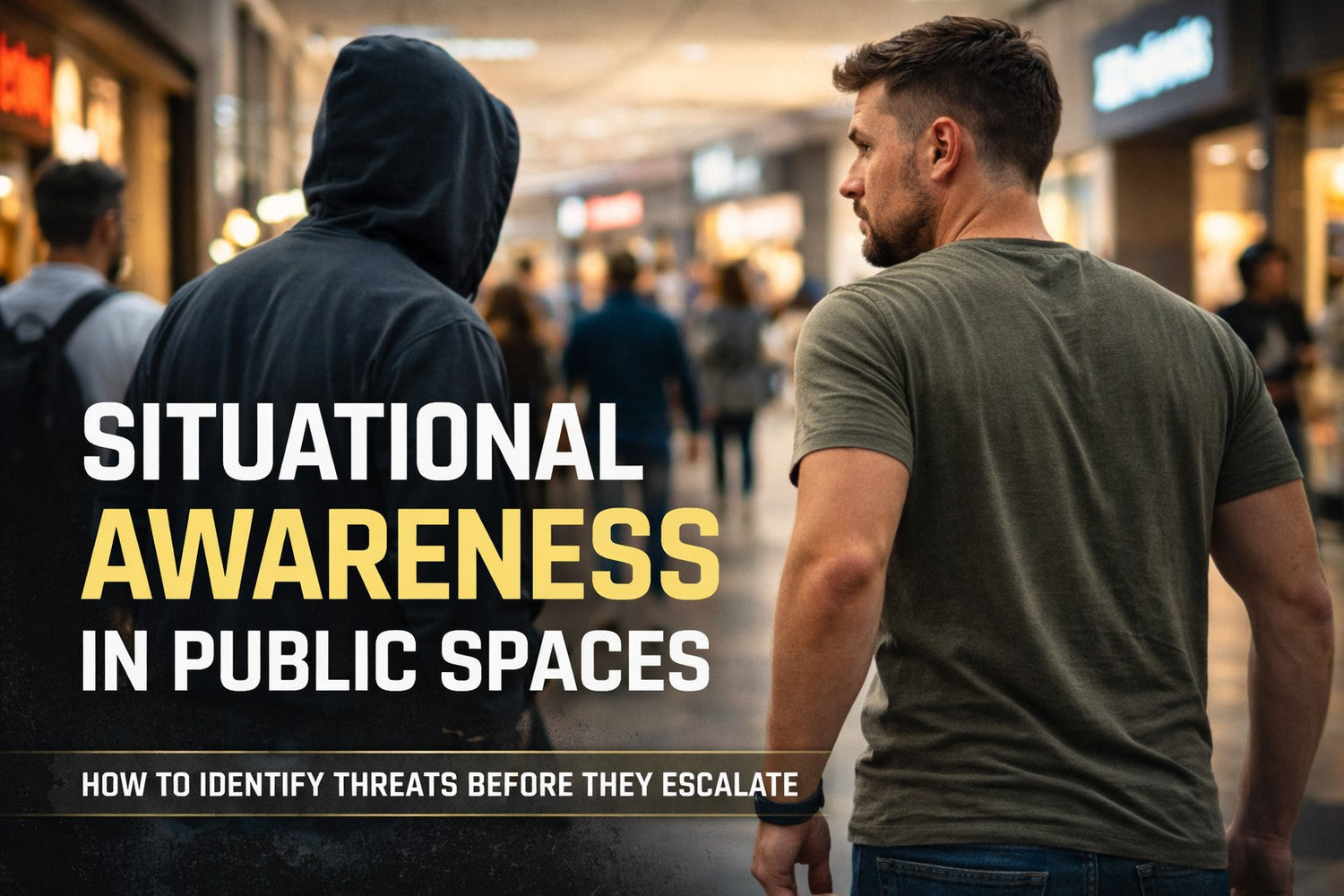
Situational awareness is not about living in fear.
It is about living prepared.
In public spaces — parking lots, restaurants, shopping centers, gas stations — the ability to recognize potential danger early is often more important than marksmanship itself. Most defensive encounters are decided before a shot is ever fired.
The disciplined shooter understands this:
Avoidance is victory.
Preparation is responsibility.
Reaction is a last resort.
This guide breaks down how to develop situational awareness in a way that is calm, controlled, and practical.
The Difference Between Awareness and Paranoia
Awareness is intentional observation.
Paranoia is emotional overreaction.
A paranoid mindset assumes danger everywhere.
An aware mindset recognizes patterns and anomalies without panic.
Healthy situational awareness means:
- You notice entrances and exits.
- You observe people’s behavior casually.
- You identify anything that breaks normal patterns.
- You remain relaxed but attentive.
You are not scanning aggressively.
You are not profiling.
You are not escalating.
You are simply observing.
The goal is not to look for threats constantly — it is to recognize them when they appear.
Baseline Behavior Recognition
Every environment has a baseline.
A grocery store at noon behaves differently than a parking garage at midnight. A crowded festival feels different than a quiet sidewalk.
Baseline awareness means asking:
“What is normal here?”
Examples:
- Are people moving casually?
- Are conversations relaxed?
- Are employees behaving routinely?
- Is traffic flowing naturally?
Once you understand the baseline, anomalies become obvious.
An anomaly might be:
- Someone pacing nervously.
- A person watching others instead of shopping.
- Unusual fixation on exits or cash registers.
- Concealment gestures or unnatural arm positioning.
Not every anomaly is a threat.
But anomalies deserve awareness.
Pre-Attack Indicators
Most violent acts show behavioral signals before escalation.
These are not guarantees — but they are patterns repeatedly observed in real-world incidents.
Common pre-attack indicators include:
- Target fixation
- Blading the body unnaturally
- Repeated adjustment of waistband or concealment area
- Rapid breathing
- Aggressive posturing
- Verbal escalation
- Closing distance intentionally
Distance compression is one of the most significant red flags.
If someone is unnecessarily reducing space while displaying agitation, awareness should increase.
Again, the goal is not confrontation — it is preparation.
Positioning and Exits
One of the simplest awareness habits is positioning.
Whenever you enter a public space:
- Identify primary exits.
- Identify secondary exits.
- Notice obstacles and cover.
- Avoid being trapped in dead-end corners.
In restaurants or public seating areas:
- Sit where you can see main entry points.
- Avoid seating with your back to primary traffic areas when possible.
In parking lots:
- Keep your head up.
- Avoid distractions while walking.
- Maintain safe spacing from other vehicles.
Good positioning buys time.
Time allows decision-making.
Avoidance vs Engagement Decision-Making
The disciplined mindset prioritizes avoidance whenever possible.
If something feels wrong:
- Change direction.
- Create distance.
- Leave the area.
- Reposition.
Engagement is a last resort when:
- An imminent threat exists.
- There is no safe avenue of retreat.
- A clear danger is present.
Situational awareness exists to prevent escalation.
The best defensive encounter is the one that never happens.
Understanding this distinction separates prepared individuals from reactive ones.
Training Awareness Without Becoming Reactive
Situational awareness can be trained without paranoia.
Simple exercises:
- Practice identifying exits in every building you enter.
- Observe baseline behavior in everyday environments.
- Mentally note anomalies without judgment.
- Walk through “what if” scenarios calmly — not fearfully.
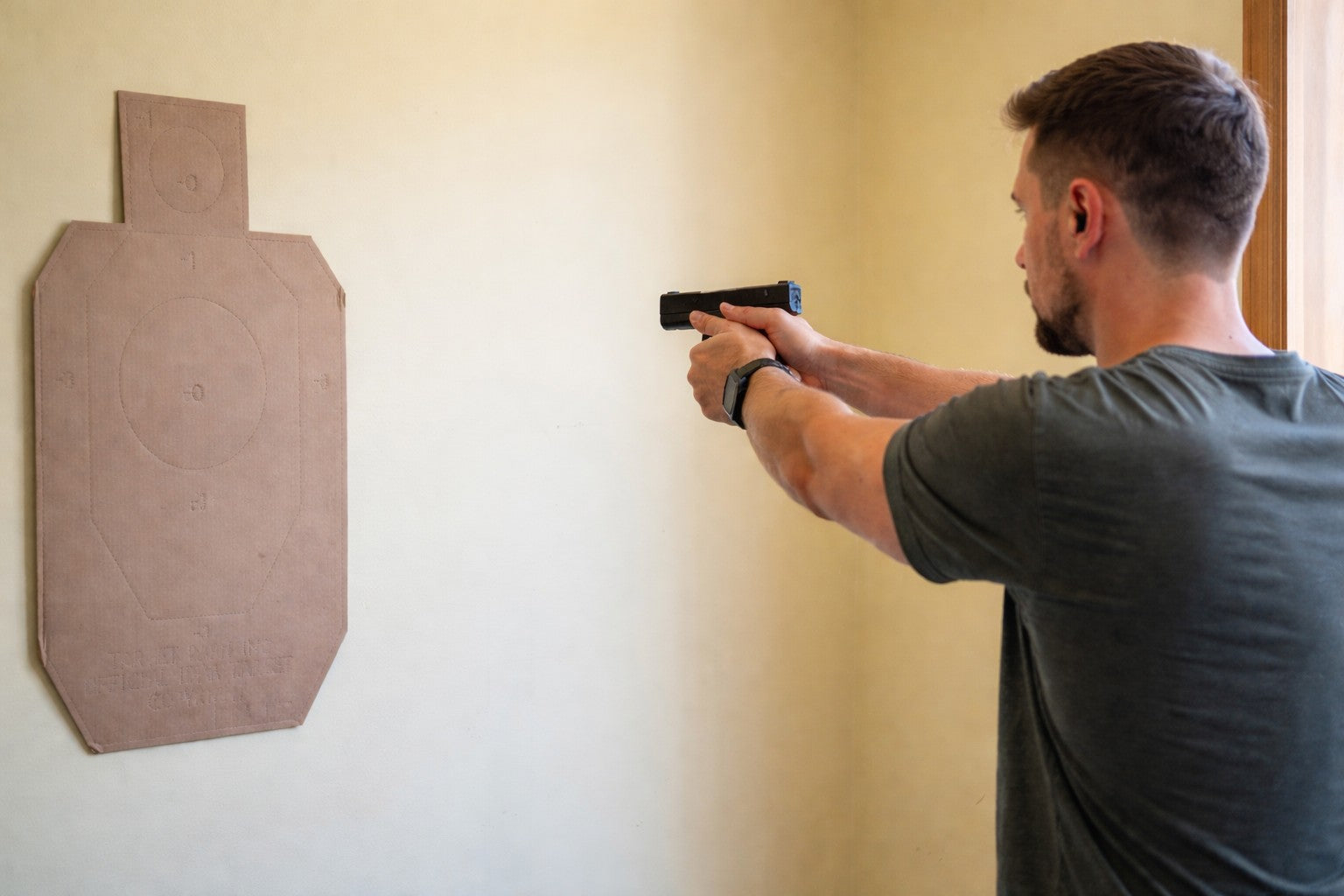
Structured scenario training targets can also reinforce:
- Threat recognition
- Weapon confirmation
- Decision-making discipline
But mindset training must always come first.
You cannot shoot your way out of poor judgment.
The Calm Advantage
The most effective defensive practitioners are calm.
They are not hyper-aggressive.
They are not confrontational.
They are not looking for conflict.
They are aware.
Situational awareness is about buying time, creating space, and protecting yourself and others through informed decision-making.
Skill with a firearm matters.
But awareness prevents the need to use it.
Final Thoughts
Situational awareness in public spaces is not about fear — it is about responsibility.
It requires:
- Understanding baseline behavior
- Recognizing anomalies
- Identifying pre-attack indicators
- Positioning intelligently
- Choosing avoidance whenever possible
The disciplined shooter prepares mentally first.
Awareness is the foundation.
Skill is the reinforcement.
Judgment is the priority.
Train your eyes. Train your mind.
Preparation begins long before engagement.