
Speed without control is noise.
In defensive shooting, the ability to deliver accurate follow-up shots quickly is often more important than a single perfect round. Recoil management bridges the gap between basic marksmanship and practical defensive performance.
Many shooters can fire one accurate shot at a controlled pace. The challenge begins when speed increases. Sights lift. Timing compresses. Grip tightens. Accuracy falls apart.
The solution is not “shooting faster.” It’s learning to manage recoil so accuracy remains consistent as cadence increases.
Grip Pressure Mechanics
Recoil control begins before the shot breaks.
Your grip establishes how the firearm moves during discharge and how efficiently it returns to alignment.
Balanced Grip Pressure
Recoil management is not about squeezing harder with your firing hand. In fact, over-gripping with the dominant hand often disrupts trigger control.
Instead:
- The dominant hand stabilizes the firearm.
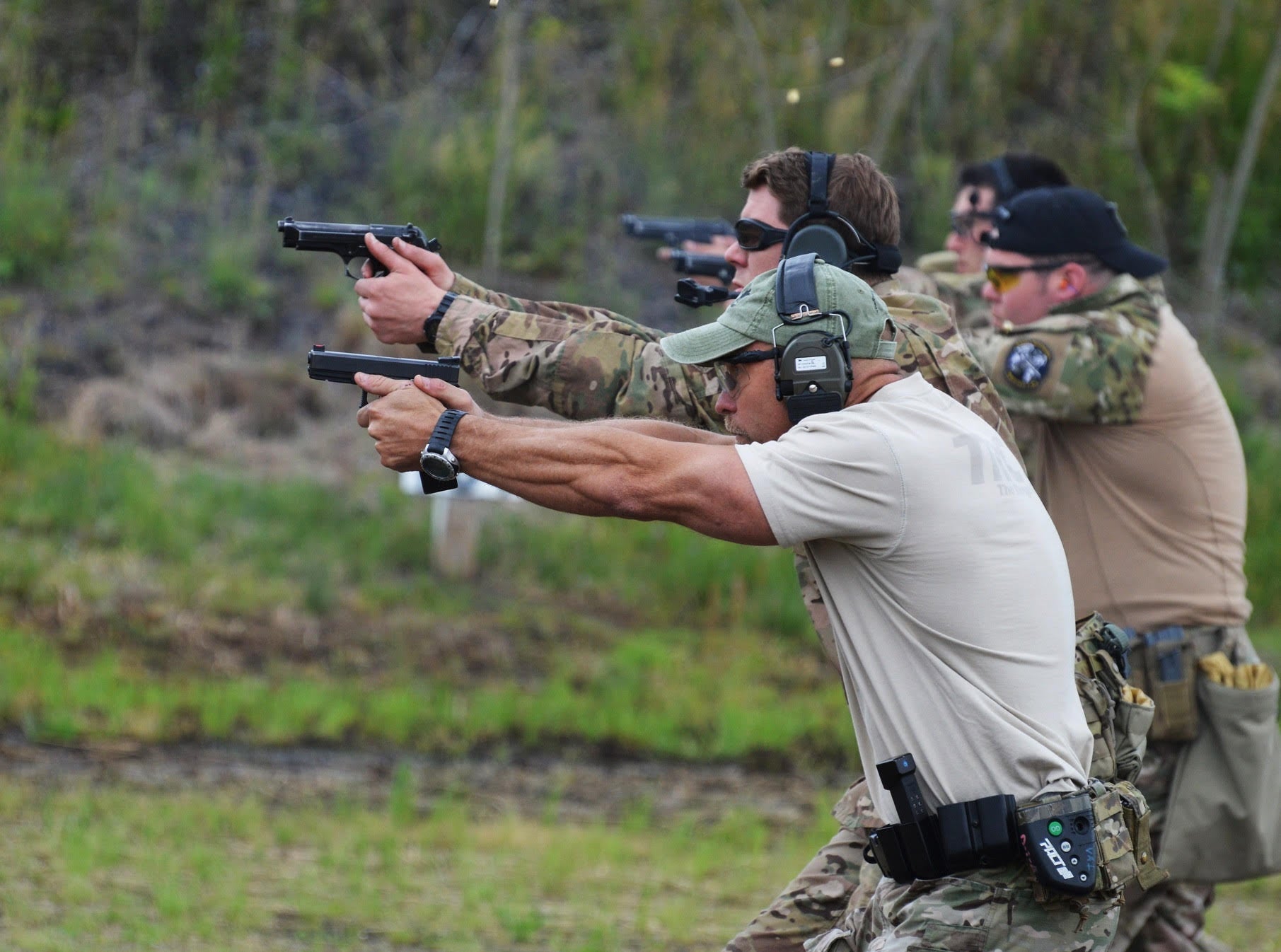
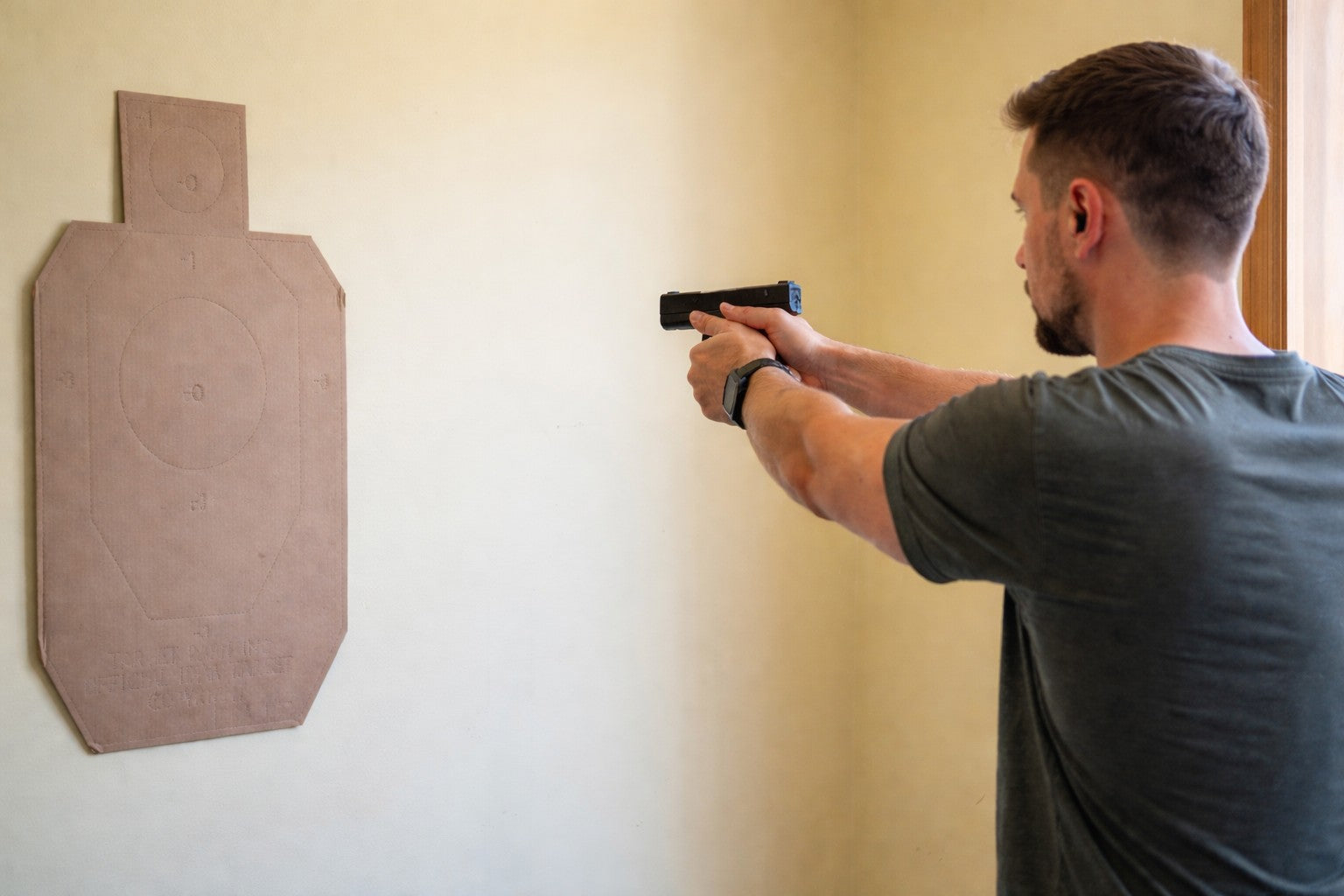
- The support hand applies the majority of grip pressure.
- Pressure should feel like controlled compression, not strain.
Think of your grip as a clamp. The stronger and more stable the clamp, the less the muzzle flips.
Forward Lean
Body position supports grip mechanics.
- Weight slightly forward
- Knees soft
- Shoulders slightly ahead of hips
If your upper body leans back, recoil will exaggerate muzzle rise.
Structure reduces movement.
Support Hand Dominance
Modern defensive shooting emphasizes support hand dominance.
Why?
Because the support hand controls recoil while the dominant hand manages the trigger.
If your firing hand grips too tightly:
- Trigger movement becomes inconsistent.
- Shots drift laterally.
If your support hand grips too lightly:
- Muzzle rise increases.
- Sight tracking becomes chaotic.
Aim for:
- Approximately 60–70% pressure from the support hand
- 30–40% from the dominant hand
This allows:
- Smooth trigger press
- Faster sight return
- More consistent shot placement
Tracking the Front Sight
Many shooters lose accuracy at speed because they stop seeing their sights.
Recoil lifts the firearm. The front sight rises. The shooter fires again without confirming alignment.
Effective recoil management requires visual discipline.
See the Lift
After the shot breaks:
- Observe the front sight rise.
- Observe it settle.
- Press again when alignment returns.
You are not guessing. You are tracking.
The front sight should move in a predictable arc. If it jumps erratically, your grip or stance is inconsistent.
Tracking is what separates controlled speed from uncontrolled rapid fire.
Split Time Control
Split time refers to the time between consecutive shots.
Beginners often chase speed by forcing shorter splits before control exists.
Instead:
- Start with deliberate pairs.
- Maintain visual confirmation of alignment.
- Gradually reduce split time while preserving accuracy.
If your group spreads:
Your splits are too aggressive.
Accuracy should dictate speed, not ego.
As control improves, your split times will naturally decrease without sacrificing consistency.
Shooting Doubles
A “double” is two rapid shots fired with minimal sight confirmation between them.
This technique is effective at close defensive distances — but only when recoil control is disciplined.
Controlled Double
- First shot: Confirm sight alignment.
- Second shot: Fired as the sights return.
You are still visually engaged.
Uncontrolled Double
- Two shots fired mechanically.
- No visual confirmation.
- Group spreads vertically or horizontally.
The goal is not raw speed. The goal is acceptable accuracy at practical defensive distances.
Controlled doubles train:
- Grip consistency
- Sight tracking
- Cadence rhythm
- Confidence under recoil
Connecting Recoil Management to Anatomical Targeting
Recoil control directly affects shot placement in high-value zones.
When firing follow-up shots to:
- The upper thoracic cavity
- The cardiac region
- The pelvic girdle
Consistency matters.
Poor recoil management leads to:
- Vertical stringing
- Off-center hits
- Delayed transitions between target zones
Structured recoil training builds confidence in transitioning between vital areas without losing accuracy.
Speed becomes practical instead of chaotic.
Training Progression
To develop effective recoil management:
- Begin at close distance (3–5 yards).
- Focus on tight groups.
- Add cadence gradually.
- Track sight movement deliberately.
- Introduce controlled doubles.
As skill improves, extend distance while maintaining discipline.
Dry fire can reinforce grip consistency and trigger control, but live fire is essential for true recoil adaptation.
Final Thoughts
Recoil management is not about fighting the firearm.
It is about:
- Structured grip pressure
- Support hand dominance
- Visual discipline
- Controlled cadence
- Intentional follow-up shots
When fundamentals are strong, speed follows naturally.
The shooter who controls recoil controls the pace of the encounter.
Train deliberately. Track your sights. Let accuracy lead speed.